Women's Petite Bottoms Guide
Petite bottoms are where petite sizing matters most: shorter rises and inseams, raised knees and scaled pockets across pants, jeans, skirts and shorts for women 5'4" and under.
Shop Women's Petite Bottoms Now
Shop Women's Petite Bottoms on Amazon Shop Women's Petite Bottoms on eBayThe Amazon and eBay links on this page are affiliate links. If you make a purchase through them, Apparel Search may earn a commission.
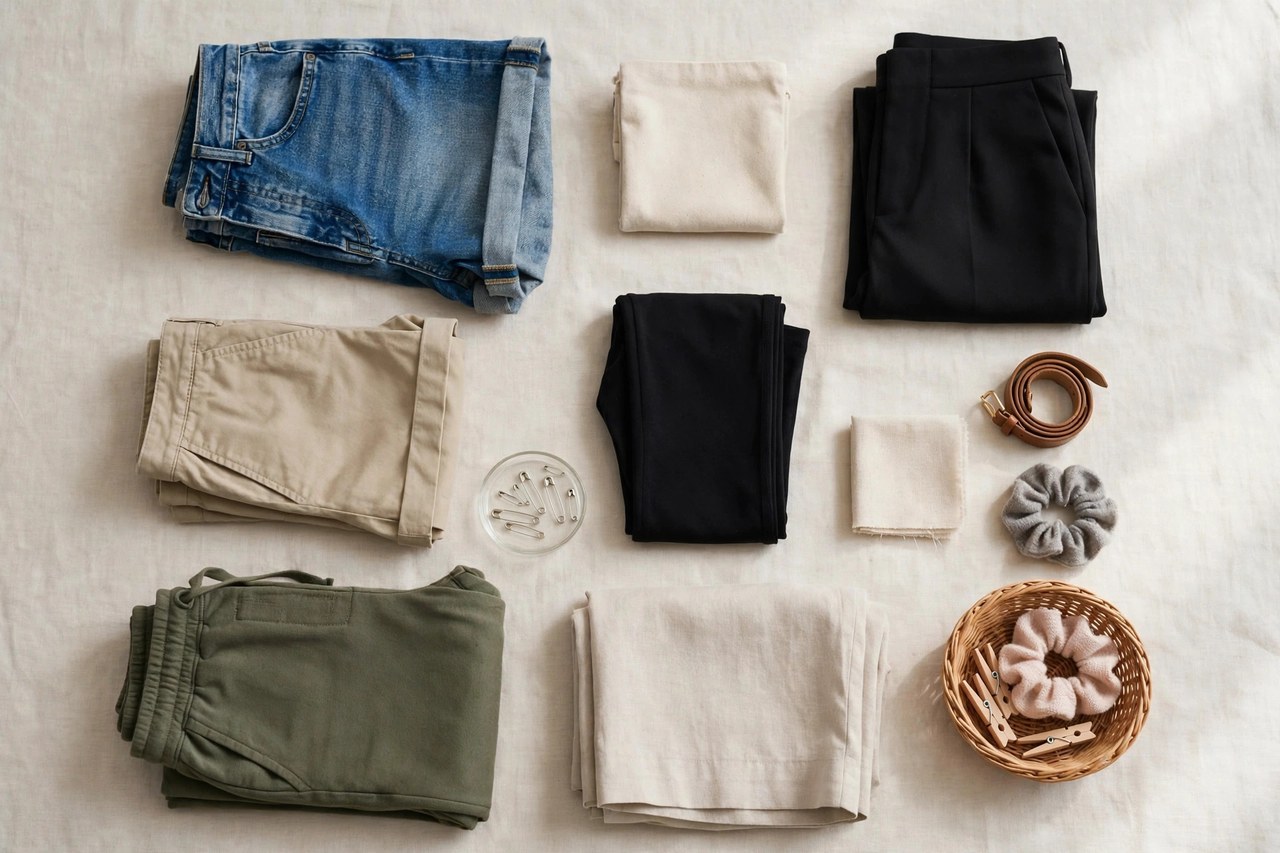
Bottoms is the collective name for everything worn below the waist — pants, jeans, skirts, shorts, capris and leggings — and it is the department where petite sizing, for women 5'4" and under, makes its largest and least replaceable difference. A regular top can be tucked or belted into submission, but a regular bottom's rise is too long, its knee sits too low, its pockets slide too far down the thigh and its hem pools on the floor, all at the same time. No single alteration fixes a pattern that is long in four places.
This guide works through the petite bottom categories, the measurements that define them, and the fit checks specific to each. Use it as the map for the whole lower half of a petite wardrobe, then follow the individual guides for jeans, pants, skirts and shorts when you are buying a specific piece. The short version: buy petite bottoms first, before any other petite category, because this is where the money changes what you actually see in the mirror.
Rise, Inseam and Knee: The Three Petite Measurements
Rise is the distance from crotch seam to waistband, and petite rises run about three-quarters of an inch to an inch shorter than regular in the same style, so the waistband sits at the waist rather than creeping toward the ribs and the crotch seam sits at the body rather than hanging below it. Inseam is the inside leg length: petite full-length pants typically run 28 to 30 inches against 32 to 34 regular, with petite ankle styles near 25 to 27 inches — figures that vary by brand, so always compare inches.
Knee placement is the invisible third measurement. In petite trousers, jeans and leggings, the knee shaping, crease position, fading on denim and any articulated panel are raised by roughly an inch, so the garment bends where your leg bends. A regular bottom hemmed to petite length keeps its low knee, which is why hemmed regular jeans still look subtly wrong: the whiskering sits at mid-thigh and the knee fade below the knee. Scaled pocket size and higher pocket placement complete the picture, keeping back pockets on the seat rather than the upper thigh.
Pants, Jeans and Leggings
Petite pants and trousers come in the same leg shapes as regular ranges — straight, tapered, wide, bootcut — but wide and flare shapes are rebalanced so the volume starts lower and the hem width is slightly reduced, preventing the swamped look. A petite bootcut's break point is raised so the flare opens below a shorter calf. For jeans, petite cutting also repositions fading, distressing and pocket embroidery, and shortens the front rise so high-rise styles support rather than swallow the torso.
Petite leggings and jeggings shorten both inseam and rise and raise compression and knee placement, ending at the ankle bone instead of stacking. When buying any of these, fit the waist and hip first and treat remaining length as the only acceptable alteration; a petite bottom that still needs hemming by more than an inch suggests the brand's petite block runs long for you, and a smaller length option or a different brand will serve better than repeated tailoring on every pair.
Skirts and Shorts
Petite skirts are shortened in length and in the distance from waist to hip, so an A-line's flare, a pencil skirt's taper and any slit or kick pleat land at the intended points on a shorter leg. As a guide, a petite knee skirt typically measures about 20 to 22 inches from waist to hem. Waistbands sit at the true waist, and yokes, tiers and horizontal seams are raised and reduced in number or depth, since each horizontal line costs visible leg length on a petite frame.
Petite shorts shorten inseam and rise together: tailored and Bermuda styles keep their character at 9- to 11-inch petite inseams, while casual and denim shorts at 3- to 5-inch inseams show the intended amount of leg instead of creeping toward capri territory on a short thigh. Cuffs are shallower, cargo pockets smaller and higher, and drawstrings shorter. For both skirts and shorts, sit and climb a step during fitting — petite lengths are engineered around a shorter stride, and binding at the knee or a hem that catches signals a regular cut in disguise.
Fabrics, Fit Checks and Buying Order
Fabric choice interacts with petite fit. Sturdy mid-weight fabrics — cotton twill, denim, ponte, suiting blends — hold the shorter proportions crisply, while very fluid fabrics in wide-leg petite pants need the reduced hem width of a true petite cut to avoid trailing. Stretch of one to two percent elastane improves comfort across all bottoms, but high-stretch thin fabrics bag at a petite knee faster because the knee sits higher and bends the fabric at a sharper point; reinforced knee construction and good recovery matter.
Use a fixed fit routine: waistband level and snug at the waist, rise comfortable standing and seated, knee features aligned with your knees, pockets lying on the body part they name, hem at the planned point with the intended shoes. Build the petite bottoms wardrobe in this order: everyday pants or jeans first, then a skirt and shorts for the season, then specialty pieces like wide-leg or formal trousers. Keep a note of the inseam and rise numbers that work for you by category; those two figures, more than any dress size, are your real petite bottoms size.
Related Women's Guides
More to Explore on Apparel Search
Looking for Women's Clothing Stores?
This guide helps you choose women's petite bottoms. To browse where to buy, visit our women's clothing store directory, where you can find retailers that carry them.