Women's Petite Skirts Guide
A petite skirt is shortened in the right places — waist-to-hip shaping, hem length and print scale — so a mini, midi or maxi lands at the point its name promises on a 5'4"-and-under frame.
Shop Women's Petite Skirts Now
Shop Women's Petite Skirts on Amazon Shop Women's Petite Skirts on eBayThe Amazon and eBay links on this page are affiliate links. If you make a purchase through them, Apparel Search may earn a commission.
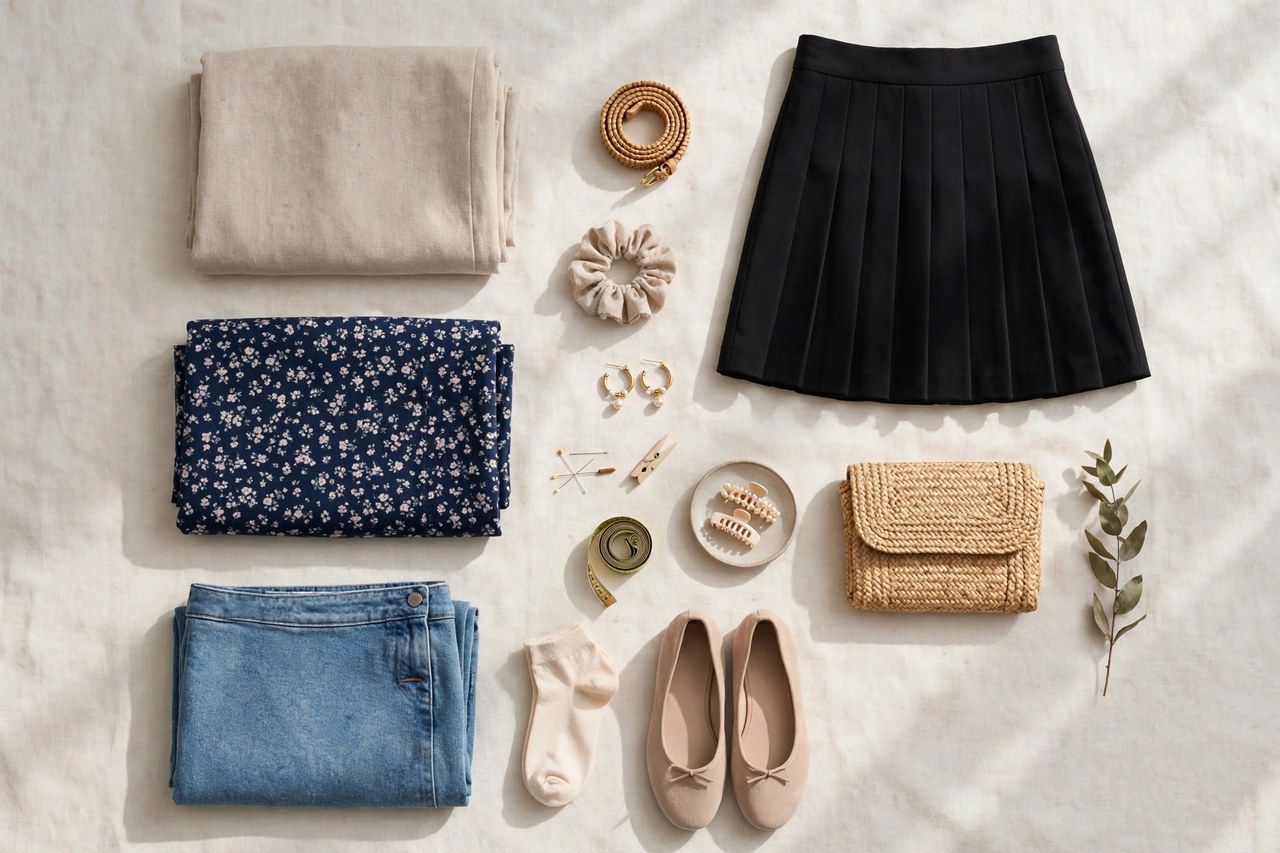
Skirt length is a promise. A midi should end at mid-calf, a knee skirt should graze the knee, and a maxi should just clear the floor — but on a petite woman a regular skirt breaks every one of those promises, dropping each hem three or four inches lower than intended. A midi becomes a near-maxi, a knee skirt lands in the awkward zone below the knee, and a maxi pools on the ground. Petite skirts are cut shorter from waist to hem, with the shaping compressed to match.
The difference is more than a hem. In a true petite skirt the distance from waist to hip is shorter, so darts, yokes and pleats sit on the hip where they belong, the waistband sits at the natural waist, and prints and borders are scaled to a shorter length. This guide covers petite skirt lengths and how to read them, the main silhouettes from pencil to pleated, fabrics and construction, and the styling choices that keep a shorter skirt — and the legs below it — looking long and balanced.
Petite Lengths: Mini, Knee, Midi and Maxi
Mini skirts in petite ranges end at mid-thigh with a shorter total length, so the proportion of leg to skirt matches the design rather than accidentally becoming a knee skirt. Knee-length skirts are the office standard; the petite version is cut so the hem ends at the top, middle or just below the knee as designed — that precision matters, because a hem landing two inches lower, at the widest part of the calf, shortens the leg more than any other error. Measure your own waist-to-knee length once and compare it with listings.
Midi skirts are where petites gain most: a true petite midi ends at mid-calf, roughly 28 to 31 inches from the waist depending on height, instead of the 33-plus inches of a regular midi that swamps a short frame. Petite maxi skirts do exist and can work beautifully, cut around 36 to 39 inches so they skim the shoe rather than drag; look for a slim A-line or column shape rather than wide tiers, which add volume a petite frame carries less easily. Tiered and border-print maxis should have narrower tiers and smaller borders in petite cuts.
Silhouettes: Pencil, A-Line, Pleated, Wrap and Flared
The pencil skirt is a straight, close silhouette ending at the knee; in petite cuts the taper and the back vent are raised so you can walk without the skirt binding below the knee. The A-line skirt flares gently from the waist and suits almost every petite figure, because the clean waist-to-hip fit shows the waist while the flare balances the hip — in petite lengths the flare starts at the correct, higher hip point.
Wrap skirts adjust at the waist and suit petites well, provided the wrap overlap is scaled so it does not cross too far and bunch. Flared and skater styles are shorter, playful silhouettes whose hem circumference is reduced in petite cuts so the flare stands away in proportion. Denim, pencil-straight and column skirts give a long vertical line that flatters height. Whatever the silhouette, check where design details sit: a yoke, cargo pocket or tier seam should fall at the intended point on your hip or thigh, not several inches lower.
Fabrics, Prints and Construction Details
Fabric decides how a petite skirt's length behaves. Fluid fabrics — crepe, rayon, soft jersey and chiffon layers — let a midi or maxi fall in a narrow column that lengthens. Structured fabrics — cotton twill, denim, wool blends and suiting — hold a pencil or A-line shape and suit knee lengths. Ponte and stretch wovens make comfortable pull-on petite skirts, but check that the waistband is firm and sits at the petite waist, since a soft waistband migrates downward and lengthens the skirt as the day goes on.
Prints and stripes follow petite scaling rules. Small-to-medium florals, dots and checks keep proportion on a shorter skirt; a large motif cut off awkwardly at a shortened hem is a sign of a regular skirt that was merely hemmed. Vertical stripes, pinstripes and a front seam or slit all add visual length.
Styling, Care and Buying Tips
Styling a petite skirt is mostly about the waistline and the shoe. Tucking or half-tucking a top, or choosing a shorter top that ends at the waistband, shows the skirt's raised petite waist and lengthens the legs; a long untucked top over a midi hides both advantages. Shoes close in color to tights or skin extend the leg below a knee or midi hem, and a pointed flat lengthens more than a heavy ankle strap, which cuts the line — though a delicate strap at the ankle itself is fine.
Care and buying follow the fabric label, with one petite addition: have hems altered before the first wear rather than folding a too-long regular skirt, because folding changes the silhouette's balance. When buying, record your waist-to-knee and waist-to-mid-calf lengths and shop those numbers, not just the size. A core petite skirt wardrobe — a knee pencil or A-line for work, a fluid midi, a denim or casual short skirt and, if you love them, one true petite maxi — covers the year in correct proportions.
Related Women's Guides
Looking for Women's Clothing Stores?
This guide helps you choose women's petite skirts. To browse where to buy, visit our women's clothing store directory, where you can find retailers that carry them.