Women's Petite Workwear Guide
Petite workwear is office and occupational clothing cut for women 5'4" and under — jackets that button at the right waist, trousers with a true petite rise and inseam, and dresses whose shaping lands where it belongs.
Shop Women's Petite Workwear Now
Shop Women's Petite Workwear on Amazon Shop Women's Petite Workwear on eBayThe Amazon and eBay links on this page are affiliate links. If you make a purchase through them, Apparel Search may earn a commission.
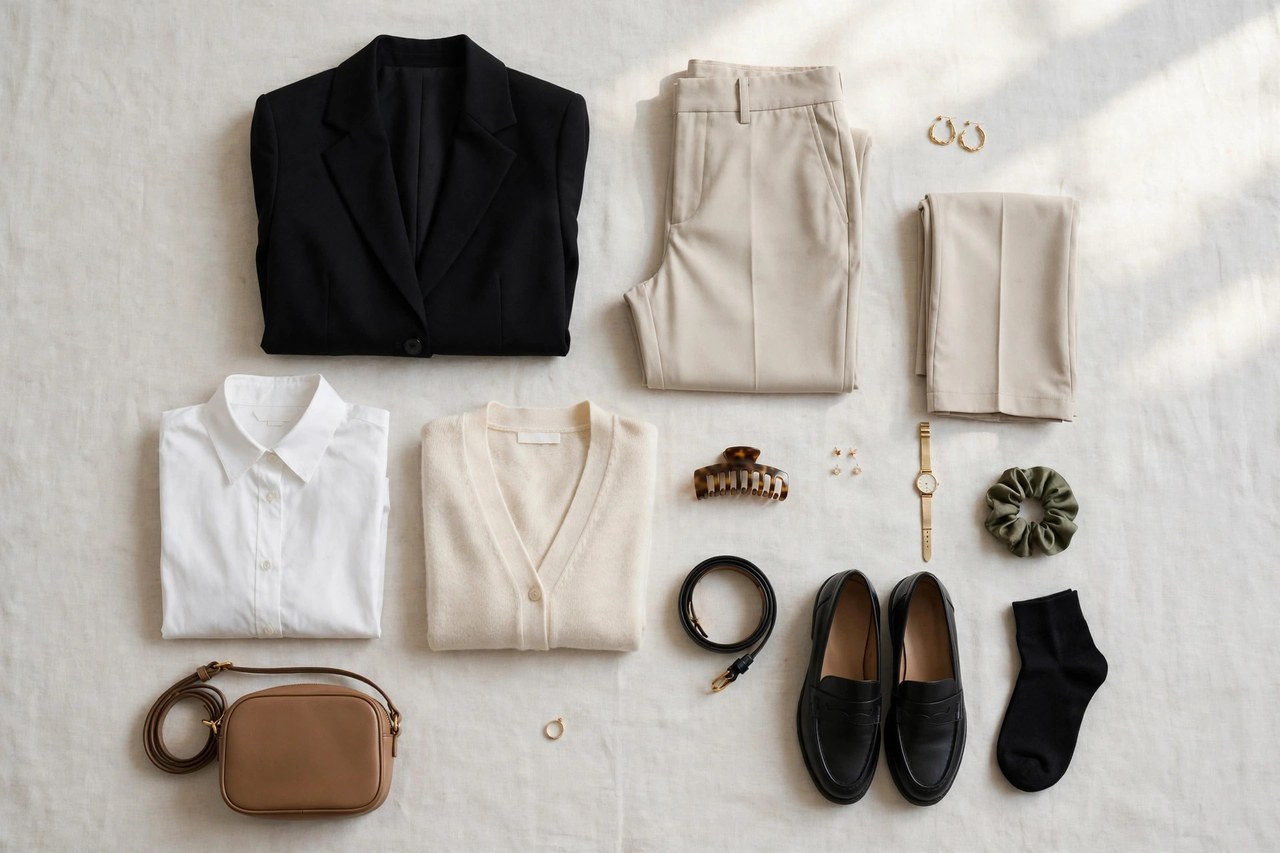
Workwear here means clothing for work: the suits, separates, dresses and polished basics worn to offices and professional settings, plus neat occupational clothing for roles with a public face. For petite women it is the category where fit is read as competence — a regular-size blazer with sleeves over the hands and a button stance at the hip undermines an otherwise sharp outfit. Petite workwear is cut for women 5'4" and under, with shorter jacket bodies and sleeves, trousers graded in rise and inseam, and dresses shaped at a petite waist.
This guide covers the petite work wardrobe piece by piece — suits and blazers, trousers and skirts, work dresses and the tops that go under jackets — then the professional fabrics that survive a working week, and a sizing and care routine built around cost per wear, because work clothes are bought to be worn hard.
Suits and Blazers in Petite Cut
A petite suit jacket shortens the body so it ends at the intended point on the hip, places the button stance at a petite natural waist (the point where the jacket should nip in), narrows the lapels and shoulders, and finishes the sleeves at the wrist with a sliver of shirt cuff showing. These are structural positions that a tailor cannot fully move on a regular jacket, which is why petite suiting is worth buying in the petite range rather than altering down. Matching petite trousers or a skirt complete a suit that reads as made for you.
Blazers follow the same rules as separate jackets and do the most mixing in a work wardrobe: navy, black and one seasonal color cover most offices. Single-breasted styles lengthen a petite torso best; double-breasted jackets in petite cuts reduce button rows and lapel width to stay in scale. Check that vents do not split open when seated, that the collar lies against the neck over a petite blouse, and that the jacket buttons comfortably over your typical layer by mid-afternoon, not just in the morning fitting.
Trousers, Skirts and Work Dresses
Petite work trousers grade both dimensions that matter: the inseam, typically around 28 to 30 inches in petite ranges depending on shoe, and the rise, shortened so the waistband sits at the waist and the front lies smooth when seated through a working day. Straight, tapered and wide-leg styles all come in petite cuts; the hem should break correctly over your work shoes without pooling, and many petite professionals keep the same trouser hemmed for flats and for heels.
Petite skirts place the waistband, darts and kick pleat correctly and end at the knee as labeled, rather than below it. Work dresses — sheaths, shifts and wrap styles — are where petite grading shows most: the waist seam, bust darts and hem all land at once, and a petite sheath needs little more than the right shoe. A small rotation of two suits, extra trousers, two skirts and two dresses, all in petite cuts that mix, covers a professional month without repetition fatigue.
Fabrics and the Working Week
Professional fabrics must drape, recover and resist wrinkles through commuting and long seated hours. Wool and wool blends anchor suiting, with a touch of elastane for sit-all-day comfort; ponte knit makes unlined petite jackets and trousers that move like knitwear and read like tailoring; crepe in polyester or triacetate blends travels and resists creasing; and polished cotton sateen covers warmer months. Lined trousers and skirts hang smoother and last longer, an honest economy in clothes worn weekly.
Build the palette around two neutrals — navy and charcoal, or black and camel — so every petite top, shoe and bag works with every bottom. Shirts and blouses under jackets should be petite as well, so cuffs end at the jacket sleeve and collars sit inside the lapel line. Quality signals in workwear are plain: buttons sewn tight, seams that lie flat, hems with enough allowance to adjust, and fabric that springs back when you crush it in your hand in the shop.
Sizing, Rotation and Care
Size petite workwear to your largest measurement and tailor the small differences: hemming trousers and skirts, nipping a waist, shortening a strap. Keep written measurements — petite inseam for flats and heels, jacket sleeve length, waist — and online professional shopping becomes reliable instead of hopeful. When trying on, rehearse the job: sit at a desk, reach a shelf, climb stairs, and carry a bag; workwear passes or fails in motion.
Rotate suits and trousers with rest days, brush and air them between wears, and dry clean sparingly — over-cleaning ages professional fabrics faster than wearing does. Wash petite blouses and knit shells promptly so they are always ready under a jacket. Replace pieces by condition, not season: a petite suit that fits perfectly is worth re-heeling shoes and re-lining trousers to keep. In workwear more than anywhere, correct petite fit is not vanity — it is the uniform doing its job.
Related Women's Guides
Looking for Women's Clothing Stores?
This guide helps you choose women's petite workwear. To browse where to buy, visit our women's clothing store directory, where you can find retailers that carry them.