Workwear Manufacturers
Work wear clothing factory guide: coveralls, trousers, hi-vis and protective work clothing.
Workwear is clothing engineered for jobs: coveralls, work trousers, bib overalls, jackets, high-visibility garments and flame-retardant clothing that must survive industrial laundering and daily abrasion while keeping the wearer identifiable and, where the standards apply, protected. This guide lists workwear manufacturers and connects them to the uniform and protective clothing resources around the category.
The terminology matters here more than in fashion. The workwear terminology page linked below explains the trade’s language, and the work boots product page covers the footwear half of the kit; buyers specifying a workwear program should read both alongside the factory listings.
Workwear Resources
Workwear Standards and Certification
Much workwear is regulated personal protective equipment, and the standards shape what factories may claim. High-visibility garments are certified to EN ISO 20471 in Europe or ANSI/ISEA 107 in the United States, which fix the area and placement of fluorescent fabric and reflective tape. Flame-retardant workwear for welding, utilities and petrochemical work is certified to standards such as EN ISO 11612, and arc-rated clothing to the electrical standards of its market; rain protective workwear has its own waterproofing standard. Certification attaches to the finished garment from a specific production line, tested as a system, so a buyer should ask for the certificate for the exact model and factory, and should treat uncertified lookalikes as ordinary clothing, whatever the fabric was called.
Below the certified tier sits general workwear, coveralls, trousers, jackets and aprons bought on durability and price, where the meaningful specifications are fabric weight and composition, shrinkage and colorfastness under industrial laundering, and seam strength. Both tiers appear in the listings below: a US brand program serving North American workers, and a long-established Pakistani exporter producing the full weight range with fire retardant and stain release finishes.
How Workwear Is Made
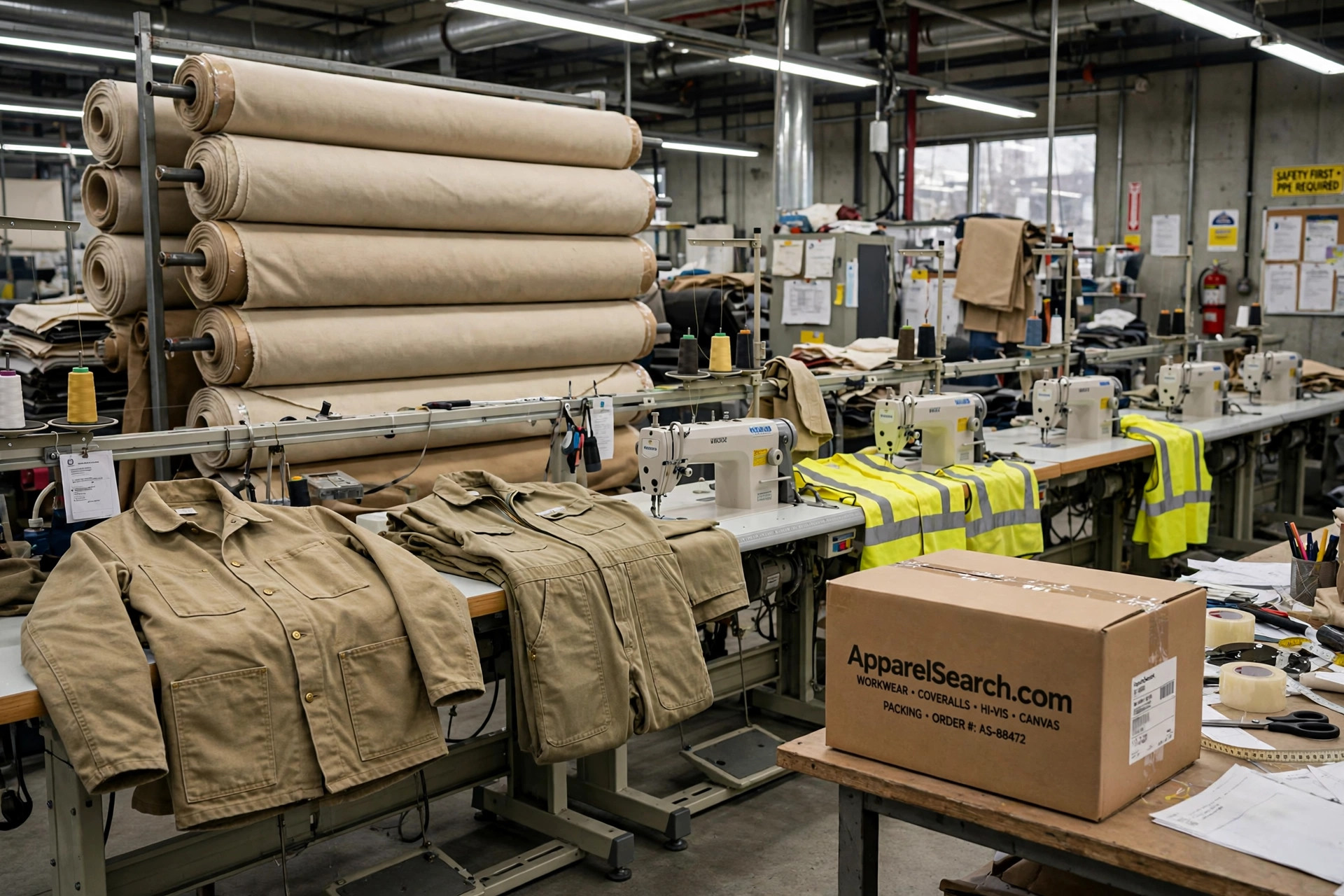
Workwear production is cut-and-sew with the dials turned toward durability. Fabrics are specified by weight, the grams per square meter figures in the listing below run from 150 to 340 gsm, and by finish: reactive or vat dyeing for colorfastness, fire-retardant treatments, stain release and water repellency. Seams are felled or double-stitched, knees and elbows are reinforced, metal hardware is covered or plastic where sparks or scratching matter, and high-visibility garments are built to standard with certified reflective tape placement. Factories in this category typically run their own dyeing relationships and test labs, because a workwear claim, flame retardancy above all, is a certified property of the finished garment, not a fabric salesman’s promise.
Workwear Manufacturer Listings
Kolossus Workwear
Kolossus Workwear is a specialized clothing brand servicing the uniform and work clothing industry in America for over 20 years. In 2016 Kolossus embarked on its biggest quest to this day, offering durability, affordability and comfort on every garment to workers throughout North America. Kolossus prides itself on the superior craftsmanship of their garments, their ability to provide affordable clothing options to workers in a variety of industries, and on their customer oriented services that stand behind every piece and every client, big and small. Products include coveralls, pants, jeans, high visibility clothing, medical uniforms and shirts.
Multi Wear Garments
Multi Wear is an enterprise devoted to designing, manufacturing and exporting workwear garments internationally, working since 1955 in Pakistan. Their products are coveralls, trousers, bib trousers, cargo trousers, nursing suits, doctor’s coats, aprons and jackets, produced in different weights: 150 gsm, 180 gsm, 200 gsm, 250 gsm, 280 gsm and 340 gsm, with dyeing in both reactive and vat. They also deal in fire retardant, stain release and sweat-out work wears.
For samples and inquiry contact them at info@mwgarments.com.pk (Skype: multiweargarments).
More Factory Resources
Common Questions
What does gsm mean in a workwear specification?
Gsm is grams per square meter, the fabric weight. Light workwear shirts sit near 150-180 gsm, general work trousers and coveralls at 200-280 gsm, and heavy winter or foundry garments at 340 gsm and above. Weight is a quick proxy for durability and warmth.
What is the difference between workwear and uniforms?
Uniforms identify the wearer with an organization; workwear protects and serves the wearer at a task. Many garments are both, and the factory base overlaps, which is why this guide and the uniform directory cross-reference each other.
Why is flame-retardant workwear certified as a finished garment?
Because the protection depends on the whole system: fabric, thread, closures, reflective tape and construction. A certified fabric sewn with ordinary thread can fail, so standards test and certify complete garments from the production line.