Beekeeping Clothing Factories
Factories and manufacturers making protective suits, jackets, veils and gloves for beekeepers.
Beekeeping clothing is protective workwear with a very specific job: it lets a beekeeper open a hive, inspect frames and harvest honey while staying calm, cool and protected from stings. The factories in this directory manufacture the suits, jackets, veils and gloves that apiaries, honey producers and hobbyist suppliers sell around the world.
Honeybees are social insects that live in colonies. A hive population consists of a single queen, a few hundred drones and thousands of worker bees, and the bees forage for nectar and pollen from flowering plants. A honey bee is a eusocial flying insect within the genus Apis of the bee clade, known for constructing perennial, colonial nests from wax, for the large size of its colonies, and for its surplus production and storage of honey. Because that honey is a prized foraging target for many animals, including honey badgers, bears and human hunter-gatherers, people who work with bees wear purpose-made protective clothing, and that clothing has to be manufactured to a dependable standard.
Beekeeping Clothing Resources
What Beekeeping Clothing Factories Make
The core product range is consistent across the industry. Full beekeeping suits are one-piece or two-piece coverall-style garments with a zippered veil that keeps bees away from the face and neck. Beekeeping jackets pair a veiled top with the wearer’s own work trousers for quick hive inspections. Veils are also sold separately, in round and fencing styles, and beekeeping gloves are usually made from soft goatskin or canvas with long gauntlet cuffs that seal over the suit sleeve. Ventilated three-layer fabric suits are a growing part of the range, because they hold their shape away from the skin while letting air move through on hot days.
Factories typically produce for several markets at once: commercial apiaries buying in volume, beekeeping supply retailers who need their own label sewn in, and agricultural cooperatives. Buyers should expect a factory to offer size runs from small through several extra-large sizes, because protective clothing is worn over ordinary clothes and must fit loosely.
How Beekeeping Suits Are Made
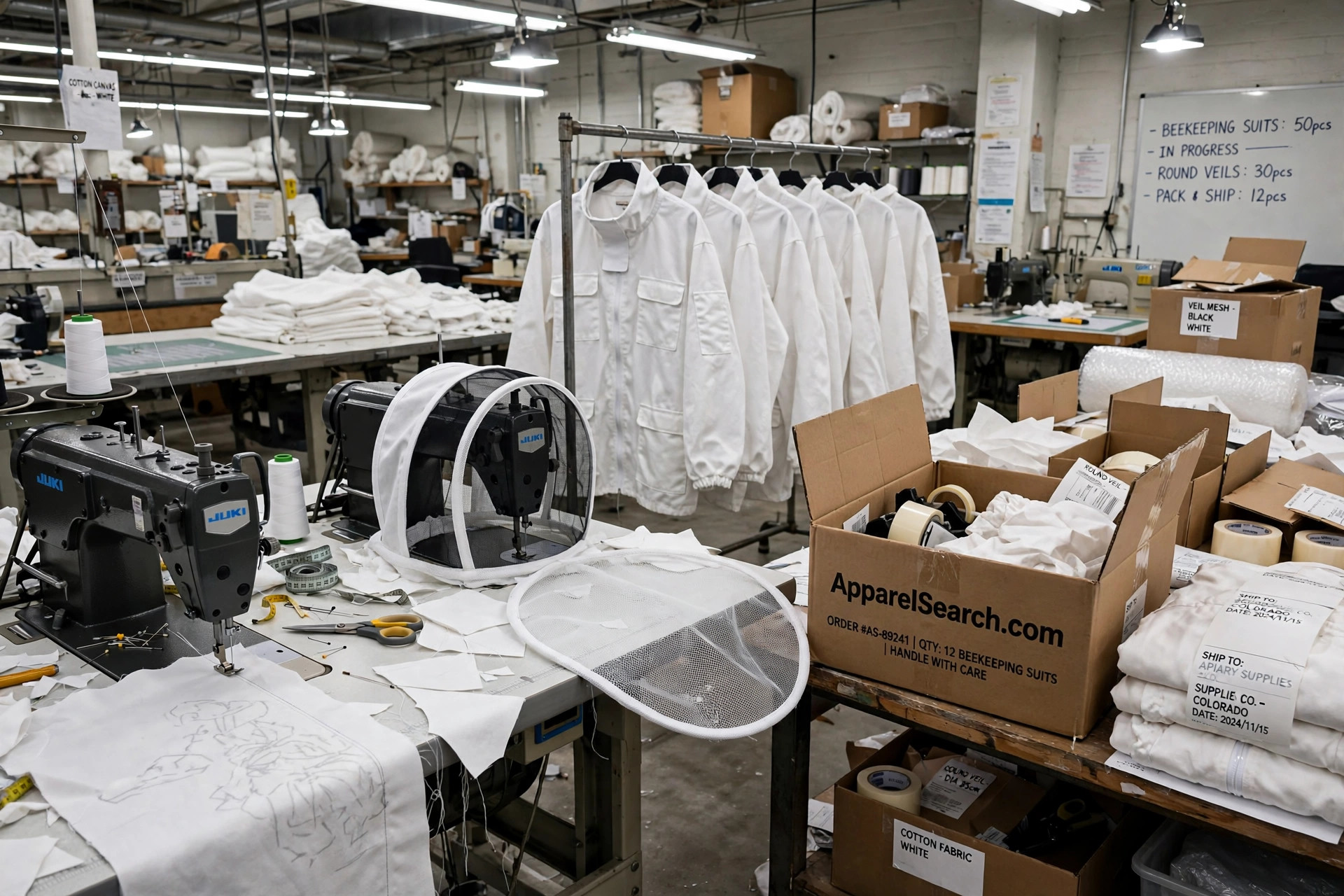
Production starts with fabric selection. Smooth, light-colored cotton and cotton-polyester blends are traditional, because bees react less to pale colors and a tight, smooth weave is harder for a sting to penetrate. Ventilated suits use a sandwich of mesh layers instead. Patterns are cut with generous ease, seams are sewn flat and strong, and every opening gets a closure bees cannot work through: heavy zippers with overlapping flaps at the front and ankles, elastic at wrists and ankles, and a veil zipper that closes the hood completely against the suit.
Quality control on this product is unusually literal. Inspectors check zipper runs end to end, hold veils up to the light for holes in the mesh, and test glove gauntlets for gaps at the seam where cuff meets sleeve. A single small opening can let a bee inside the suit, so factories that specialize in this niche treat closure integrity as the defining quality measure, ahead of appearance.
Choosing a Beekeeping Clothing Manufacturer
Ask a prospective factory which veil styles it produces, whether its zippers are metal or plastic, and what minimum order quantities apply to private-label work. Commercial buyers should also ask about replacement veils and gloves, since those wear parts are reordered far more often than suits. If you sell into hotter climates, ventilated fabric options and light colors matter; for northern apiaries, heavier cotton twill suits are often preferred. The listings below are manufacturers and suppliers of beekeeping clothing; contact them directly for catalogs, sizing and wholesale terms.
Beekeeping Clothing Factory Listings
Manufacturers and suppliers of beekeeping suits, jackets, veils and gloves.
Dadant
Protective clothing for the beekeeper. They have everything from full protective suits with hat, veil and coveralls to coveralls only. Their protective jackets with hat and veils provide the beekeeper protection when doing a quick inspection of the beehive, and their full length protective beekeeper suits keep you protected from head to toe. They are a family owned business and currently have the sixth generation involved in the business. From humble beginnings on the family farm, their company has expanded to 10 branch locations nationwide and 4 manufacturing facilities located near Hamilton, IL. They serve United States beekeepers, as well as many overseas customers. Since 1863, the Dadant family has strived to provide quality beekeeping products and make quality products from beeswax, a natural and renewable resource.
OZ ARMOUR
Manufacturers of beekeeping suits and jackets, dedicated to giving buyers quality and affordable beekeeping suits made from handpicked cotton of the kind used by high-ranking clothing brands. Their mission is to provide the best quality suits for all beekeepers that can stand the test of time, backed by customer service and a commitment to quality at an affordable price.
Common Questions
What should a beekeeping suit be made from?
Smooth, tightly woven cotton or cotton-polyester fabric in a light color is the traditional choice, because it resists stings and keeps bees calm. Ventilated suits use layers of mesh that hold the fabric away from the skin while letting air circulate, which suits hot climates.
What is the difference between a beekeeping suit and a beekeeping jacket?
A full suit covers the whole body, usually as a coverall with an attached zippered veil, for complete protection during long hive work. A jacket covers the torso, head and arms and is worn with separate trousers, which makes it faster to put on for a quick inspection.
What should a buyer check when sourcing beekeeping clothing from a factory?
Check the closures first: zippers, elastic cuffs and the veil seal are what keep bees out. Then confirm the size range, the veil styles offered, glove gauntlet length, minimum order quantities and whether the factory can sew in a private label.