Women's Petite Separates Guide
Petite separates are individual tops and bottoms designed to mix, match and even be bought in different sizes — each piece graded for a 5'4"-and-under frame so combinations work without a tailor.
Shop Women's Petite Separates Now
Shop Women's Petite Separates on Amazon Shop Women's Petite Separates on eBayThe Amazon and eBay links on this page are affiliate links. If you make a purchase through them, Apparel Search may earn a commission.
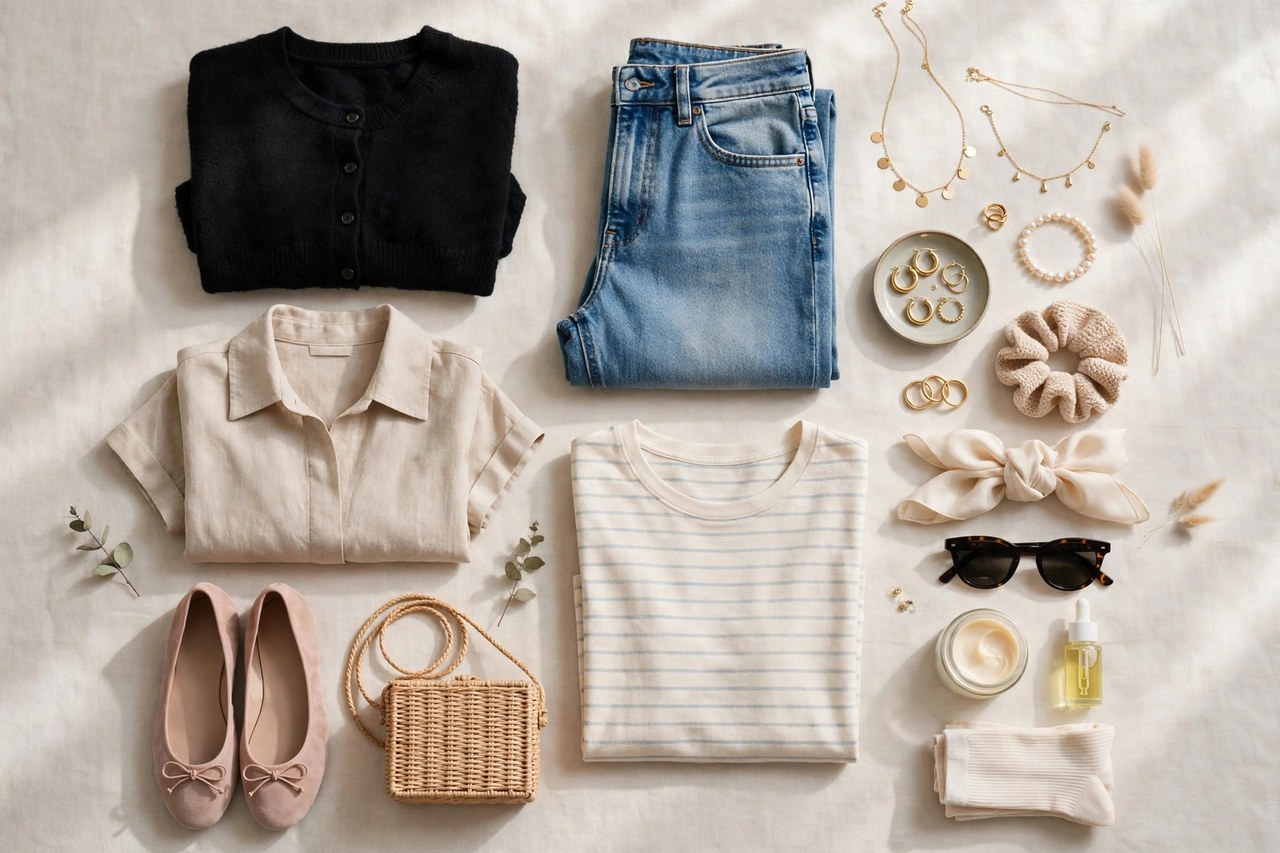
Separates are garments sold and worn as individual pieces — tops, blouses, pants, skirts — rather than as a fixed dress or matched suit, and their great advantage is fit freedom: the top and bottom can be different sizes, as most bodies require. Petite separates extend that freedom to proportion, grading each piece for a woman 5'4" and under, so a petite blouse has the right torso and sleeve length and a petite pant the right rise and inseam, and any combination of the two meets at the right waist.
The category is the working core of most wardrobes, and it rewards system thinking: a small set of petite separates in a shared palette produces more outfits than a closet of unrelated pieces. This guide covers how petite separates differ from regular ones, how coordinate lines are built to combine, the size-top-and-bottom strategy, and how to build and maintain a separates wardrobe that assembles itself.
How Petite Separates Are Graded
A petite top is not a smaller regular top. Its torso is shorter, so hems end at the high hip and waist shaping sits at the waist; its sleeves are shorter and its shoulders narrower, so long sleeves reach the wrist and set-in sleeves sit on the shoulder; its neckline is raised and its pockets, buttons and prints are scaled. A petite bottom carries the familiar corrections: inseams of 25 to 29 inches, a shortened rise, raised back pockets on pants and jeans, and skirt lengths that make a knee skirt knee-length and a midi a midi.
Those corrections are what make mixing possible. In regular separates, a petite woman often compensates — tucking an over-long top, cuffing a pant — and each compensation constrains the combinations. In true petite separates, the meeting points all agree: a blouse tucks into a pant without bulk because both were cut for the same torso, and an untucked knit top ends at the proportion a skirt's waistband expects. The result is that separates stop being a compromise category and become the most precise-fitting way to dress.
Coordinate Lines and How to Use Them
Many petite ranges are designed as coordinate lines: a season's blouses, knits, pants, skirts and jackets share fabrics, colors and print scales so that nearly everything combines. The tell is a tight palette — two or three neutrals plus one or two accent colors — repeated across piece types, with the same print appearing on a blouse and as a lining or trim elsewhere. Buying within one line is the fastest route to a wardrobe where the morning question answers itself.
Use coordinates deliberately: anchor with bottoms in the neutrals, in correct petite lengths, then add tops across the palette, then one jacket or cardigan layer cut to petite body length that completes several pairings. Check that the line's pieces genuinely share dye lots when matching exactly matters, as with a suiting-look pant and jacket bought as separates. And note the separates advantage inside coordinates: if you are a different size on top and bottom — the common case — the coordinated look stays available to you in both sizes, which a matched set cannot offer.
Sizing Strategy: Different Top, Different Bottom
Buy each piece by its own measurements. For tops, the bust and the torso length decide; if a petite top pulls at the bust but its length is right, size the top up — the grading keeps lengths close across adjacent petite sizes. For bottoms, fit the hip and thigh and let the waist be the adjustable measurement, since waist alterations on petite pants and skirts are routine, while a too-small hip cannot be let out. Keep a note of your size in each brand's petite line, since petite grading varies more between brands than regular sizing does.
Build combinations around your most common proportion challenge. If your tops and bottoms differ by two sizes, separates are your category and dresses your alteration budget. If your challenge is a short waist, choose petite tops that end at the high hip and high-rise petite bottoms, and let the two meet without tucking bulk. Try pieces in the store as combinations, not singles: a separate is only a success if it pairs with at least two things you own or are buying, in the mirror, at the correct lengths.
Building and Maintaining a Separates Wardrobe
A functional petite separates core: two pants and one skirt in neutrals, one petite jean, four to six tops spanning sleeve lengths, one sweater layer and one jacket, all in a shared palette and all at correct lengths. From those pieces come weeks of distinct outfits, which is the economic argument for paying petite prices for the proportion-critical items. Add seasonal pieces at the edges — a printed blouse, a colored knit — rather than at the foundation, and replace worn basics like-for-like while the line still stocks them.
Care for separates as a system: wash coordinates that must match with the same method so they fade together, and retire a faded black pant before it stops matching its jacket rather than after. Store a list of your inseams, rises and brand sizes with your shopping notes. Done well, petite separates deliver the closest thing to custom fit available off the rack — each half of the outfit sized and proportioned independently, combining freely, with nothing rolled, pinned or wished shorter.
Related Women's Guides
More to Explore on Apparel Search
Looking for Women's Clothing Stores?
This guide helps you choose women's petite separates. To browse where to buy, visit our women's clothing store directory, where you can find retailers that carry them.