Women's Apparel Guide
What 'apparel' really covers — the categories, terms and shopping know-how behind every women's wardrobe.
Shop Women's Apparel Now
Shop Women's Apparel on eBay Shop Women's Apparel on AmazonThe eBay and Amazon links on this page are affiliate links. If you make a purchase through them, Apparel Search may earn a commission.
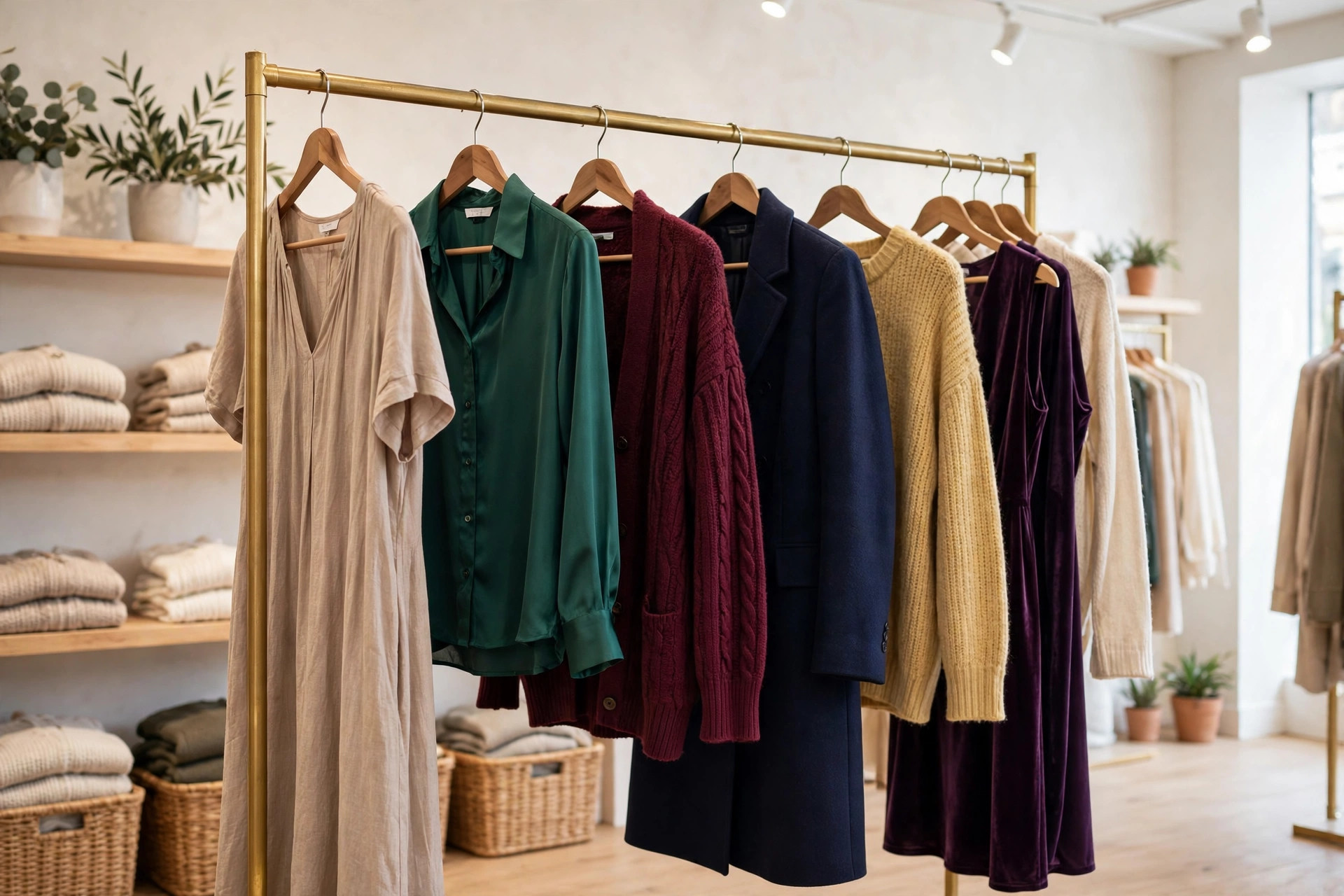
Apparel is the industry's umbrella word for everything worn: every dress, jean, coat, and sock in your closet is apparel. But the term earns its keep when you are shopping, because understanding how apparel is categorized — by garment type, by occasion, by fabric, by price tier — turns an overwhelming store or website into a map you can navigate. This guide is the orientation: the main categories of women's apparel, the vocabulary labels and retailers use, and the practical knowledge that helps you buy better across all of it.
The Main Apparel Categories
Women's apparel divides into families. Tops cover blouses, shirts, sweaters, tees, and camisoles. Bottoms include jeans, trousers, skirts, shorts, and leggings. Dresses stand alone as one-piece outfits from shifts to gowns. Outerwear — coats, jackets, anoraks, blazers — finishes and protects. Intimates and sleepwear form the foundation layer, while activewear and swimwear serve movement and water. Accessories complete the system. Retailers organize stores and size charts around these families, so knowing which family a garment belongs to tells you how it will be sized, what it will be merchandised beside, and which other guides on this site go deeper.
Speaking the Language: Apparel Terms
A few terms unlock the whole industry. A silhouette is a garment's overall shape; a line or collection is a designer's coordinated group for a season. Ready-to-wear means clothing made in standard sizes, as opposed to couture and made-to-measure. Missy, petite, tall, and plus are fit categories that change proportions, not just size numbers. Price tiers run from budget and fast fashion through bridge and contemporary to designer and luxury — the tier predicts fabric quality, construction time, and how long a piece is meant to last. Even the word garment is simply the trade term for any single item of clothing.
Sizing & Fabric Literacy
Two skills protect every apparel purchase. First, know your measurements — bust, waist, hips, and inseam in inches — because labeled sizes vary between brands and even between lines of the same brand; the size chart, not the tag, is the truth. Second, read the fiber content label: natural fibers like cotton, wool, and linen breathe and age gracefully; synthetics like polyester and nylon add durability, stretch, and easy care; blends aim for both. The care symbols on that same label predict the garment's real cost over its life — a dry-clean-only blouse and a machine-washable one are different commitments, not just different prices.
Shopping Apparel Smartly
Build around your actual life: most stylists suggest your wardrobe should be roughly 70 percent versatile basics in your best neutrals and 30 percent pieces with personality. Cost-per-wear beats sticker price — a coat worn 100 times is cheaper at $200 than a trendy top worn twice at $40. Shop with a list built from gaps in your closet, try garments sitting and walking rather than only standing at a mirror, and favor retailers with fair return policies when you are between sizes. The guides throughout this directory take each category deeper; this page is your map to all of them.
A Note on Wardrobe Planning
Knowing the categories is only useful if it changes how you shop, so here is the practical payoff. Once or twice a year, lay your apparel out by family — tops, bottoms, dresses, outerwear, foundations — and count. Most women discover the same shape: plenty of tops, a shortage of bottoms that fit beautifully, outerwear doing heroic overtime, and a category bought on impulse that barely gets worn. Shop the gaps, not the displays. Replace the hardest-working pieces at the highest quality you can manage, because they are worn the most, and let trends enter through the smallest, cheapest categories first: a top or an accessory, never a coat. That single habit — category-aware buying — is what turns a closet of clothes into a wardrobe of apparel that works.
Related Women's Guides
Photos

Looking for Women's Clothing Stores?
This guide helps you choose women's apparel across every category. To browse where to buy, visit our women's clothing store directory, where you can find retailers that carry them.