Women's Petite Fashion Guide
Petite fashion is the whole art of dressing a shorter frame well — proportion first, then silhouette, color and detail, so trends are translated into scale instead of worn straight off a taller runway.
Shop Women's Petite Fashion Now
Shop Women's Petite Fashion on Amazon Shop Women's Petite Fashion on eBayThe Amazon and eBay links on this page are affiliate links. If you make a purchase through them, Apparel Search may earn a commission.
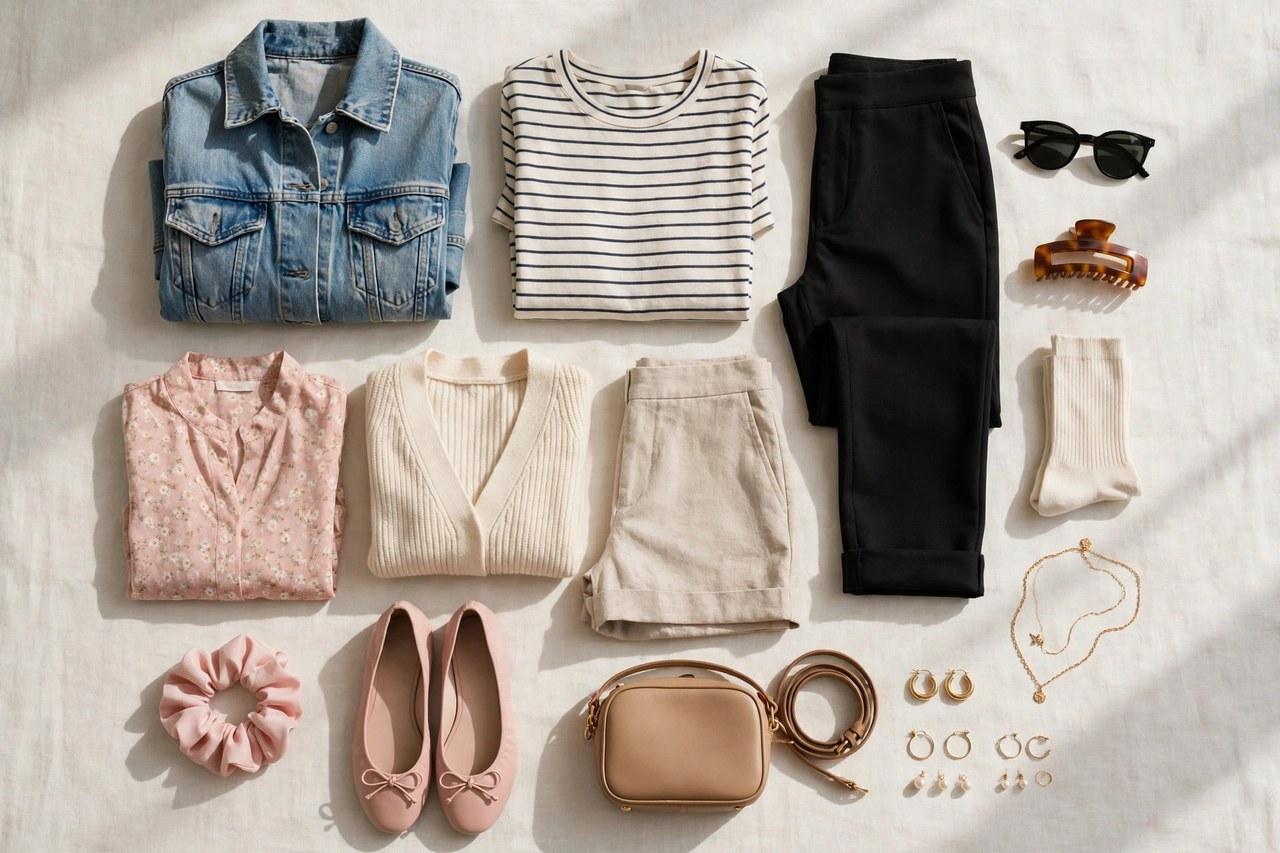
Petite fashion begins with a definition that surprises many people: petite is about height and proportion, not weight or dress size. Petite clothing is cut for women 5'4" and under, of every size, with shorter torsos, rises, sleeves and hems, narrower shoulders and details scaled down throughout. Petite fashion as a style discipline is the next step: learning how silhouette, color, print and proportion interact on a shorter frame, so that any trend — wide legs, long coats, oversized knits — can be translated into a version that flatters instead of one that overwhelms.
This is the umbrella style guide for the whole petite section, sitting above the individual garment guides. Where the fall fashion guide works through one season, this guide sets the permanent rules: the proportion principles that govern every petite outfit, how to read a trend for its petite potential, how print and color scale actually work, and how to build and shop a wardrobe in which alterations become the exception. Master these and every specific category, from coats to gowns, becomes easier to judge at a glance.
The Proportion Rules That Govern Petite Style
The first rule is to protect the waist point. On a shorter frame, where a top ends and a bottom begins is the main lever of apparent height: high, clearly placed waists, tops that end at the high hip or tuck cleanly, and dresses whose waist seams sit at the natural waist all lengthen the leg line, while dropped waists and long untucked layers shorten it. The second rule is one volume at a time: a wide leg with a close top, a full skirt with a fitted bodice, an oversized coat over slim layers — volume everywhere at once is what swamps petite frames, not volume itself.
The third rule is continuity of line. A single color or tonal column from shoulder to hem, shoes matched to trousers or tights, and hems that meet footwear cleanly all let the eye travel uninterrupted, which reads as height. The fourth rule is scale in detail: smaller prints, narrower belts and lapels, bags and jewellery sized to the frame rather than to the trend photograph. None of these rules bans any garment; petite women can and do wear maxi dresses, wide trousers and long coats brilliantly — by choosing the petite-cut version, placing its landmarks correctly, and balancing it against the other rules.
Translating Trends to a Shorter Frame
Every season's trends arrive photographed on women near six feet tall, and the petite skill is extraction, not imitation. Take the trend's idea — its color, fabric, silhouette or detail — and find its petite expression. The oversized blazer trend becomes a petite blazer with a strong but correctly placed shoulder and a body that ends at the hip, not the thigh. The long duster coat becomes a petite knee-length coat. The giant tote becomes a structured medium bag. In each case the fashion message survives intact; only the dimensions change, and dimensions were never the point of the trend.
Some trends are naturally petite-friendly and worth leaning into: cropped jackets, high rises, mini and knee lengths, wrap silhouettes, monochrome dressing, pointed shoes and vertical details all work with petite proportions by design. Others need care rather than avoidance: very low rises shorten legs in any cutting, huge prints need their petite-scaled versions, and floor-sweeping wide trousers demand a true petite inseam and a heel or a deliberately cropped cut. Read trend coverage for ideas, then shop the petite ranges for execution — that division of labor is the whole method.
Color, Print and Fabric at Petite Scale
Color affects petite dressing mainly through contrast placement. A hard horizontal break of color at mid-thigh — a long contrasting top over different trousers — cuts the figure at its least helpful point, while breaks at the natural waist or a fully tonal outfit keep the line long. This does not mean a life in one color: it means placing contrasts deliberately, matching shoes to the bottom half to extend the leg, and using bright color near the face where it draws the eye upward. Darker, receding tones below and interest above is the classic petite distribution, and it works.
Print scale is the most mechanical of the rules. A print's repeat should be proportionate to the body wearing it: as a working test, the main motif of a petite print should be smaller than your own palm, and all-over patterns should let several full repeats show across a bodice. Wide stripes, giant checks and huge florals are not forbidden, but they belong on one piece, balanced by plain companions, and ideally in their petite-range versions where the repeat has been redrawn. Fabrics cooperate or resist: fluid, medium-weight cloth drapes in scale, while very stiff or very bulky fabrics add visual inches a petite frame spends carefully.
Building and Shopping the Petite Wardrobe
A petite wardrobe works hardest when its core is bought in true petite cutting: trousers and jeans for the rise, blazers and coats for the shoulder, dresses for the bodice, skirts for the waist-to-hem placement. Around that core, forgiving categories — knits, tees, scarves, many accessories — can come from any range, checking only sleeve and body length. Shop with your measurements recorded: height, inseam, sleeve, back length and the garment lengths of pieces that fit you best, and compare stated garment measurements online rather than trusting size labels, which vary between brands more than bodies do.
Tailoring is the finishing tool, not the foundation. Budget simple alterations — hems, sleeve shortening, waist nips — into purchases and have them done promptly, since a petite wardrobe lives or dies on small lengths. Keep a honest list of what actually gets worn and buy to fill its gaps at the best quality the budget allows; petite ranges are smaller and sell through faster, so core pieces in your size deserve earlier decisions than regular shoppers face. The reward for this discipline is outsized: a wardrobe where everything already fits, combines and respects your proportions, every ordinary morning.
Related Women's Guides
More to Explore on Apparel Search
Looking for Women's Clothing Stores?
This guide helps you choose women's petite fashion. To browse where to buy, visit our women's clothing store directory, where you can find retailers that carry them.