Women's Petite Spring Fashion Guide
Petite spring fashion is a seasonal wardrobe built in proportion — lighter layers, cropped jackets, midi lengths and prints all scaled for a frame that is 5'4" and under.
Shop Women's Petite Spring Fashion Now
Shop Women's Petite Spring Fashion on Amazon Shop Women's Petite Spring Fashion on eBayThe Amazon and eBay links on this page are affiliate links. If you make a purchase through them, Apparel Search may earn a commission.
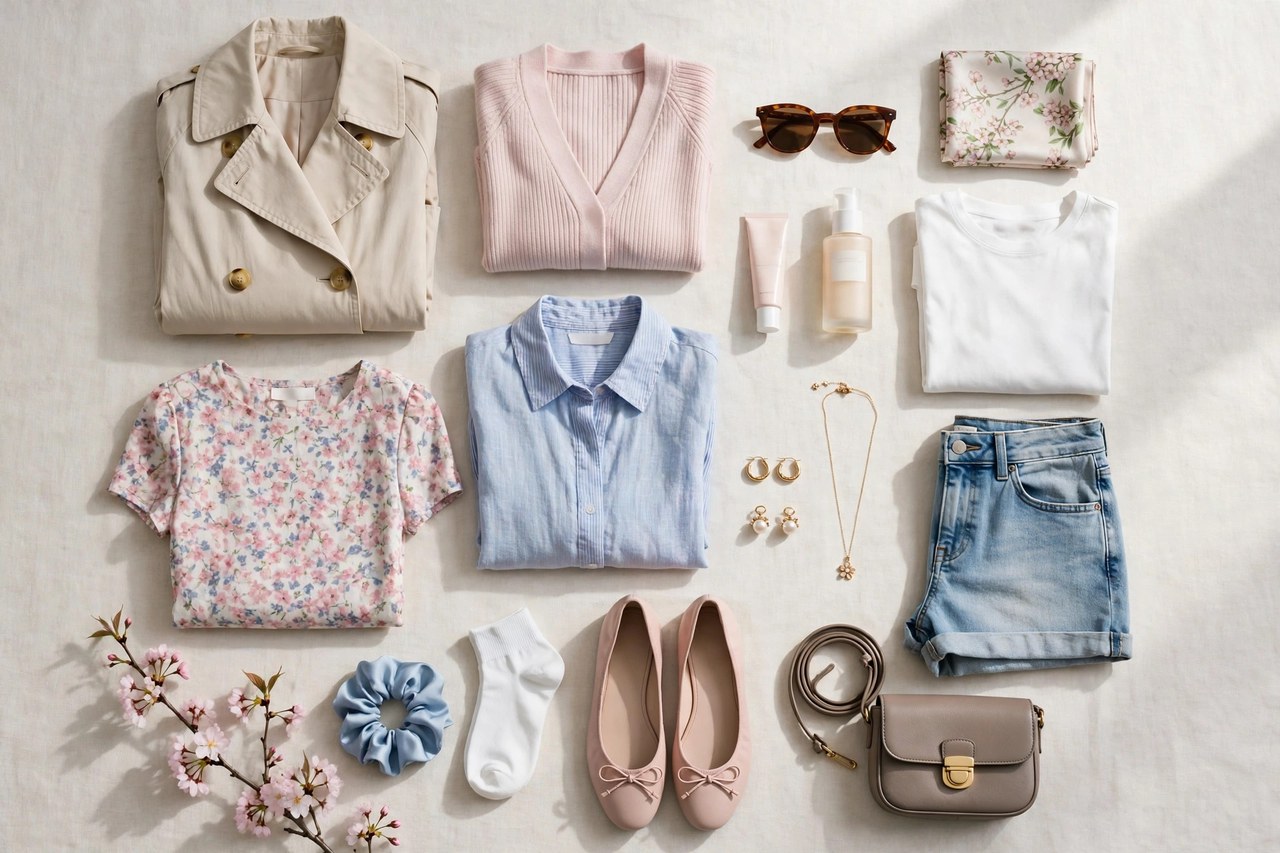
Spring fashion is transitional dressing: lighter than winter, layered against changeable weather, and built around fresh color, floral and stripe prints, and fabrics like cotton, linen blends and light knits. For petite women, spring is also the season where proportion errors show most. A regular trench coat swamps a short frame to the calf, a standard midi dress lands at the ankle, and the season's wide, floaty layers add volume a 5'4"-and-under figure carries less easily than height does. Petite spring ranges scale every one of those pieces.
This guide is a seasonal wardrobe plan rather than a single garment guide. It works through the petite spring layers that matter — jackets and light coats cut shorter, dresses and skirts at true petite lengths, light knitwear with sleeves at the wrist — then covers spring colors and prints at petite scale, and how to move a petite wardrobe from winter weight to spring weight without replacing everything. Links to the individual garment guides sit at the foot of the page for depth on each piece.
Petite Spring Layers: Trench Coats, Jackets and Light Knits
The petite trench coat is the season's signature layer: cut shorter in the body so it ends at mid-thigh to knee rather than mid-calf, with sleeves at the wrist, a belt that ties at the natural waist and scaled storm flaps and epaulettes. That belt placement is the whole point — it defines the waist on a short torso instead of cutting the figure at the hip.
Light knitwear — fine cardigans, crew and V-neck sweaters in cotton, linen blends and light merino — replaces winter chunky knits. Petite cardigans end at the hip bone with buttons spaced for a shorter torso, and sleeves that can be pushed to the forearm without yards of excess. Blazers in spring fabrics follow petite tailoring rules: narrower shoulders, a shorter body ending at mid-hip, and sleeves showing a sliver of wrist. One trench, one short jacket and two light knits, all in petite cuts, layer over the entire spring wardrobe.
Spring Dresses, Skirts and Trousers at Petite Lengths
Spring dresses in petite ranges keep the season's shapes — shirt dresses, wrap dresses, fit-and-flare and fluid midis — at honest lengths. A petite midi ends at mid-calf, a petite knee dress at the knee, and shirt dress belts and button plackets sit at the petite waist. Floral prints are redrawn smaller, so a spring dress reads as a pattern rather than a single giant bloom across a short torso. Sleeveless and short-sleeve styles have narrower shoulders and higher armholes, which stops the gaping that regular cuts show on petite frames.
For separates, petite cropped and ankle trousers are spring's workhorse: a true petite ankle pant ends at the ankle bone, not bunched above the shoe, and pairs with loafers and low trainers. Petite skirts in A-line, pleated and wrap styles suit the season at knee and midi lengths; see the petite skirts guide for length measurements. White and pastel petite jeans with a shorter inseam and rise freshen winter denim.
Spring Colors, Prints and Fabrics at Petite Scale
Spring palettes run to white, cream, pastel blue and pink, sage, butter yellow, navy and fresh stripes, with floral prints as the seasonal signature. On a petite frame the application matters: a tonal or monochrome outfit — one color family head to toe — creates the longest line, and spring's soft colors do this easily. Use brighter color and print in one piece at a time, at petite scale: a small ditsy floral, a narrow Breton stripe, a fine gingham check.
Fabrics define spring dressing as much as color. Cotton poplin and lawn, linen and linen blends, chambray, lightweight denim, crepe and fine knits breathe as temperatures rise and layer without bulk — bulk being the enemy of petite proportion. Avoid stacking several heavy layers; two light layers in petite lengths look sharper and feel better than one thick one. Rain is a spring constant, so one water-resistant petite layer, the trench or a short rain jacket with sleeves at the right length, earns its place over any number of fair-weather pieces.
Building the Petite Spring Wardrobe and Care
Transition in stages. Start by swapping winter boots for loafers, trainers and ballet flats, heavy coats for the petite trench, and chunky knits for light ones, while keeping winter trousers and skirts in rotation. Add spring pieces where they multiply outfits: a floral petite midi dress that takes both the trench and the denim jacket, white ankle jeans, a striped knit that works with every bottom. Because petite spring stock is produced in smaller runs, shop the season early — by the time the weather turns, petite sizes in popular colors are often gone.
Spring care is mostly storage care. Wash and fully dry winter knits and coats before storing them, clean and condition leather shoes, and store boots shaped. Launder spring cottons and linens cool, reshape knits while damp, and press shirt dresses and trench coats so they are ready for the first warm week rather than discovered creased during it. A petite spring wardrobe does not need to be large: eight to ten correctly proportioned pieces that all layer together will dress a petite woman better than a rail of regular-length bargains ever will.
Related Women's Guides
Looking for Women's Clothing Stores?
This guide helps you choose women's petite spring fashion. To browse where to buy, visit our women's clothing store directory, where you can find retailers that carry them.