Apparel Search Consumer Guides
Tall Women's Fashion Guide
Length is a specification — inseams, rises, torso and sleeve, fitted by the numbers.
If you are 5'9" or taller, you already know the arithmetic of the standard size chart: sleeves that end above the wrist, trousers that stop above the ankle whether you wanted cropped or not, dresses whose waistline sits somewhere around your ribs. None of that is a fit failure on your part. It is a specification difference. Clothing is patterned to a set of standard lengths, and tall sizing exists to change exactly those lengths — the inseam, the rise, the torso, the sleeve — while keeping the size itself the same. A tall 12 is not a bigger 12; it is a longer one.
This guide gathers the Apparel Search pages written for tall women into one place: jeans and trousers with genuine inseams, dresses whose waists and hems land where the designer intended, coats with sleeves that reach your hands, and a reference page that decodes what "tall" on a label actually promises. The garment-by-garment detail lives in our women's clothes guide; the pages below cover how length changes the choosing.

Search Apparel Search
The Guides in This Section
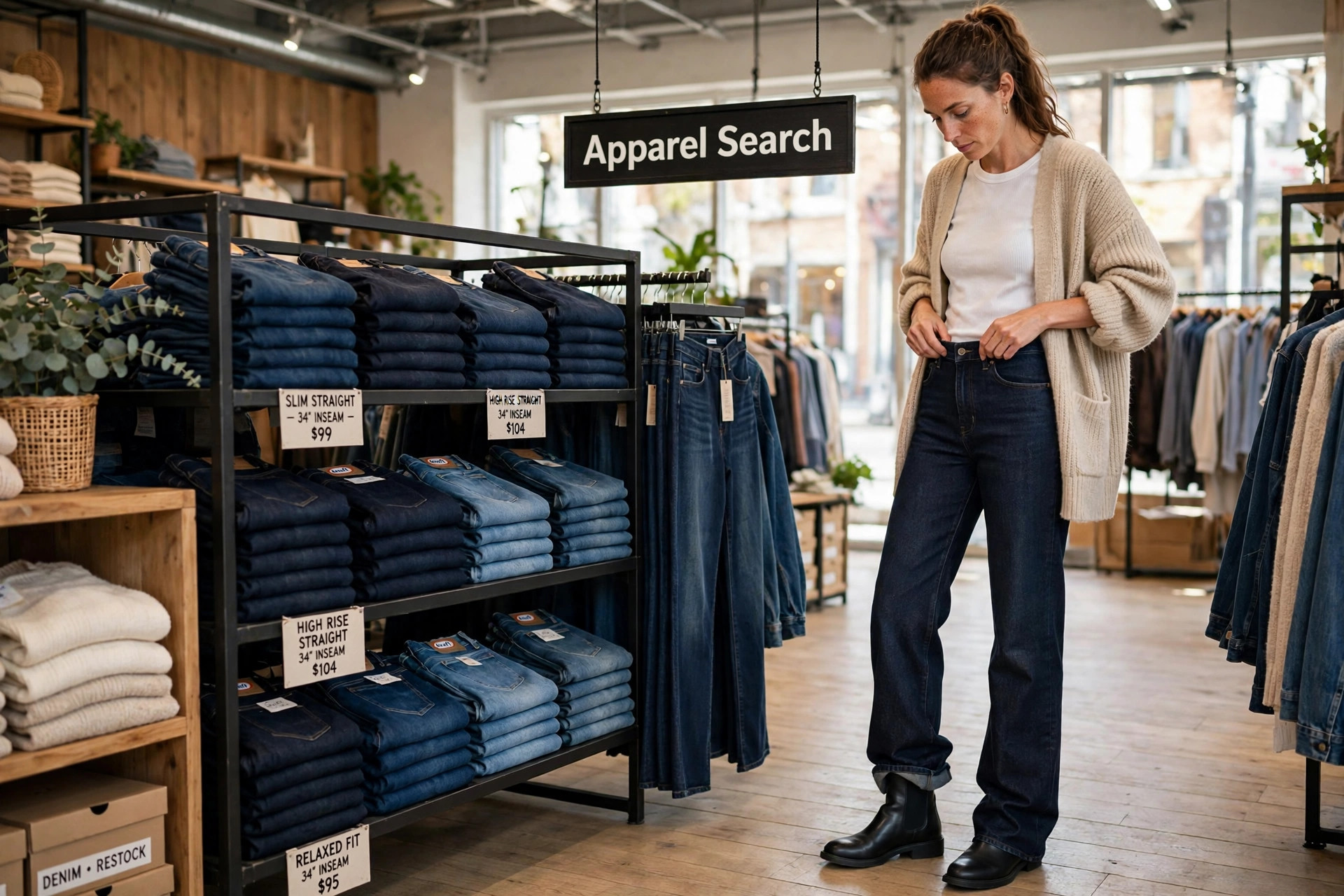 Tall Women's Jeans & PantsInseams of 32 inches and beyond, rises that grow with them, and where the knee break should land — the bottom-half mathematics of tall dressing.
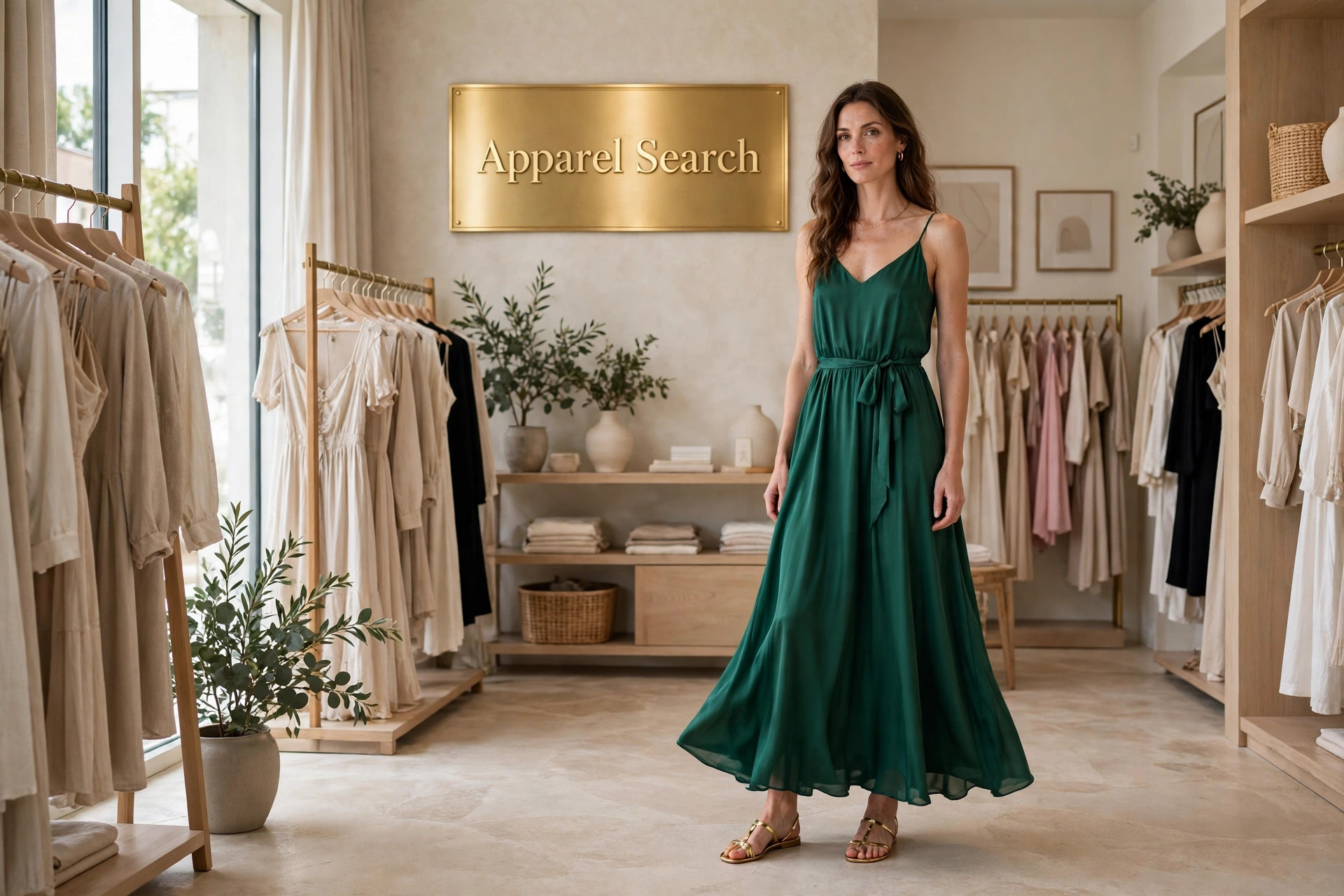 Dresses for Tall WomenWaist placement on a long torso, hem lengths read in inches rather than names, and maxis that are actually maxi.
 Tall Women's Coats & OuterwearSleeve length, body length and closure placement — the five checks to make before any coat earns its place.
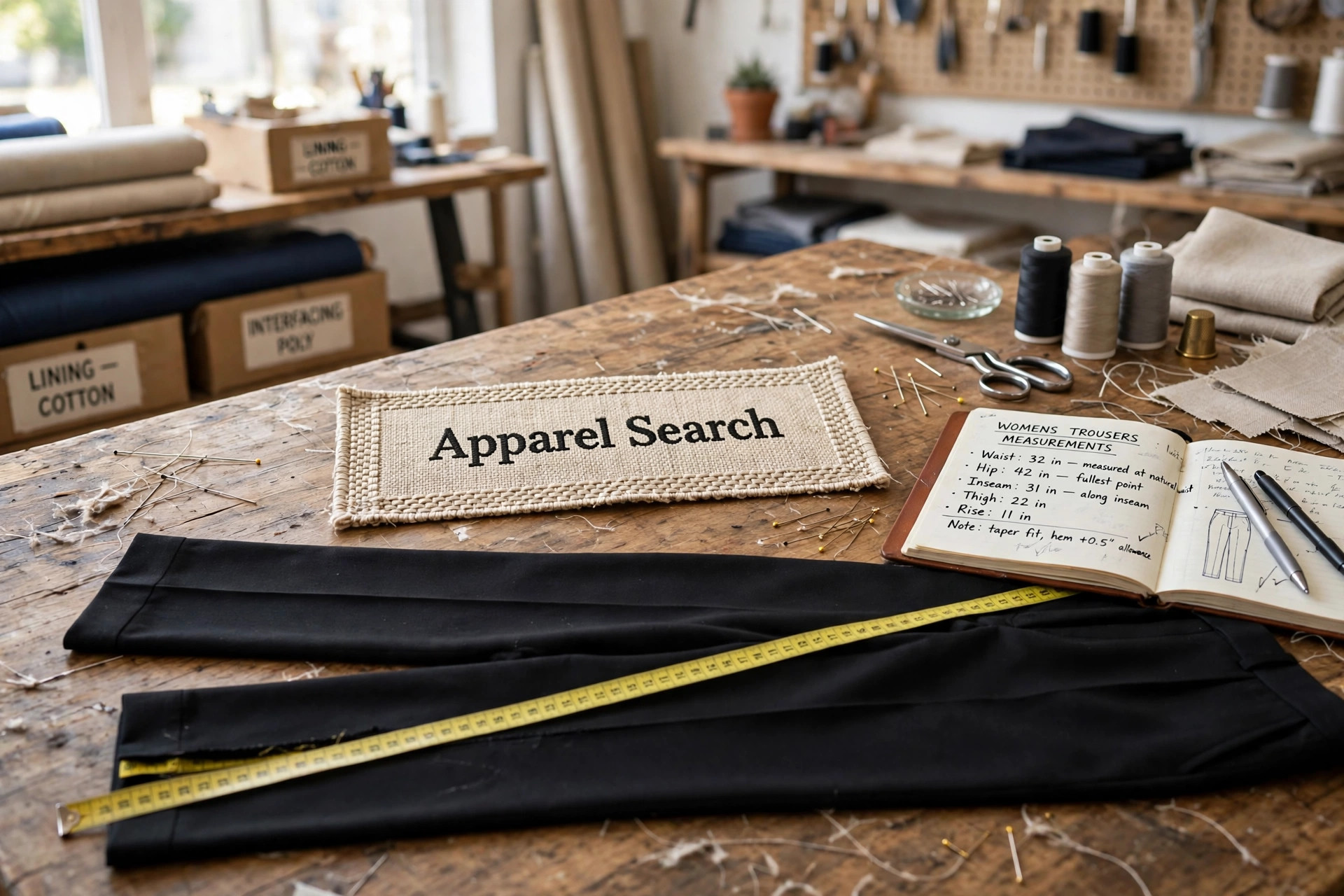 Tall Sizing ExplainedWhat tall sizing means, how much it varies by brand, how to measure your own inseam, and how to convert between standard, long and tall labels.
The Four Length Points
Every fit surprise a tall woman meets traces back to one of four measurements. Learn to check these four and you can predict how almost any garment will behave before it reaches a fitting room.
- Inseam and rise. The inseam is the inner-leg seam, crotch to hem; standard women's trousers run about 30–32 inches, tall runs 34–36 and beyond. The rise — waistband to crotch — has to grow with it, or the waistband sits low and the seat pulls. Bottoms are where tall sizing matters most and where it is most honestly labeled.
- Torso length and waist placement. A longer torso moves every horizontal feature down: dress waists, jacket waist seams, coat belts, the narrowest point of a fitted top. When a dress's waist lands at your ribs, the pattern's torso was simply shorter than yours — the single most common tall fit issue in dresses and one-piece garments.
- Sleeve length. Standard sleeves are cut to a standard arm. On a tall frame they finish one to two inches above the wrist, which reads as outgrown rather than styled. Tall ranges add that length at the cuff — and it is the first thing to check on coats, blazers and shirts.
- Hem and knee placement. Skirt, dress and coat hems land higher on a longer leg, and shaped details — the knee crease on trousers, the knee seam on boots, the slit on a skirt — land above the joint they were placed for. A "midi" designed at mid-calf can arrive at your knee; a "maxi" can retire at your ankle.
Standard, Tall, or Lengthened Regular?
Three different products hide behind similar labels. True tall ranges are re-proportioned: inseam, rise, torso and sleeve all lengthened together, and they are the reliable answer for trousers, dresses and coats. "Long" versions of a standard garment usually add length at the hem only — an extra two inches of inseam, say — which is genuinely useful for jeans and trousers but does nothing for a dress's waist placement. Standard sizes remain the right buy for plenty of categories: knitwear with generous cuts, tops worn untucked, anything whose design has no fixed waist or hem position to miss.
How to tell which you need: if standard trousers in your size finish above the ankle bone and standard sleeves above the wrist, you are a tall-range shopper for structured garments. If standard lengths mostly reach but run short, "long" versions may cover your needs. Measure once — inseam, arm, and back waist length — and shop by those numbers rather than by hope; our tall sizing explained page walks through each measurement.
At the other end of the height range sits the mirror-image problem — proportions that standard patterns make too long rather than too short — covered in our little people & short stature clothing guide.Sibling Fit Guides & Garment Guides
Common Questions
What height counts as tall for women's clothing?
Most tall ranges are designed for women around 5'9" (175 cm) and above, though brands set the line anywhere from 5'8" to 5'11". Height alone is not the whole test: what matters is where your length is. A woman of 5'8" with a long inseam may need tall trousers, while a taller woman with a long torso and shorter legs may need tall dresses but standard pants.
What is the difference between tall and long sizes?
A true tall size is re-proportioned — inseam, rise, torso length and sleeve length all grow together. A 'long' version of a standard garment typically adds length at the hem or cuff only, commonly about two inches of inseam. Long works well for jeans and trousers; for dresses and coats, where waist and sleeve placement matter, a genuine tall range is the safer specification.
Can I just size up to get more length?
Sizing up adds width everywhere and length almost nowhere — typically a fraction of an inch. The result is a garment that is roomy rather than long: shoulders drop, waists sag, and the hem still stops short. Length problems are solved by length specifications (tall, long, extra-long inseams), not by bigger sizes.
Which garments matter most in tall sizing?
Trousers and jeans first, because inseam and rise are printed specifications you can verify. Dresses second, because waist placement on a long torso cannot be altered cheaply. Coats and blazers third, for sleeve length. Knitwear, untucked tops and relaxed fits are the most forgiving categories in standard sizing.
Start With the Numbers
Every recommendation in this section reduces to a handful of measurements. Our tall sizing explained page covers what tall labels promise, how brands differ, and exactly how to take the measurements that make online size charts useful instead of decorative.