Women's Petite Clothing Guide
Petite is a proportion, not a size: clothing cut for women 5'4" and under, with shorter rises, inseams, sleeves and torsos — scaled in length everywhere a standard cut is not.
Shop Women's Petite Clothing Now
Shop Women's Petite Clothing on Amazon Shop Women's Petite Clothing on eBayThe Amazon and eBay links on this page are affiliate links. If you make a purchase through them, Apparel Search may earn a commission.
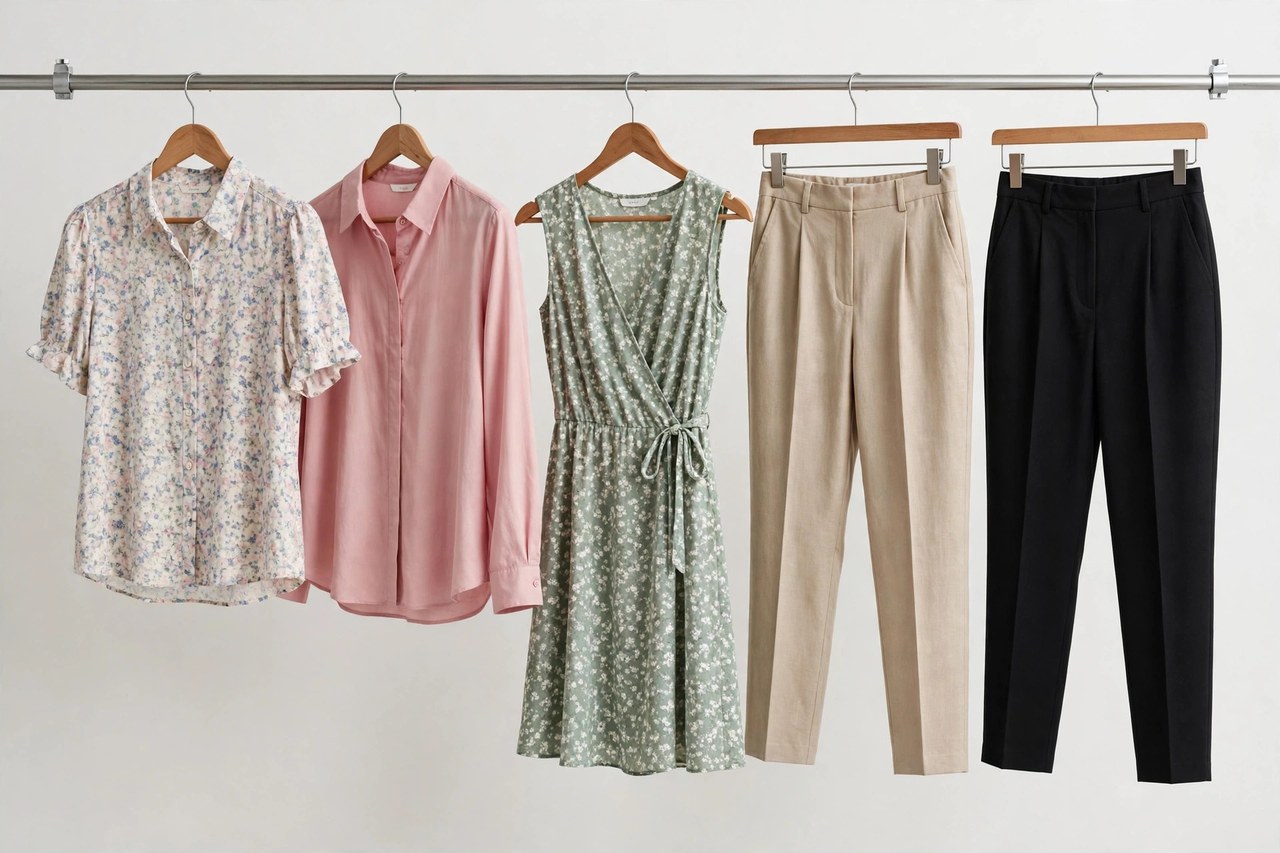
Petite clothing is clothing proportioned for women of 5 feet 4 inches and under. The word describes height and proportion, not body size: petite ranges run through the full span of dress sizes, and a petite woman may wear any of them. What changes in a petite cut is length and placement — the garment is re-proportioned, not merely shrunk — so that waistlines, knees, hems, pockets and sleeves land where the shorter frame actually has them.
This distinction is the most misunderstood point in women's sizing. Buying a smaller standard size does not produce a petite fit: the smaller size is narrower, but its rise is still long, its sleeves still overhang, its waist still sits below yours. This guide sets out exactly which measurements change in petite pattern-making, garment by garment fit tips, and when alterations on standard clothing can (and cannot) substitute for a true petite cut.
What Actually Changes: Rise, Inseam, Sleeve and Torso
Four measurements define the petite re-proportioning. The rise of trousers and jeans is shorter, so the waistband reaches the natural waist without excess fabric below it. The inseam is shorter — commonly around 27 to 29 inches against a standard 31 to 33 — and, just as importantly, the knee position, tapering and hem details are placed higher to match. Sleeve lengths are cut shorter so cuffs end at the wrist bone rather than over the hand, with shoulder seams and armhole height adjusted as well.
The torso changes complete the picture: bodices are shorter from shoulder to waist, so waist seams, belts and empire lines sit at the actual waist; necklines are raised slightly and scaled smaller; pockets, buttons and prints are placed and sized for a shorter frame. Dresses and coats extend the logic to hemlines, coat vents and button stances. A true petite garment is therefore a different pattern, drafted on a petite block — which is why women who switch to petite ranges often describe the experience as clothes finally fitting everywhere at once, not just in the one place a size change fixes.
Fit Tips by Garment
For pants and jeans, petite cuts solve the two classic problems at once: no hemming that destroys the leg shape, and no long rise bunching at the front. Check that the knee of a tapered or bootcut style aligns with your knee. For dresses, the petite waist placement is the prize: fit-and-flare, wrap and sheath styles all sit correctly without a tailor moving the waistline, which is one of the most expensive alterations. Jackets and coats in petite have correct sleeve length, button stance and pocket height, and shoulders scaled to the frame.
For tops and shirts, petite lengths end at the right hip point for both tucking and wearing out, and sleeves stop at the wrist. Skirts are hemmed to the intended proportion — a petite midi is designed to be a midi on a petite frame, not an accidental maxi. Where a style is not offered in petite, choose standard versions with simpler hems and no fixed knee or waist detailing, since those alter most successfully, and budget the tailoring into the purchase honestly rather than wearing the near-fit.
Petite Is Not Just Smaller: Sizing Myths
Myth one: size down and it is the same. As established above, sizing down narrows without shortening key lengths, and it can distort fit at the bust and hip while leaving sleeves and rises long. Myth two: petite means tiny. Petite sizing spans the same numeric range as standard sizing, and petite-plus ranges exist; the category is about vertical proportions only. Myth three: everyone under 5'4" needs petite in everything. Proportions vary within heights — a woman of 5'3" with a long torso and short legs may need petite trousers and standard tops, and the reverse also occurs. Buy by body section, not by label loyalty.
A related practical point: juniors' and cropped styles are not petite substitutes, though they sometimes help. Cropped trousers can work as full-length on a petite frame if the rise suits, and a cropped jacket can hit at the right point — but the shoulders, waist placement and pocket positions remain standard. Use these as opportunistic finds, tested piece by piece, not as a system. The system is: know your own proportions (long or short torso, long or short legs relative to your height), and shop petite where your body is petite.
Shopping and Alteration Strategies
Build the petite wardrobe around the categories where proportion matters most and alterations help least: trousers and jeans, tailored jackets, dresses with defined waists, and coats. These are worth seeking in true petite ranges and paying fair prices for, because the fit is engineered rather than repaired. When shopping online, compare the garment measurements — inseam, sleeve, back length — against a garment you own that fits, since petite labeling still varies between brands.
For standard pieces you love, a tailor can shorten hems and sleeves, raise skirt waistbands slightly and taper legs, at modest cost. What tailoring cannot economically do is move a waistline, shorten a rise, or rescale a whole bodice — those are pattern changes, and that boundary is exactly the case for petite ranges.
Related Women's Guides
More to Explore on Apparel Search
Looking for Women's Clothing Stores?
This guide helps you choose women's petite clothing. To browse where to buy, visit our women's clothing store directory, where you can find retailers that carry them.