Apparel Search Consumer Guides
Tall Women's Coats & Outerwear
Sleeve length, body length and closure placement — checked before the coat earns its place.
A coat is the garment the world sees most, and it is also the garment with the most length built into it: sleeves, body, closures and pockets all positioned on a standard frame. For a tall woman, a standard coat in the right size can still be the wrong coat in three places at once. This guide — part of our tall women's fashion guide — breaks the purchase down into the checks that decide it, so a coat is judged by specifications before it is judged by color. Our women's coats guide covers styles, fabrics and weights across the whole category.
Sleeve Length: The First Confession
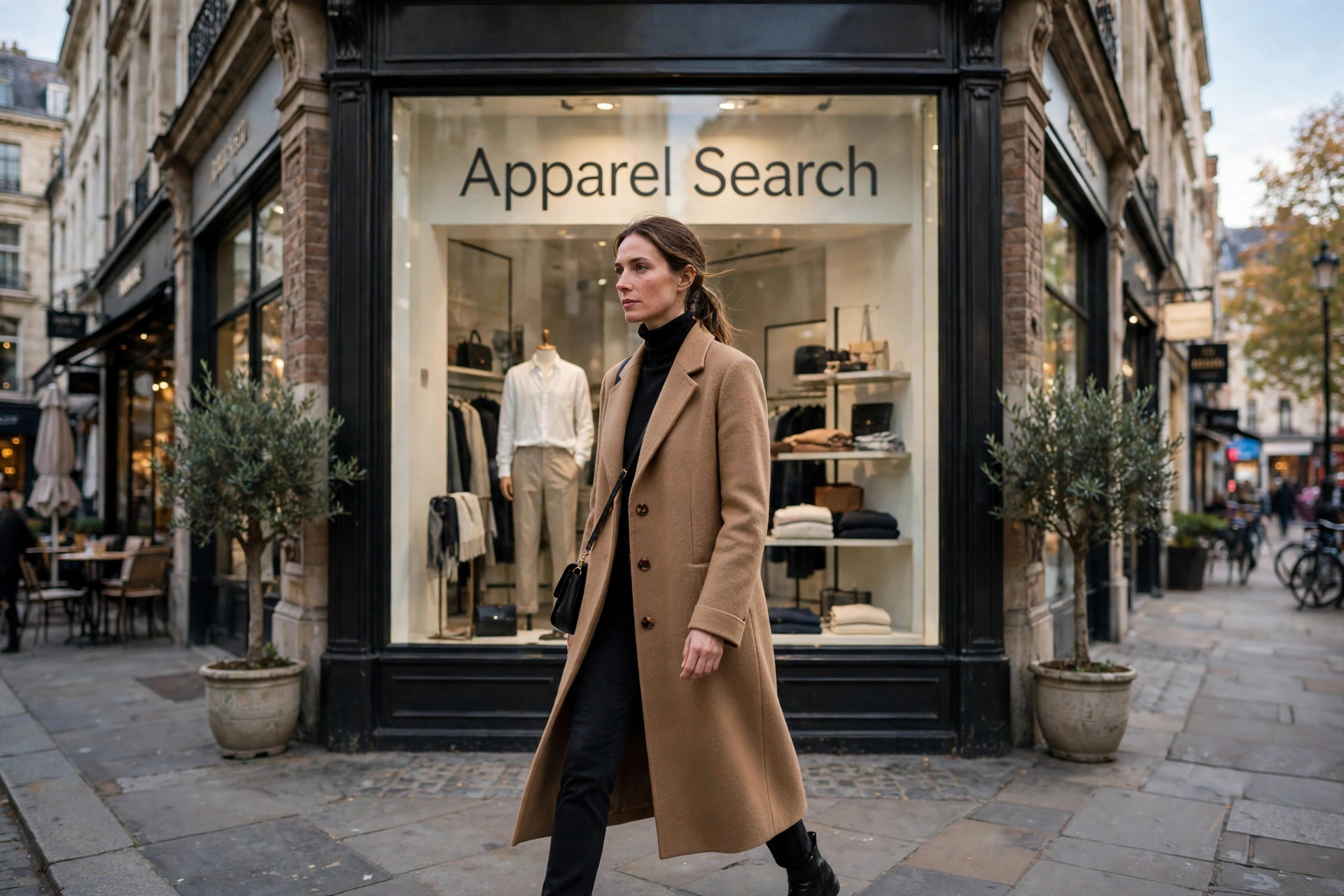
Hold your arm straight and look at where a coat sleeve ends. It should reach the wrist bone and ideally a touch beyond, so that raising your arm, driving, or carrying a bag does not leave a band of bare wrist in the cold. Standard sleeves on a tall arm commonly finish one to two inches above that point — the outgrown look, on a brand-new coat. Tall ranges add the length at the cuff, and good size charts state sleeve length (from shoulder point or center back neck) outright. Blazers and tailored jackets follow the same rule with a smaller allowance: the cuff should meet the wrist with a sliver of shirt sleeve showing, not end mid-forearm.
Body Length: Where the Hem Was Meant to Be
Coat lengths are named by intention — cropped, hip, thigh, knee, midi, full — and every intention assumes a standard leg. A knee-length coat on a tall frame lands mid-thigh; a midi coat lands at the knee. Neither is wrong to wear, but buy the coat you meant to buy: compare the chart's garment length, typically measured from the back neck, against your own back-neck-to-target measurement. Long coats are a tall frame's home turf — a genuine full-length coat on a tall woman is one of the strongest silhouettes in clothing, worth seeking in tall ranges where the length is built in rather than approximated.
Placement: Belts, Buttons and Pockets
A longer torso moves the coat's furniture. Belt loops and waist seams sit high, so a belted coat belts the ribs instead of the waist; button rows space themselves for a shorter chest, ending the closure line early; pockets ride up to where hands do not naturally fall. None of these can be altered after the fact, which makes placement a try-on check rather than a hope: belt the coat, button it fully, and put your hands in the pockets. If all three land where your body expects them, the coat's torso matches yours. Wrap coats and belt-free styles are the forgiving designs, since their architecture adjusts to the wearer.
Five Checks Before You Buy
- Sleeve check. Arms straight down, then raised: the cuff stays at or past the wrist bone in both positions.
- Length check. The hem lands at the point the style name promises — thigh, knee, calf — measured against your leg, not the hanger.
- Placement check. Belt at your waist, buttons closed without strain, pockets where your hands fall.
- Layering check. Try it over the thickest sweater you realistically wear. Tall sizing lengthens a coat; it does not automatically add layering room through the shoulder and back.
- Movement check. Sit, reach, and mime the drive to work. A coat is worn in motion for months at a time; the fitting room walk is the trailer, not the film.
Buy the coat that passes all five and it will serve the way the best coats do — for a decade of winters, over everything from tailoring to knitwear, at a cost per wear that makes the tall specification the cheapest line on the receipt.
Shop Tall Women's Coats on Amazon
Ready to shop? Product links are kept in one place on the Apparel Search shopping guide:
Shop Clothing on AmazonThis link opens the Apparel Search shopping guide for Amazon, where the product links are kept in one place.
Common Questions
How long should coat sleeves be on a tall woman?
The cuff should reach the wrist bone, ideally a fraction past it, with your arm relaxed — and stay close to it when you raise your arm. If a standard coat's sleeves end an inch or more above the wrist, that is the tall-range signal: tall patterns add the missing length at the cuff, and many size charts state sleeve length directly.
Why does the belt on coats sit too high on me?
Belt and waist-seam placement is fixed by the pattern's torso length, which is standard even in larger sizes. On a longer torso the belt circles the lower ribs instead of the waist. It cannot be moved by a tailor, so check placement when trying on — or choose wrap coats and unbelted styles, whose architecture adjusts to you.
What coat length suits tall women best?
The length you intended, verified in inches. Tall frames carry long coats exceptionally well — a true midi or full-length coat is a natural silhouette — but a knee-length style name on a standard pattern will land mid-thigh. Compare the chart's back-neck-to-hem figure with your own measurement to that point on your leg.
Can coat sleeves be lengthened by a tailor?
Sometimes, by up to an inch if the cuff carries extra fabric — many coats do not. Lining constraints usually cap the gain well below what a tall arm needs. Sleeve length, like inseam, is fundamentally a buying specification: choose the tall range rather than planning an alteration.
Back to the Tall Women's Fashion Guide
Inseams, rises, torso and sleeve — dressing tall by specification, not by luck.