Apparel Search Consumer Guides
Tall Sizing Explained
What tall, long and extra-long labels really mean — and the measurements that translate any chart.
"Tall" is the least standardized word in women's sizing. One brand's tall is another's long, a third brand's tall begins two inches of height below a fourth's, and none of them are obliged to explain themselves. This reference page — part of our tall women's fashion guide — sets out what the labels generally mean, where they vary, and how to take the three measurements that let you translate any brand's chart into your own.
What Tall Sizing Actually Is
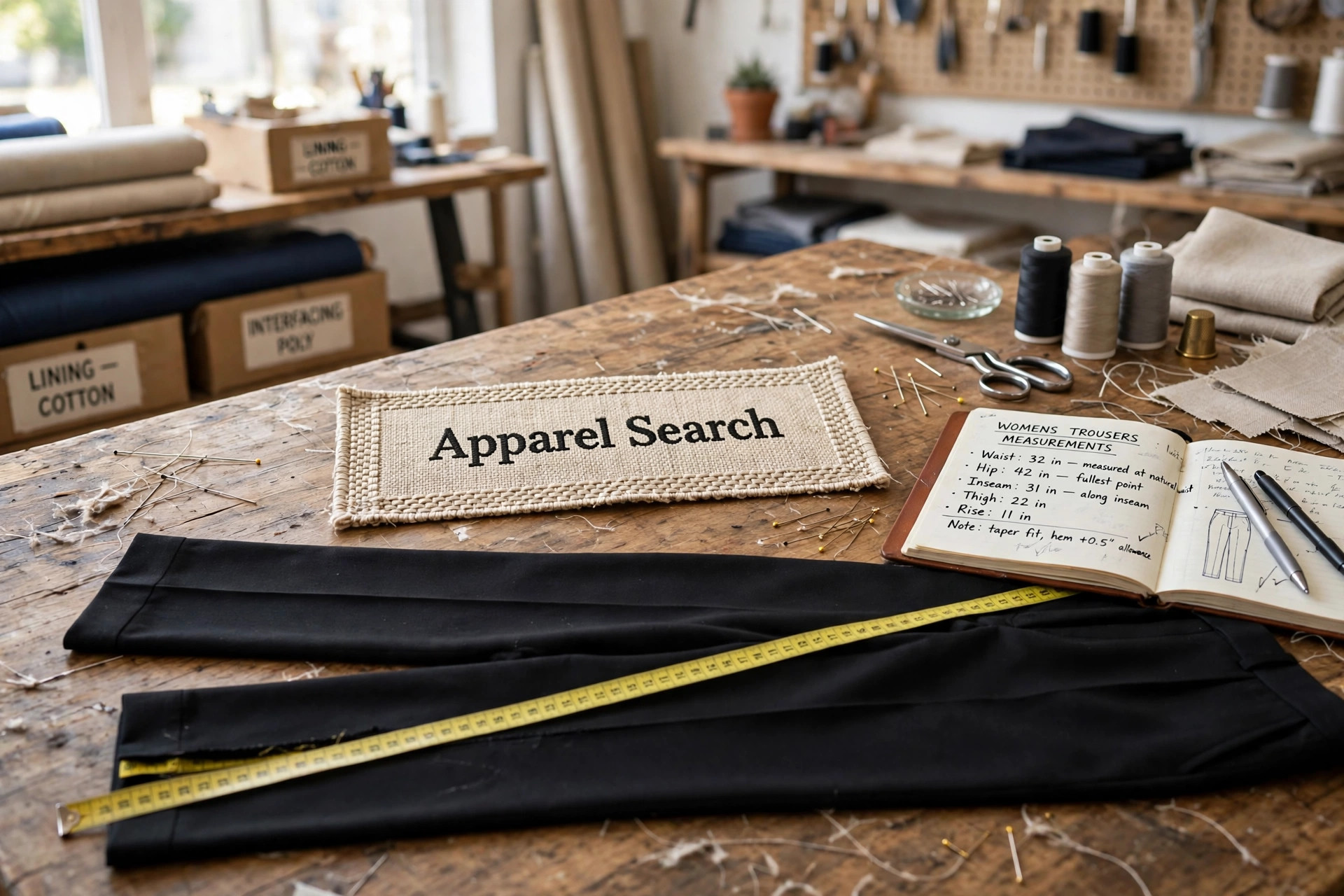
Tall sizing is a proportion specification, not a size. A tall 12 and a standard 12 share the same bust, waist and hip grading; the tall version redistributes length — a longer inseam and rise in trousers, a longer bodice and skirt in dresses, longer sleeves in everything with sleeves. Most brands design their tall ranges for women of about 5'9" and up, but the threshold wanders: some start at 5'8", others at 5'10" or 5'11". What qualifies you is not a height certificate. It is the repeated experience of standard lengths finishing early — hems above the ankle, cuffs above the wrist, waists above the waist.
Note what tall is not. It is not plus sizing, which grades width; the two systems are independent, and tall-plus ranges exist at their intersection. It is not men's sizing borrowed across the aisle, whose proportions solve different geometry. And it is not sizing up: a bigger standard size adds a fraction of an inch of length while adding width everywhere, the arithmetic of a worse fit.
The Labels, Translated
Tall (T) — a re-proportioned range: length added at inseam, rise, torso and sleeve together. The complete specification, and the one to seek for dresses, trousers and coats. Long (L) — usually a standard pattern with a longer hem: most often a 34-inch inseam in place of 32, with rise and knee placement unchanged. Entirely serviceable for jeans; incomplete for anything with a waist seam. Extra long / X-Long — a further step of hem length, commonly 36 inches and beyond in bottoms, appearing in denim more than anywhere else. Length options by inches — the most honest labeling of all: brands that sell trousers and jeans by stated inseam (32/34/36) let you skip the vocabulary entirely and shop a number.
How to Measure Your Inseam
- Start from a pair that fits. Take trousers or jeans whose hem lands exactly where you like it, in the shoes you wear with them. Lay them flat and smooth.
- Measure the inner leg. Run a tape from the crotch seam — the point where the inseams meet — straight down the inner leg to the hem. That figure is your personal inseam for that style and shoe.
- Adjust by style. Add an inch for full-length wide-leg or flare styles that should reach the floor; subtract for intended crops. Record the numbers by style, not as a single figure — your wardrobe has several inseams, and each is correct.
- Measure the other two. Sleeve: from the shoulder point to the wrist bone, arm slightly bent. Back waist: from the prominent bone at the base of the neck to your natural waist. With inseam, these three numbers decode nearly every size chart you will meet.
Our guide to taking body measurements covers the full measuring sequence, and the body measurements reference sets out what each standard measurement means — useful groundwork before applying the tall adjustments above.
Converting Between Labels
When a brand you like offers no tall range, convert by category rather than by hope. Bottoms: look for the stated inseam and buy the number, whatever the range is called. Dresses: compare back-waist length; if the chart does not give it, wrap, shift and empire styles convert safely while fitted waists do not. Sleeves: compare the stated sleeve length against your shoulder-to-wrist figure, and let knitwear — which stretches and forgives — convert more freely than tailored pieces. And when a chart gives garment length in inches, trust it over every label in this section of the shop: inches are the one sizing language with no dialects.
Keep a Numbers Card
Write down your inseam by style, your sleeve length, your back-waist length, and the brands whose tall patterns you have proven. Three minutes of record-keeping converts every future purchase from a fitting-room expedition into a lookup — and converts returns from a routine into a rarity.
Common Questions
At what height should I shop tall sizes?
Most tall ranges are cut for women around 5'9" and taller, with brands setting the threshold anywhere from 5'8" to 5'11". The practical test is length distribution, not height alone: if standard trousers finish above your ankle, sleeves above your wrist and dress waists above your waist, you are a tall-range shopper whatever your exact height.
What is the difference between tall, long and extra-long?
Tall is a re-proportioned pattern — inseam, rise, torso and sleeve lengthened together. Long usually adds hem length only, most often a 34-inch inseam instead of 32. Extra-long extends the hem further, commonly 36 inches or more. For bottoms the distinction is small; for dresses and coats, true tall is the specification that matters.
How do I measure my inseam correctly?
Lay flat a pair of trousers whose length you already like, and measure from the crotch seam down the inside leg to the hem. That is your inseam for that style and shoe height. Keep separate figures for full-length, ankle and cropped styles — each is a different correct answer.
Do tall sizes run larger than standard sizes?
No — they run longer, not larger. A tall 12 has the same bust, waist and hip measurements as a standard 12 from the same brand; the difference is entirely in length specifications. If a tall garment feels roomy, that is the brand's general fit, not the tall grading.
Back to the Tall Women's Fashion Guide
Inseams, rises, torso and sleeve — dressing tall by specification, not by luck.