Apparel Search Care Guides
Sneaker Care & Cleaning Guide
How to clean and keep sneakers by material — leather, canvas, mesh, suede and knit — plus the drying, deodorizing and storage habits that decide how long a pair lasts.
Sneakers rarely wear out all at once. They fade by accumulation: dirt ground a little deeper into the mesh each week, foam that never gets a rest day, a wet pair dried against a radiator until the glue gives up. The care that prevents it is not elaborate — it is gentle cleaning matched to the material, patient drying, and rotation. This guide works material by material, because the method that revives a leather pair will wreck a suede one, and finishes with the harder question: how to tell a tired pair from a finished one.
Before Any Cleaning
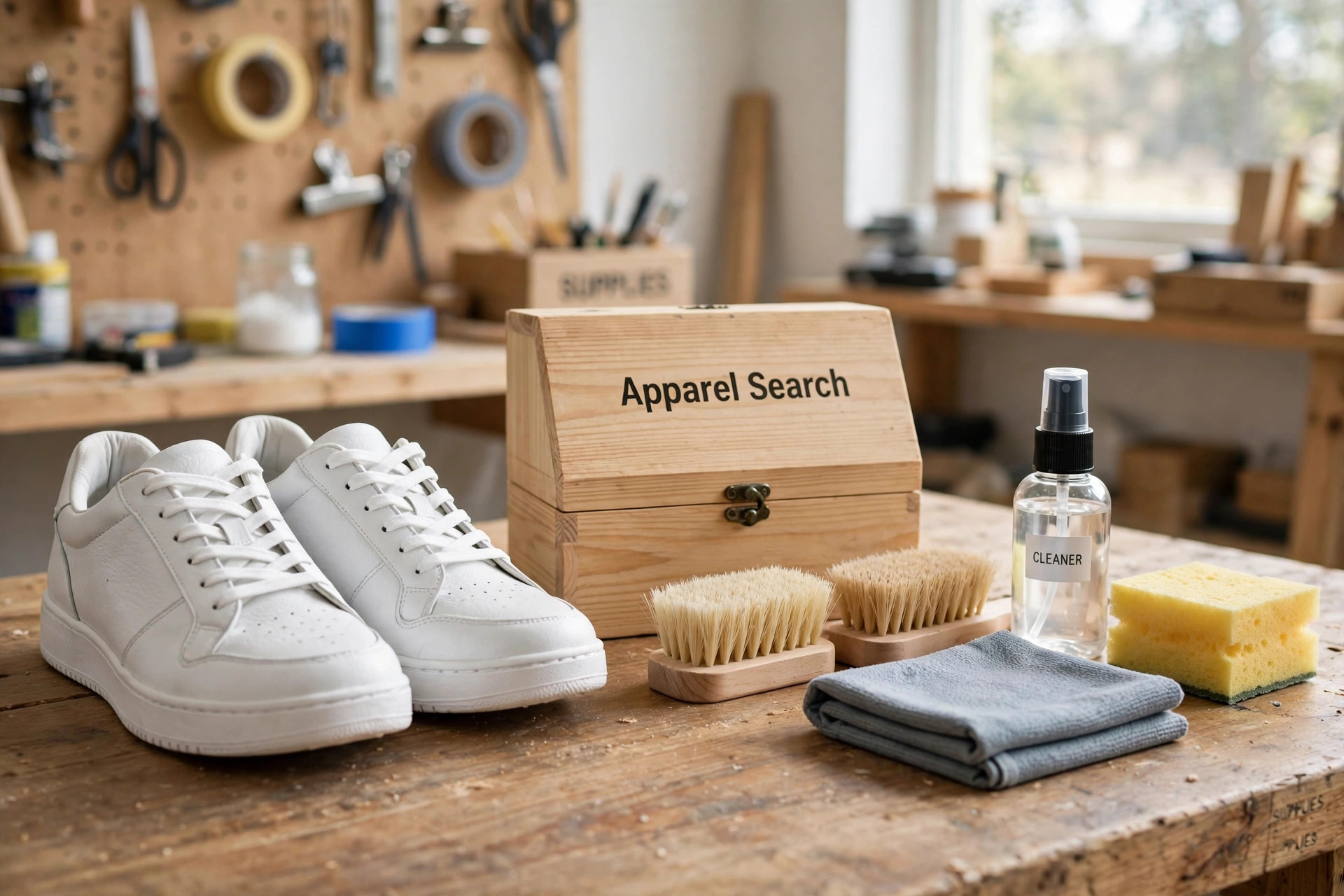
Three preparations apply to every material. Strip the pair down: remove the laces and insoles and wash them separately — laces in a laundry bag or a bowl of soapy water, insoles with a cloth and mild soap, both air dried. Dry brush first: a stiff brush or an old dry cloth removes the loose dirt and grit that would otherwise be ground in by washing. Test your cleaner on a hidden spot — inside the heel or under the tongue — before using it everywhere. Only then clean by material.
Cleaning by Material
Leather
Wipe down with a damp cloth, then work a mild soap solution (a few drops in warm water) over the surface with a soft cloth or brush, wiping the soap away with a clean damp cloth. Leather should get wet on the surface, never soaked through. When dry, an occasional leather conditioner keeps it supple; white leather takes a gentle bicarbonate paste on scuffs. Creasing at the flex point is normal wear, not dirt — do not scrub at it.
Canvas and Mesh
Hand wash in cool water with a mild detergent, using a soft brush on marks; cool water matters because heat sets some stains and stresses the glues. Machine washing suits some canvas pairs if the maker allows it — cold, gentle, in a laundry bag — but hand washing is the safe default. Rinse until the water runs clear, because detergent left in fabric attracts dirt faster next time.
Suede and Nubuck
Dry only — water is the enemy here. Brush with a suede brush to lift dirt and restore the nap, work at marks with a suede eraser, and let any mud dry completely before brushing it off rather than attacking it wet. Grease marks respond to a dusting of cornstarch left overnight and brushed out. If suede does get wet, stuff it, air dry it slowly away from heat, then brush the nap back up once fully dry.
Knit Uppers
The gentlest wash of the four: cool water, mild detergent, minimal agitation, because knits stretch and distort when handled roughly wet. Squeeze rather than wring, and dry them stuffed so the shape sets as it dries. Knit sneakers pick up odor faster than leather — the insoles and the interior are usually the source, not the knit itself.
Drying, Deodorizing and Storage
Drying is where most damage happens. Always air dry at room temperature, stuffed with plain paper or a towel to hold the shape and draw out moisture, and always away from radiators, hairdryers and direct sun: heat warps soles, cracks leather, fades fabric and weakens the adhesives that hold a modern sneaker together. A wet pair needs a full day or more; patience is the method. For odor, the causes are moisture and bacteria, so drying is half the cure — sprinkle bicarbonate of soda inside overnight and shake it out, wash the insoles, and let pairs dry fully between wearings. Storage: cool, dry and out of sunlight, which yellows white soles and fades colors; shoe trees suit leather pairs, and the original box or a breathable bag beats sealed plastic, which traps moisture.
Repair or Replace?
Most modern sneakers are cemented, not stitched, so true resoling is rarely an option — that construction choice is made at the factory, not the repair bench. What can be renewed cheaply: laces, insoles (a fresh pair transforms a tired shoe's feel), and heel toplifts on some styles. The signs a pair is finished are in the structure, not the appearance: midsole foam creased and compressed so the cushioning feels dead, outsole tread worn smooth at the heel or ball, the heel counter collapsed so the foot rolls, or the upper tearing at the flex points. For running shoes the working rule is roughly 300 to 500 miles before the cushioning is spent, however clean the uppers look. A grubby pair is a cleaning problem; a compressed pair is a replacement — learn to tell them apart and you will spend less and hurt less.
Shop Sneaker Care
Ready to shop? Product links are kept in one place on the Apparel Search shopping guide:
Shop Sneaker Care Products on AmazonThis link opens the Apparel Search shopping guide for Amazon, where the product links are kept in one place.
Common Questions
Can I put sneakers in the washing machine?
Sometimes — it depends on the material and the maker. Many canvas and some knit sneakers tolerate a cold, gentle machine cycle in a laundry bag with the laces removed, and some manufacturers say so on the care label. Leather and suede should never be machine washed: water and agitation crack leather and ruin suede's nap. Whatever the material, the dryer is always wrong — heat warps soles, melts glues and shrinks uppers. Air drying is the rule for every pair.
How do I keep white sneakers white?
Little and often beats the occasional rescue. Wipe white sneakers down after wear so dirt never sets, treat marks the day they happen rather than the month after, and store them out of direct sunlight, which yellows white rubber and fabrics over time. A paste of bicarbonate of soda and water, worked in gently with an old toothbrush and rinsed, handles most scuffs on white leather and canvas; whitening products exist for soles. Accept the honest limit: a pair worn daily in all weather is workwear, and rotation is what keeps any pair looking fresh.
How often should I clean my sneakers?
Wipe or brush off surface dirt after wear — thirty seconds that prevents most deep cleaning. A proper clean is needed when dirt has worked into the fabric, the insoles smell, or the pair has been through mud or a spill: for a daily pair that might be monthly, for an occasional pair a few times a year. The deeper rhythm that matters more is rotation — resting a pair a full day between wearings lets the cushioning foam recover and the interior dry, and does more for lifespan than any cleaning schedule.
Can suede sneakers be protected from water and stains?
Yes, partly. Protector sprays made for suede form a breathable barrier that makes water bead and stains lift more easily; apply to clean, dry suede before the first wear and reapply every few weeks of regular use, after any cleaning, and at the start of the wet season. Protection is resistance, not immunity — a soaked suede sneaker still needs the slow air-dry and brush-out routine, and no spray makes suede a rain shoe.