Start Here
Stretching Is a Small Fix, Done Properly
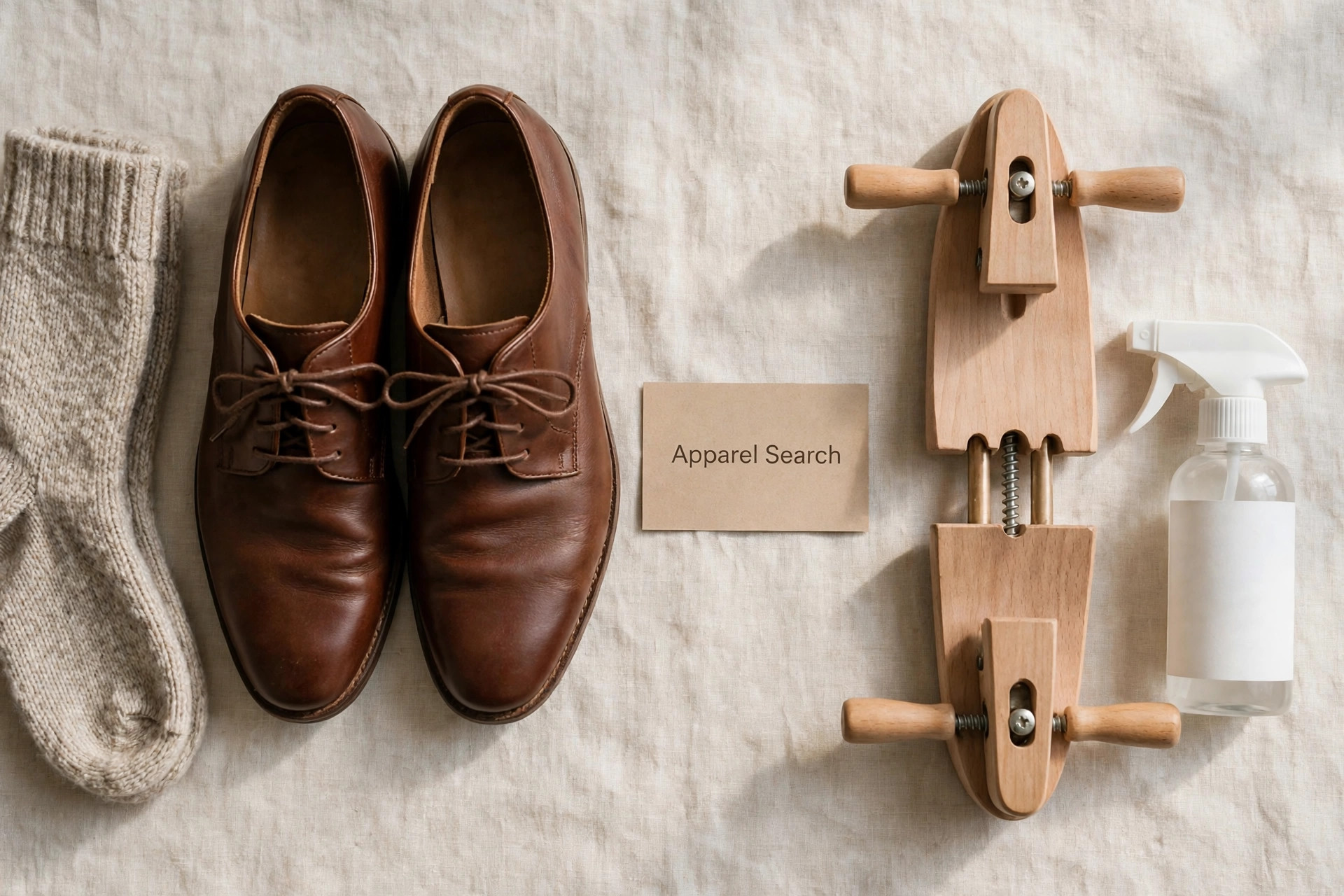
Stretching suits one specific situation: a shoe that is the right length and nearly the right width, let down by one snug area — a close fit across the ball of the foot, a firm toe joint, a heel counter that presses in one spot. Used there, it is a precise, safe adjustment. Used to rescue a shoe that is simply too small, it disappoints, and it usually makes the pair unreturnable in the attempt.
Start from the fit check in how to break in new shoes: if the pair passes on length and fails only on local snugness, the methods below, in this order, are the safe sequence. Work on one shoe, test it against the other, and stop as soon as the pressure point eases — stretched leather does not shrink back.
The Methods
Four Safe Methods, in Step Order
The thick-socks method — the gentlest first try. Put on the thickest socks you own, or two pairs, ease the shoes on, and walk around the house for an hour or two at a time over a few evenings. Your own foot is the mildest stretcher there is, and this method cannot overshoot. It suits canvas and soft leather, and it doubles as the last stage of breaking in.
Stretch spray plus wearing. Leather stretch sprays relax the fibres of the upper so it gives more readily under pressure. Apply inside the tight area as the product directs, then wear the shoes with ordinary socks for a few hours while the leather settles. The spray does nothing on its own — it is the wearing that shapes — and it is for leather only, never suede or patent.
A two-way shoe stretcher — the reliable home method. A two-way stretcher expands a shoe across the width and, with the length attachment, eases it slightly heel to toe. Insert it, turn until you feel firm resistance and a half-turn more, and leave it overnight; repeat for a second night if needed rather than forcing more in one go. Most stretchers accept small bunion and corn plugs that push out one exact spot — the home version of spot stretching.
The freezer-bag method — with its limits stated. Fill a strong freezer bag a quarter full of water, seal it with the air pressed out, tuck it into the toe or across the ball of the shoe, and freeze the shoe overnight; water expands as it turns to ice and presses the upper outward. Thaw for twenty minutes before removing the bag. It is a blunt instrument: the pressure goes everywhere, not just where you want it, so reserve it for plain leather or canvas shoes you already own, and keep it away from the materials in the next section.
The Limits
Materials That Must Not Be Stretched
Patent leather heads the list: the high-shine coating is far less flexible than the leather beneath it, and forcing the shoe wider cracks the finish in fine lines that cannot be polished out. Synthetic uppers — most faux leathers and coated fabrics — have no fibre structure to relax; they either spring back to their moulded shape within days or fail at a seam or crease. Suede is a borderline case: it gives naturally with wear, so let it, rather than spraying or forcing it, because stretched suede thins and its nap flattens unevenly. Woven and knit uppers, finally, do not need stretching — if a knit shoe feels tight, the size is wrong, because the material is already giving all it has.
Spot Work
One Spot, and What a Cobbler Can Do
Most tight-shoe complaints are really one-spot complaints: pressure over a bunion joint, a heel counter edge that digs in, a toe cap that meets one toe. Spot stretching answers them without loosening the whole shoe. At home, a stretcher fitted with a plug at the exact point does it; the plug position is set by marking the spot on the outside of the shoe while wearing it, then matching the plug to the mark.
A cobbler does the same work with better tools and judgment: a professional stretching machine that applies measured pressure for a day or two, ball-and-ring stretchers for a single joint, and reshaping of a heel counter that no home method reaches. Cobblers also know when to refuse — a shoe that needs length, or a patent shoe, will come back with honest advice instead of a damaged upper. The fee is small next to the price of the shoes, and for a good leather pair it is the method this guide would choose first. If an insole is part of the fit picture, check its space trade-offs in the arch support and insoles guide before stretching around it.
Questions
Common Questions
How much can a shoe be stretched?
About a quarter to a half size in width — enough to ease a snug shoe across the ball of the foot or at one pressure spot. Stretching cannot add length, and it cannot turn the wrong size into the right one.
Can I stretch patent or synthetic shoes at home?
No. Patent coatings crack when the leather beneath is forced to give, and most synthetic uppers either spring straight back or split at the seams. Patent and synthetic shoes should fit comfortably in the shop, with no stretching planned.
Is the freezer-bag method safe?
It works, within limits, on plain leather and canvas: water expands as it freezes and presses the upper outward gently. Keep the bag sealed and only part-filled, protect the lining, and never use it on patent, suede or glued constructions you cannot afford to risk.
More to Explore
Search Apparel Search