Start Here
Breaking In Is Fitting, Done Slowly
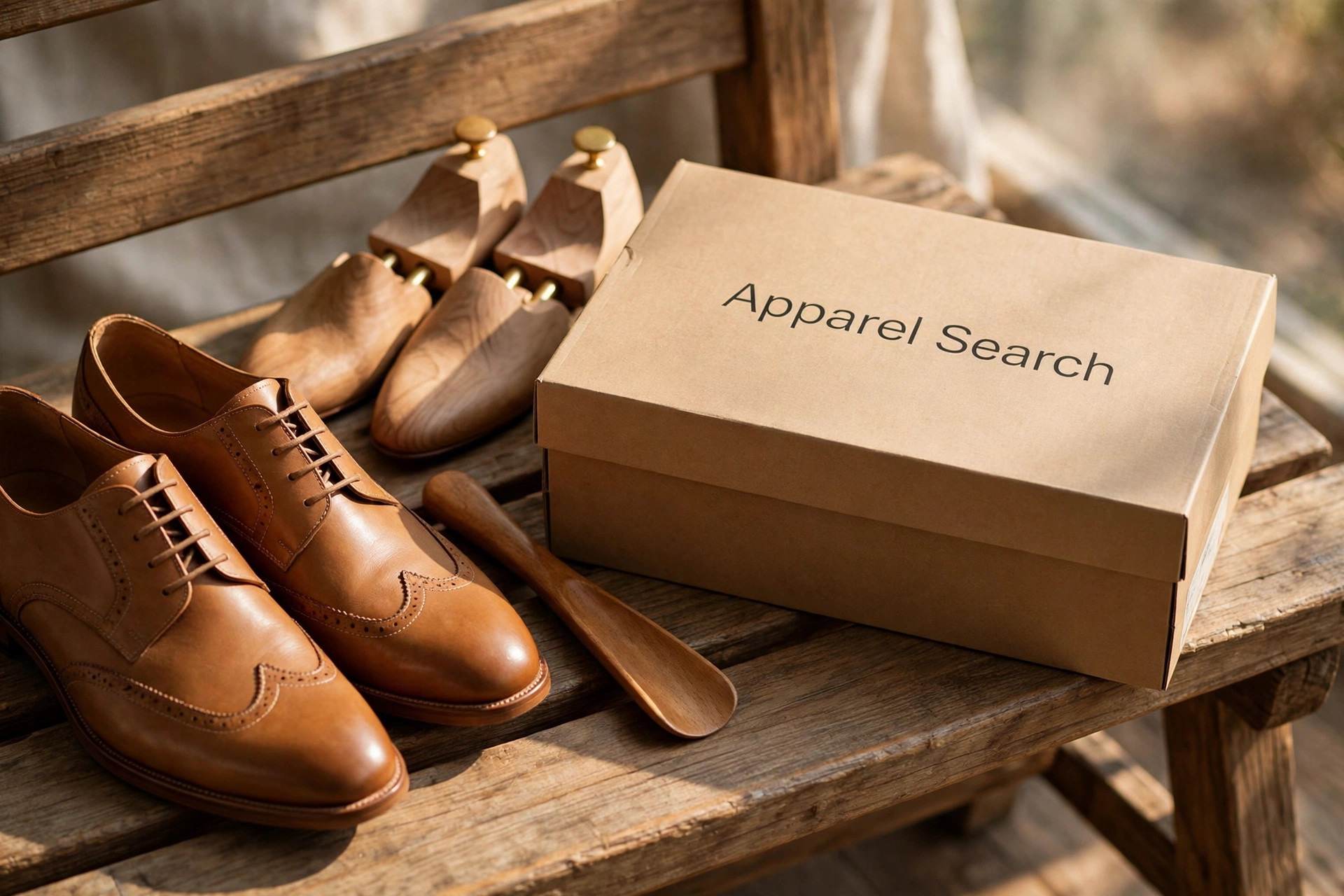
A new shoe is not finished when you buy it. The upper still holds the shape of the last it was made on and the sole is still flat and stiff. Breaking in is the short, deliberate process of letting the shoe take your shape — in sessions brief enough that a fit problem still shows up while an exchange is possible.
Wear a new pair all day, outdoors, and two things happen: your feet tell you about problems too late, and the shop can fairly say the shoes are now used. The schedule below protects both. Its companions are how to stretch tight shoes, for a pair that is close but snug, and how to clean white sneakers, once a light-coloured pair is in regular wear.
Search Apparel Search
The Schedule
Five Steps Over the First Two Weeks
Days 1–2: indoors, an hour at a time. Wear the shoes at home, on clean floors, with the socks you intend to wear with them. Walk normally, sit, stand. You are checking the basics — toes lying flat with a little room ahead of the longest toe, no pinching across the widest part of the foot, heels held rather than loose.
Days 3–5: two to three hours, still mostly indoors. Add stairs and longer standing. The sole begins to flex where your foot bends, and the upper creases at its natural flex point — a straight crease across the vamp is normal.
Days 6–9: a short outing. Take the pair out for an errand or a short walk, on a dry day. Between wearings, put shoe trees in, or stuff the toes firmly with paper, and rest the pair a full day.
Days 10–12: half a day at work or out. By now the footbed will have taken a light impression of your foot and the heel counter should feel less rigid. If one specific spot is still snug, that is a spot problem, and the spot fixes below work better than more hours.
Day 14: the full-day test. Wear the pair for a normal full day. A broken-in shoe should be unremarkable by evening: snug in the morning, forgotten by lunch. Anything you are still thinking about at the end of two weeks is information, not a stage.
Reading the Fit
Normal Tight Spots — and Signs the Fit Is Wrong
Some firmness is the process working. A close fit across the ball of the foot in leather, a stiff heel counter on boots, and a sole that resists bending at first all soften predictably, and mild warmth at a flex point fades as the upper gives.
Other signals do not soften, because they are size and shape, not stiffness. Toes pressed or curled will not gain room — uppers stretch across the foot, never meaningfully along it, so a short shoe stays short. Rubbing that causes blisters means the shoe is moving against the foot or pressing in the wrong place; more wear makes that worse. Numbness, sharp pressure on top of the toes, or a heel that lifts clear out of the shoe are the same verdict: the wrong fit, and the right move is an exchange, ideally while the soles are still clean from indoor wear.
By Material
Leather, Suede, Canvas and Patent Behave Differently
Leather is the classic break-in material: it softens, takes an impression, and gives modestly across the width. Give it the full schedule, condition it lightly once it is in regular wear — the routine in the leather boot care guide applies to leather shoes as well — and expect the best long-term result of any upper.
Suede starts softer and needs fewer sessions, but it marks while new and unprotected, so spray it before the first outdoor step and keep early outings dry; the suede care guide covers the routine. Canvas barely needs breaking in — a few wearings soften the heel edge — but it gives very little, so a canvas shoe that pinches on day one will pinch on day thirty. Patent leather is the exception: its glossy coating limits how much the leather beneath can give, so patent shoes should fit comfortably in the shop, with no break-in expected.
Small Fixes
Heel Slip, Toe Pressure — and When to Give Up
A slight heel slip in a stiff new shoe often settles as the sole learns to bend with your foot instead of levering the heel out. If it persists, try, in order: lacing one hole further up or using the extra heel-lock eyelet if the shoe has one, a tongue pad, or a thin insole — the space trade-offs are explained in the arch support and insoles guide. Toe pressure is less negotiable: a spot stretch at one joint can help, but length cannot be added, and a shoe that presses the tops of the toes is telling you its toe box shape is not yours.
Give up and exchange when two weeks of the schedule leaves pain, blistering rub points or pressure unchanged, when the shoe is short, or when you have been avoiding the pair. A shoe that needs rescuing was the wrong shoe; a shoe that needed two patient weeks was the right one.
Questions
Common Questions
How long does it take to break in new shoes?
For most leather shoes, about two weeks of short, gradually longer wearings — roughly eight to ten sessions. Canvas and soft suede usually settle in a few wearings, while stiff leather boots can take the full two weeks and sometimes longer.
Should new shoes hurt at first?
New shoes should feel snug and firm, not painful. Mild stiffness and a close fit across the widest part of the foot are normal and ease with wear. Sharp toe pressure, numbness, or rubbing that causes blisters means the fit is wrong, not unfinished — that pair should be exchanged, not endured.
Can I speed up breaking in with water or heat?
No. Soaking shoes or blasting them with heat can crack leather, loosen glue and distort the shape, and it voids the option of exchanging them. Short wearings, shoe trees between wears, and patience do the same job without damaging the shoe.