Start Here
Clean by Material, Not by Colour
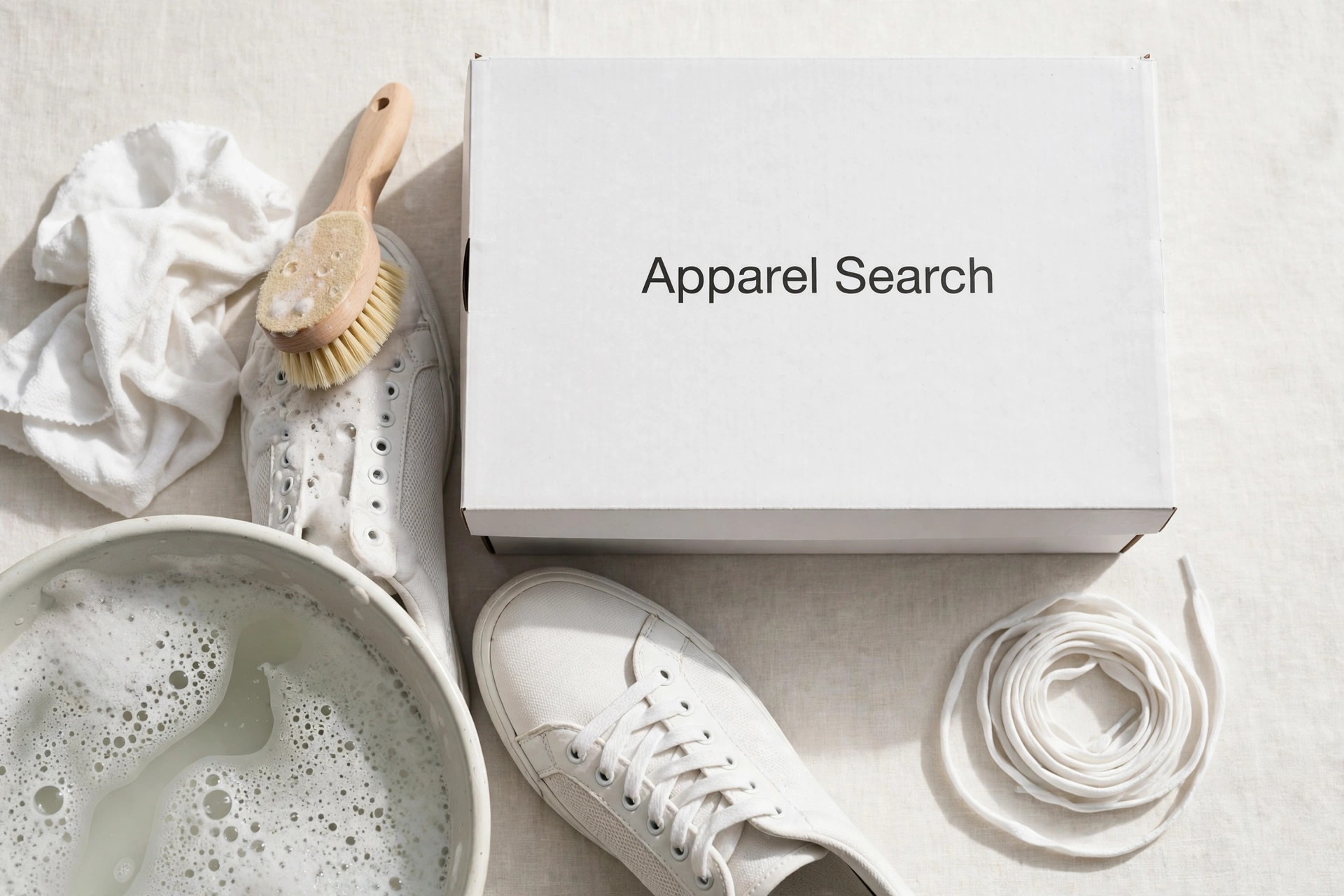
White sneakers fail in a particular way: they rarely wear out before they stop looking white. The fix is a routine, not a rescue — a short clean after muddy or dusty wear, a fuller wash when marks build up, and drying and storage habits that stop white turning yellow between cleans. Everything here is hand work with mild products, because the materials under the white — leather, canvas, mesh and suede — each object to something different.
This page is the cleaning companion to the fit guides in this cluster, how to break in new shoes and how to stretch tight shoes, and it follows the same material-first logic as the general sneaker care guide.
The Wash
Five Steps, Whatever the Material
Strip the shoe down. Remove the laces and lift out the insoles; all three parts are washed separately. Knock the soles together outdoors and brush off every bit of dry dirt first — washing mud only spreads it.
Mix a mild solution. A basin of lukewarm water with a few drops of washing-up liquid or a teaspoon of laundry detergent is enough. Stronger is not cleaner on white shoes; residue left behind is one of the main causes of yellowing.
Wash the upper by its material — the matrix below gives the tool and the caution for each. Work in small circles, rinse the brush or cloth often, and treat both shoes even when only one looks marked, so they age the same colour.
Do laces, insoles and soles separately. Laces soak in the solution for twenty minutes, then rinse and hang. Insoles get a gentle brush and a full rinse. Soles and white rubber midsoles respond to a firmer brush, and scuffs on rubber often lift with a plain white eraser used dry.
Rinse until the water runs plain, then dry by the rules below. Soap left in fabric is tomorrow’s yellow patch, so the rinse matters as much as the wash.
By Material
The White-Sneaker Care Matrix
| Material | Clean with | Watch out for |
|---|---|---|
| Leather | Soft cloth or sponge, mild solution, wipe rather than soak; condition lightly once dry | Soaking, which stiffens leather; coloured polishes, which tint white |
| Canvas | Soft brush and solution; the one material that usually tolerates a cool gentle machine wash, in a bag | Hot water, which sets stains and shrinks; leftover detergent, which yellows |
| Mesh | Very soft brush or cloth, light pressure, minimal water; dab, do not scrub | Stiff brushes, which snag the knit; bleach, which yellows and weakens it |
| Suede | No wash: dry suede brush and eraser first; for water marks, dampen the whole panel evenly and let it dry stuffed | Immersion in water; cleaning one spot only, which leaves a tide line |
Suede is the outlier in the table and in the wardrobe: the full brush, eraser and protector routine lives in the suede care guide, and the same no-soaking rule protects the leather pairs covered by the leather boot care guide.
Keeping Them White
Yellowing, Drying and Storage
Yellowing has three usual causes, and all three are habits rather than accidents. Residue: detergent or soap not fully rinsed out yellows as the shoe dries, which is why step five insists on plain running rinse water. Sunlight: white fabrics and rubber oxidise faster in direct sun, so dry and store white sneakers in shade. Age: white rubber soles yellow slowly whatever you do — cleaning slows the look of it, and nothing honestly reverses it.
Drying rules are short. Stuff the shoes with plain white paper or a clean cloth to hold the shape and draw out moisture — printed newspaper can transfer ink to a damp white lining. Dry at room temperature, away from radiators and direct sun; heat warps soles, cracks leather and sets the very yellowing you are avoiding. Allow a full day before wearing, longer for canvas.
Store white sneakers clean, fully dry, laced loosely, and out of light: back in their box, or in a cloth bag on a closet shelf, with paper in the toes. A protector spray suited to the material, refreshed every few weeks in wet seasons, buys time against splashes between cleans — prevention that takes two minutes and saves a full wash.
Never Use
What Never to Use on White Sneakers
Bleach is the headline: never on mesh, suede, leather or any coloured trim, and even on plain canvas only as a last-resort, well-diluted soak followed by a long rinse — as a routine cleaner it yellows synthetics, rots stitching and leaves the residue that discolours next month. Also off the list: hot water, which sets protein stains and shrinks canvas; stiff wire or hard brushes on anything but sole tread; coloured cloths and sponges that can transfer dye to a wet white upper; and the tumble dryer, whose heat attacks glue, rubber and leather at once. White shoes ask for mild products and patience — both are cheaper than a replacement pair.
Questions
Common Questions
Can I put white sneakers in the washing machine?
Canvas sneakers, yes, usually — laces out, insoles out, in a wash bag, on a cool gentle cycle. Leather, suede and most mesh trainers, no: heat and soaking distort leather, ruin suede and weaken the glues that hold a trainer together. Those are hand-wash shoes.
Why do white sneakers turn yellow?
Mostly oxidation and residue: detergent or soap left in fabric yellows as it dries, sunlight speeds the change, and white rubber soles yellow with age and exposure. Thorough rinsing, drying out of direct sun, and storing shoes clean and dark all slow it down.
Can I use bleach to whiten sneakers?
Not as a routine cleaner, and never on mesh, suede or coloured trims — bleach yellows many synthetics, weakens stitching and strips leather. A very dilute solution is a last resort on plain white canvas only, followed by a long, thorough rinse.
More to Explore
Search Apparel Search