Apparel Search Consumer Guides
Pointe Shoe Fitting Guide
Length, width, box, vamp and shank matched to one foot by a trained fitter — how the appointment works, how the shoes are prepared, and how long a pair really lasts.
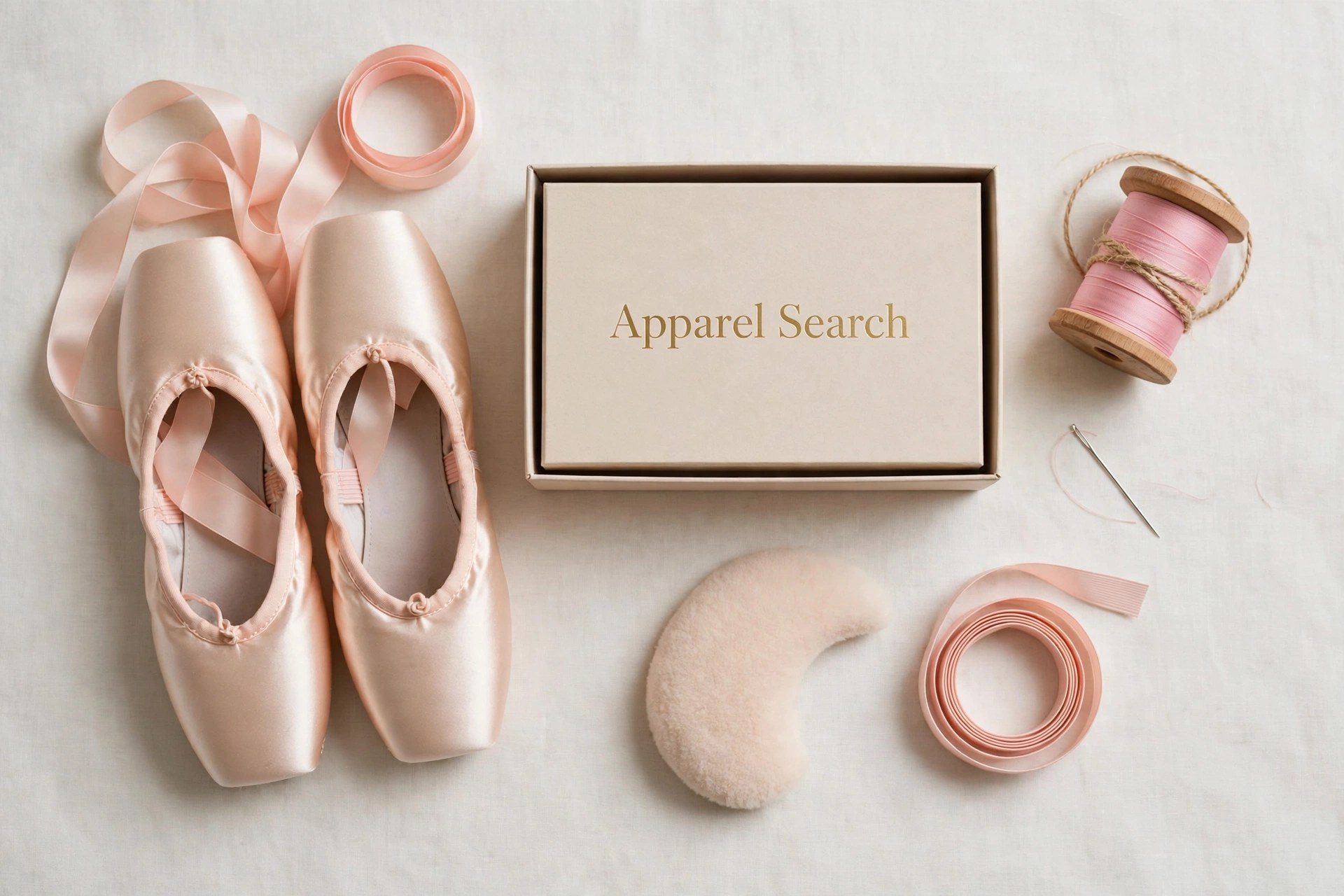
Of all the shoes in our women’s dance shoes guide, pointe shoes are the ones that are never simply bought. A pointe shoe must extend the line of the foot, hold the toes in a shaped box, and flex its shank exactly where the dancer’s arch bends — and feet differ in toe length, width, taper and arch more than any size chart can hold. So pointe shoes are fitted, in person, by a trained fitter, in a process closer to fitting an instrument than buying footwear. This guide explains how that fitting works, what an appointment involves, how the shoes are prepared and broken in, how long they last, and how they are cared for between classes.
Teacher Approval Comes First
Dancers go on pointe only when their teacher says they are ready. Readiness is a judgment a teacher makes from a student’s training, strength, technique and consistency in class — not a birthday, not a wish, and not a purchase. Book a first fitting after that conversation, not before it: the fitter’s job is to match a shoe to a foot, and the teacher’s job is to decide the moment. A good shop will ask, and a good teacher will want to see — often to approve — the first pair before ribbons are sewn and the shoes are danced in.
What the Fitter Is Matching
A fitting works through five variables, and the right shoe is the one that satisfies all five at once. Length leaves the toes lying flat in the box — never curled, never jammed — with the longest toe just reaching the end. Width holds the foot without squeezing it, so the box supports rather than compresses. Box shape follows the toes: a tapered foot wants a tapered box, a broad, even row of toes a squarer one, so no toe carries the load alone. Vamp length — the depth of the box over the toes — must cover enough to hold the foot without cutting into the bend of it. And shank strength, the stiffness of the sole’s spine, is matched to the arch and the dancer’s strength: enough support to work against, never so much that the dancer cannot roll through the shoe. Drawstring, elastic and the small details follow from there. This is why the same dancer can be a different size in every maker’s shoe, and why our general shoe fit guide’s rule — fit the foot, not the number — reaches its strictest form here.
The Fitting Appointment, Step by Step
Book ahead: specialist fitters work by appointment, and a first fitting commonly takes forty-five minutes to an hour. Arrive with clean feet, trimmed toenails and the tights or socks worn in class; the dancer will also wear whatever toe padding she will actually dance in, because padding changes the fit inside the box. The fitter starts with the feet themselves — their shape, toe pattern and arch — then brings shoes in several models and widths. Each candidate is checked standing flat, in a plié (which shows whether the length allows the toes to stay flat as the foot works), and up on pointe at the barre, where the fitter watches the alignment of foot and shoe: the dancer should sit straight over the platform, neither pulled back nor tipped forward, toes flat and uncrumpled inside the box. Expect to try many pairs and to reject most of them. The right pair feels snug and even, not comfortable like a slipper and never painful — and the dancer leaves with the exact model, size and width recorded, which is what makes later reorders possible.
Breaking In and Preparing the Shoes
New pointe shoes are deliberately unfinished. Before a first class, the ribbons and elastics are sewn on by hand — ribbons crossed over the ankle and tied to the inside, elastic across the heel or instep as the teacher prefers — positioned on the dancer’s own foot and stitched to the shoe’s binding, never glued. Sewing the first pair is part of the rite of passage, and most dancers learn it at the fitting or from their teacher. Breaking in then happens mostly by wearing: short periods around the house, gentle pliés and rises, letting warmth and work soften the box and shank where the foot actually bends. The older folklore of slamming shoes in doors or bending them double by hand shortens a shoe’s working life and can soften it in the wrong places; modern guidance is to let the dancing do the shaping, a little at a time, exactly as the fitter demonstrated.
How Long a Pair Lasts
Pointe shoes wear by the hour, not the month: the paste in the box and the shank soften with heat, moisture and work, and a pair that has gone soft — dancers say dead — no longer holds the foot as it was fitted to. Somewhere around ten to twenty hours of pointe work is the common range, gentler beginner work tending longer, daily advanced class much shorter; professionals can finish a pair in a single performance. Dancers who take several classes a week rotate two pairs, which stretches both pairs’ lives and lets each dry fully between wearings. Treat replacement as a recurring part of the training budget, planned with the teacher — and when a shoe’s platform frays, its box collapses to one side, or the shank stops springing back, it is done, however young it looks.
Care Between Classes
The enemy is trapped moisture. After every class the shoes come out of the dance bag, the padding comes out of the shoes, and the pair airs in the open — never sealed in plastic, never left in a hot car, never dried on a radiator, which cooks the paste that gives the box its shape. Stuffing them loosely with paper between classes helps them hold their form as they dry. Ribbons and elastics are checked for fraying, the satin brushed rather than washed, and the pair is retired to character-shoe or barre-only duty — or to the keepsake box of first pairs — when its working life ends. The care habits rhyme with the ones in our children’s dancewear guide: air everything, wash little, and let nothing live in the bag.
A note on buying: because a pointe shoe only works fitted, this page deliberately carries no shop box. The fitting is a specialist, in-store service — the shoes follow from it, and the shop that fits them is the place to buy them. Young dancers meeting dance footwear for the first time start with the soft slippers in our girls’ dance shoes guide; pointe is a later chapter, opened by a teacher.
Common Questions
Who decides when a dancer is ready for pointe shoes?
The dancer's teacher. Going on pointe is a step a ballet teacher authorizes when a student's training, strength, technique and maturity in class say she is ready — it is not a purchase a dancer or parent makes on a schedule or by age alone. A fitter fits the shoes; the teacher's judgment comes first, and a reputable shop will expect it to have happened before a first fitting is booked.
How long do pointe shoes last?
Measured in hours of class rather than weeks on a calendar — commonly somewhere in the range of ten to twenty hours of pointe work before the shank and box soften past the support the shoe was fitted to give, with beginners, who work more gently, often toward the longer end. Dancing on shoes that have gone soft ('dead') changes how the foot is supported, which is why teachers and fitters treat replacement as part of the training budget, not an extravagance.
Can pointe shoes be bought online by size?
A first pair should not be. Pointe fitting matches length, width, box shape, vamp length and shank strength to the individual foot, and two dancers with the same street-shoe size routinely leave a fitting in different models and sizes. Dancers who have been fitted in person and know their exact model and size do reorder that shoe — but the fitting itself is a specialist, in-store process, which is why this guide carries no shop box.
What happens at a first pointe shoe fitting?
The fitter examines the feet bare and in the padding the dancer will wear, tries several models and sizes, and checks the dancer standing flat, in plié and up on pointe, watching how the toes sit in the box and whether the shoe supports the line of the foot. Expect to try many pairs, expect the appointment to take the better part of an hour, and expect the teacher's preferences — many teachers want to approve a first pair, some attend or ask to see the shoes in class before they are sewn.