Women's Dancewear
Good dancewear is engineered, not just stretchy — here is how leotards, tights and practice skirts are actually made.
Shop Women's Dancewear Now
Shop Women's Dancewear on Amazon Shop Women's Dancewear on eBayThe Amazon and eBay links on this page are affiliate links. If you make a purchase through them, Apparel Search may earn a commission.
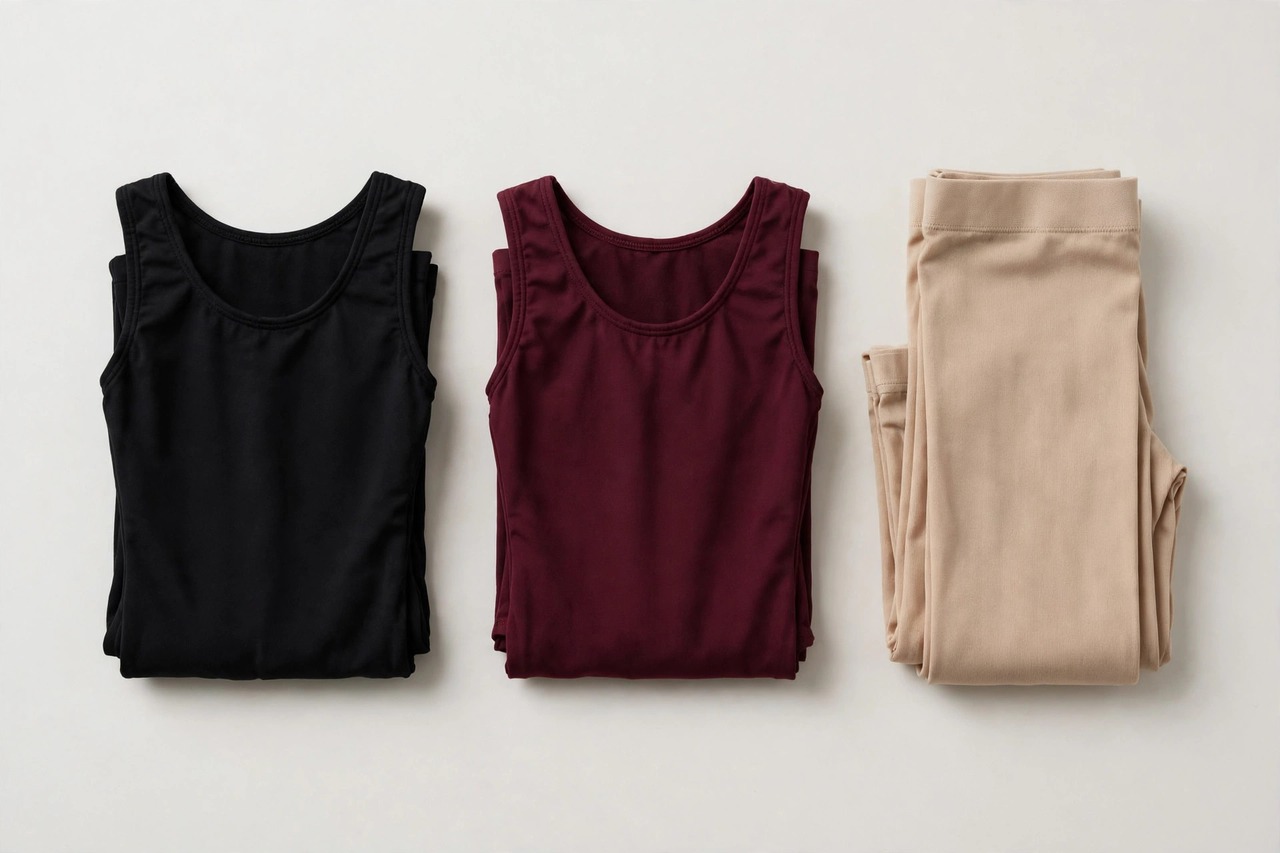
Dancewear is technical clothing. A leotard has to stretch in four directions, recover instantly, hold its shape through hundreds of washings, support without hardware digging in during floor work, and stay opaque under bright light while bent, lifted and turned. Understanding how these garments are constructed — the fabrics, seams, linings and finishes — helps you judge quality in the store instead of discovering it three classes later.
This guide looks at the garments themselves: what the options are, how they are built, and how to size and care for them so they perform as designed.
Leotards: Necklines, Backs and Support
The classic necklines each serve a purpose. Camisole leotards with thin straps give the cleanest shoulder line and are the standard for exams and auditions. Tank styles offer more coverage and strap stability. Cap-sleeve and three-quarter sleeve designs add warmth and a more formal look for class. High-neck and mock-neck cuts suit contemporary work, while pinch-front, sweetheart and V-neck fronts add shaping detail for studio wear where dress codes allow it. Backs range from low scoops to racerbacks and keyhole closures; lower backs look elegant but offer less strap security, so test port de bras and overhead reaches in the fitting room.
Support is built in, not added on. Most quality leotards include a shelf lining or full front lining, and many have a built-in bra layer with removable cups. Seaming matters too: princess seams shape without compression panels, center seams are economical but less smooth, and flatlock stitching lies flat against skin during floor work. Leg lines come in low ballet cuts, moderate cuts and high cuts; higher leg lines lengthen the visual line but ride up more, which is why many dancers prefer a moderate cut with good elastic tension for long rehearsal days.
Fabrics: What Dancewear Is Made From
Cotton-lycra blends feel soft, breathe well and look matte, but they hold moisture, fade faster and lose recovery sooner than synthetics. Nylon and microfiber blends are the modern workhorses: smooth, durable, quick to dry and resistant to pilling, with four-way stretch that snaps back wash after wash. Tactel and similar branded microfibers feel especially soft for long wear. Mesh panels and inserts add ventilation and design detail but should be checked for seam strength, since mesh tears at stress points if the stitching is sparse.
Performance fabrics add another layer of specification. Foil, hologram and velvet finishes are bonded or flocked onto a stretch base, which makes them beautiful under light and delicate in the wash. Matte finishes hide sweat better than shiny ones. Whatever the fabric, hold it up to light and stretch it firmly: quality dancewear stays opaque at full stretch, and the recovery should be immediate, with no lingering bagginess at the seat or knees.
Tights and Practice Skirts
Dance tights are far denser than fashion hosiery, typically knit to be fully opaque with a reinforced toe and a comfortable waistband that will not roll during floor work. Footed tights are the class standard. Convertible tights have a reinforced opening under the foot so they can be rolled up for pointe shoe fittings, pedicures or barefoot contemporary work. Stirrup tights end under the arch, leaving heel and toes bare, and footless styles suit modern and jazz classes. Weights vary: standard class tights are lighter, while performance and winter rehearsal tights are heavier and more durable.
Practice skirts complete the ballet kit. Wrap skirts in chiffon or georgette tie at the waist and fall somewhere between mid-thigh and knee; pull-on styles use an elastic waistband for speed. The fabric should float without clinging, and the hem should be narrow and clean. Treat skirts as precision items — a skirt that twists or a tie that loosens mid-combination is a distraction no dancer needs.
Sizing, Fit Checks and Care
Dancewear sizing runs smaller than street clothing, and girth — the measurement over the shoulder and through the torso — matters more than height or weight alone. Between sizes, most dancers size up in leotards to avoid shoulder straps cutting in during overhead work. Fit checks: raise both arms, bend fully forward, and do a deep plié in the fitting room. Straps should stay put, the seat should stay covered, and nothing should require adjusting afterward.
Care decides lifespan. Wash leotards and tights in cold water, ideally in a mesh bag, and hang to dry; dryer heat destroys elastane faster than anything else. Wash embellished and foil finishes inside out, skip fabric softener because it coats stretch fibers and reduces recovery, and store tights rolled rather than folded over hooks. Retire garments when elastic crackles, straps lose snap or fabric thins at stress points — worn-out dancewear fails at the worst possible moments.
Related Women's Guides
Photos

More to Explore on Apparel Search
Looking for Women's Clothing Stores?
This guide helps you choose women's dancewear by style, fabric and fit. To browse where to buy, visit our women's clothing store directory, where you can find retailers that carry them.