Women's Dance Clothing
Dance clothing is a working system — layers you add for warm-ups, remove for class, and swap completely for the stage.
Shop Women's Dance Clothing Now
Shop Women's Dance Clothing on Amazon Shop Women's Dance Clothing on eBayThe Amazon and eBay links on this page are affiliate links. If you make a purchase through them, Apparel Search may earn a commission.
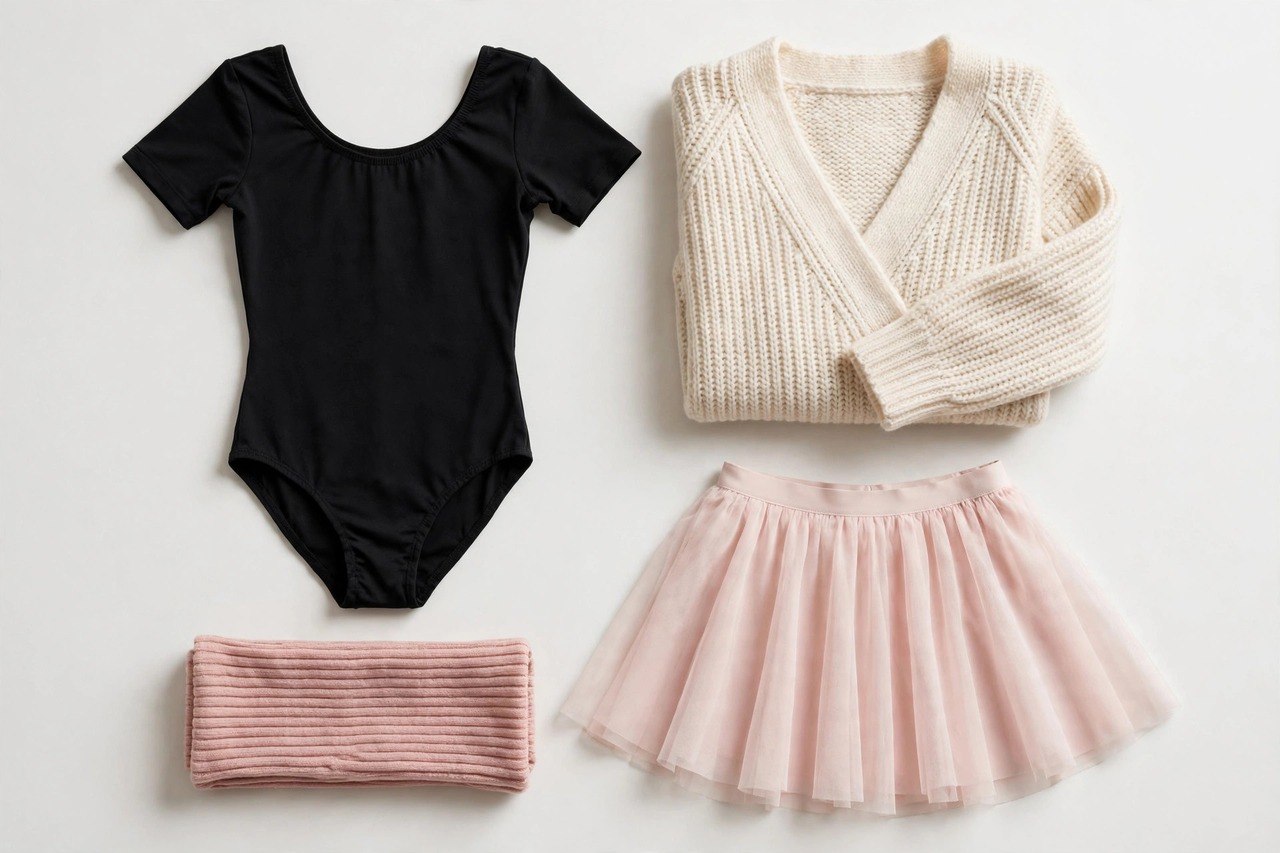
Ask a dancer what she is wearing and the answer changes by the hour. The outfit for the first pliés of a cold morning class is not the outfit for center work, and neither is what she wears under stage lights. Dance clothing is best understood as a layering system, not a single costume: a close base that lets a teacher see alignment, removable warm layers that protect muscles while they wake up, and a cleaner, often more formal set of pieces reserved for rehearsal runs and performance.
That system is practical before it is pretty. Every layer has a job, a moment when it goes on, and a moment when it comes off. Once you understand the order, shopping gets simpler — you stop buying random pretty pieces and start building a small rotation that works for class, rehearsal and show week alike.
The Base Layer: What Stays On
Almost everything starts with a leotard and tights. That combination is the base for ballet and the foundation under most contemporary, lyrical and jazz combinations too. Teachers rely on it because nothing hangs, flaps or hides the line of the back, hips and knees. Over the leotard, dancers add a practice skirt for ballet, fitted shorts for jazz and contemporary work, or leggings for hip-hop and commercial styles where floor work and a streetwear silhouette are part of the vocabulary.
Fit here is about information. Clothing should move exactly when you move, with no lag from loose fabric. Many dancers keep two or three base sets in rotation rather than one favorite, because dance clothing is washed constantly and a damp leotard pulled from yesterday's bag is a miserable way to start class. Dark, plain colors dominate weekday classes; studios often save color and detail for exam, audition or performance wear.
Warm-Ups: The Layers That Come Off
Warm-up clothing exists to raise muscle temperature during barre and the first exercises, then leave. Classic pieces include knit wrap sweaters that tie at the waist, shrugs that cover shoulders and arms while leaving the torso visible, leg warmers worn over tights, and loose knit warm-up pants or shorts that dancers peel away one side at a time as they warm through. Trash-bag pants — rustly, sauna-like trousers — are a backstage staple for keeping heat in between pieces, though they are far too noisy and slippery for actual dancing.
The rule with warm-ups is removability. Choose pieces you can take off mid-combination without breaking the exercise: wraps that untie, leg warmers that roll down, sweaters that slip off the shoulders. If a layer needs a trip to the dressing room, it will end up left in your bag. Studios also vary in how much warm-up clothing they allow past barre, so newer dancers should watch what the advanced class wears and follow that lead.
Class, Rehearsal and Performance: Three Different Dress Codes
Class dress codes are the strictest in their plainness. Many ballet schools specify the leotard color by level, require hair in a bun, and ban skirts past a certain length or any jewelry that could catch a partner. Jazz, tap and contemporary classes are usually more relaxed about color but just as firm about fit and about shoes, because the teacher needs to see feet and ankles clearly.
Rehearsal clothing sits in between. For studio rehearsals dancers wear class clothes, sometimes with a rehearsal skirt that mimics the length and weight of the actual costume so turns and lifts feel right. Performance is a different wardrobe entirely: costumes are assigned, fitted and maintained by the company or school, worn with performance tights, the correct undergarments in matching tones, and stage makeup and hair set to a shared standard. Never rehearse in a costume unless you are told to — costumes are fragile, hard to clean, and irreplaceable on short notice.
Packing a Dance Bag That Works
A well-packed dance bag prevents most clothing emergencies. Keep a spare leotard and pair of tights sealed in a small pouch; runs and spills always happen on performance days. Add your warm-up layers folded on top so they come out first, a small towel, a sewing kit with needle, thread and safety pins for strap and ribbon repairs, and a plastic bag for damp clothes so the rest of the bag stays fresh.
Organize by order of use: shoes at the bottom or in a separate ventilated pocket, base layers next, warm-ups on top. After class, hang damp pieces to dry at home rather than leaving them balled in the bag — that single habit doubles the life of elastic and keeps odors from setting into synthetic fabrics. Before a performance, pack the night before using the posted costume and hair list, and check it twice; backstage is no place to discover a missing skirt.
Related Women's Guides
Photos

More to Explore on Apparel Search
Looking for Women's Clothing Stores?
This guide helps you choose women's dance clothing by style, fabric and fit. To browse where to buy, visit our women's clothing store directory, where you can find retailers that carry them.