Women's Leotards Guide
The one-piece foundation of dance, gymnastics and skating: cuts, necklines, fabrics and fit, explained as the athletic garment it is.
Shop Women's Leotards Now
Shop Women's Leotards on Amazon Shop Women's Leotards on eBayThe Amazon and eBay links on this page are affiliate links. If you make a purchase through them, Apparel Search may earn a commission.
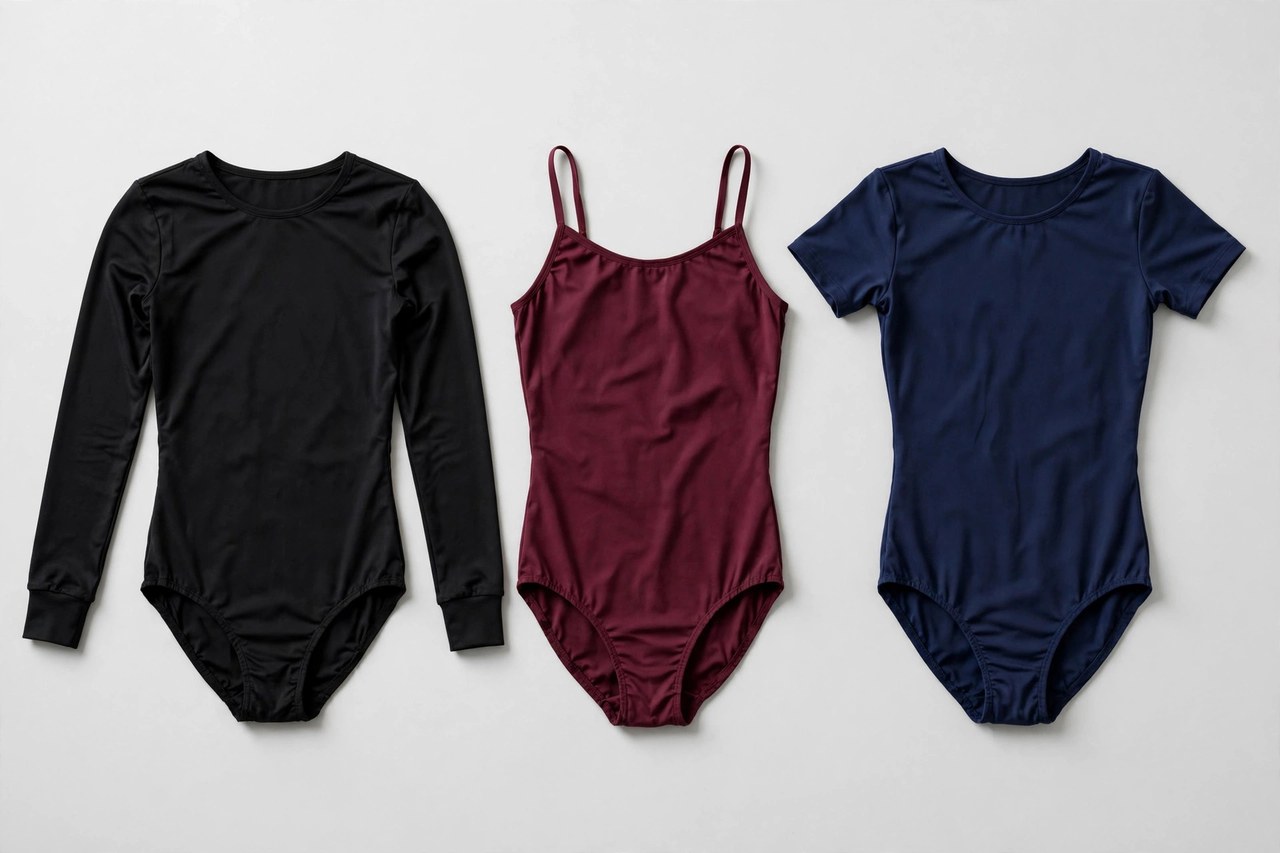
A women's leotard is a close-fitting one-piece garment, made of a stretchy fabric, that covers the body from the shoulders to the top of the thighs, worn by dancers and people exercising indoors. For females, the standard gymnastics competition uniform is a leotard, and leotards are also worn by acrobats, figure skaters, athletes, actors and circus performers, both as practice garments and as performance costumes.
This guide treats the leotard strictly as what it is: technical athletic wear. It covers the cuts and necklines on offer, the fabrics that make them work, the related unitard, and how to size a garment that has to move exactly with the body.
Cuts and Necklines
There are sleeveless, short-sleeved and long-sleeved leotards. Tank and camisole styles dominate practice wear for freedom of movement and ventilation; short sleeves are common in ballet class dress codes; long sleeves are standard for gymnastics competition and skating, where they also carry embellishment. Leg lines range from a traditional ballet cut to higher competition cuts — check your studio or federation rules before buying for an event.
Necklines are engineered, not decorative. Scoop-necked leotards have wide neck openings and are held in place by the elasticity of the garment. Others are crew necked or polo necked and close at the back of the neck with a zipper or snaps — a closure that keeps the neckline secure through inversions and lifts. How do you put one on? Leotards are entered by stepping into the legs and pulling the sleeves over the shoulders, which is why the fabric's recovery matters so much.
Fabrics
The modern leotard is a nylon or polyester knit with a generous percentage of elastane (sold as Lycra or spandex). Four-way stretch lets the garment follow splits, leaps and backbends without riding or binding; matte finishes are the class standard, while metallic, hologram and velvet fabrics belong to performance and competition. Cotton-blend leotards feel soft for short classes but absorb sweat and sag when wet, so they are rarely used for long training days.
Lining is the quality tell. A front-lined or fully lined leotard gives coverage and support and keeps embellishments from irritating the skin; an unlined practice leo is lighter and cheaper but less forgiving. Flat, soft seams at the leg elastic prevent the chafing that only shows up an hour into class.
Leotards and Unitards
A close variation is the unitard, which also covers the legs — essentially a leotard extended into full-length legs. Unitards are used in modern dance, acrobatics and some skating disciplines, anywhere a continuous line of the leg is wanted or modesty rules require full coverage. Biketards split the difference with short legs.
For class, most dancers pair a leotard with tights worn under or over it, plus a wrap skirt or shorts for ballet, or leggings for acro and aerial work. The leotard is the fixed base layer of the kit; everything else rotates around it.
Sizing and Care
Leotard sizing runs by torso measurement — the girth: a tape from the shoulder, down the front, under the crotch and up the back to the same shoulder. Buy by girth, not by dress size; a leotard that is short in the torso will pull at the shoulders no matter how it fits elsewhere. It should feel snug with no wrinkles of spare fabric, but never restrict breathing or circulation at the leg elastic.
Wash cold, inside out, and hang dry: heat destroys elastane faster than anything else, and a stretched-out leotard cannot be rescued. Keep embellished competition garments in a garment bag, and retire practice leos when the fabric loses its snap — a baggy leotard is a safety issue on apparatus, not just a looks issue.
Related Women's Guides
More to Explore on Apparel Search
Looking for Women's Clothing Stores?
This guide helps you choose women's leotards for dance and gymnastics. To browse where to buy, visit our women's clothing store directory, where you can find retailers that carry them.