Men's Wool Scarves Guide
Men's wool scarves are the simplest garment in the wardrobe - a length of woven or knitted wool - and the one that decides whether a winter coat looks finished. A scarf seals the coat's open neck, adds the outfit's most visible block of color or pattern, and works in weights from a fine merino layer under a blazer to a blanket check that serves as a travel wrap.
Shop Men's Wool Scarves Now
Shop Men's Wool Scarves on Amazon Shop Men's Wool Scarves on eBayThe Amazon and eBay links on this page are affiliate links. If you make a purchase through them, Apparel Search may earn a commission.
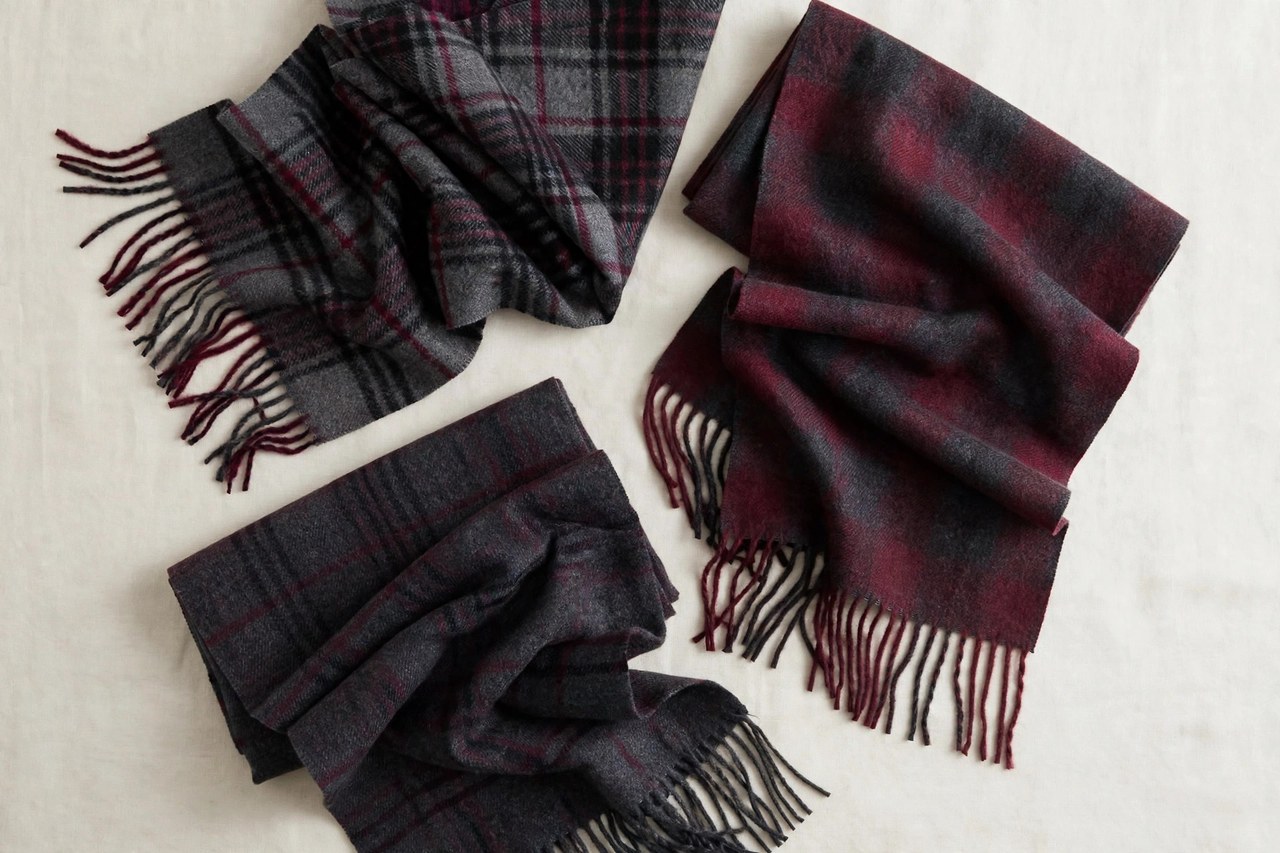
Men's wool scarves are the simplest garment in the wardrobe - a length of woven or knitted wool - and the one that decides whether a winter coat looks finished. A scarf seals the coat's open neck, adds the outfit's most visible block of color or pattern, and works in weights from a fine merino layer under a blazer to a blanket check that serves as a travel wrap. This guide is built around the questions buyers actually ask: which style, which size, which fabric, and what will it look like after a year of real use - answered in order, with the trade-offs stated plainly.
Styles and Construction
Woven scarves in twill or plain weave carry the classic patterns - tartans, checks, herringbones, solids with fringed ends - in lambswool for soft loft, merino for smoothness, and cashmere blends for luxury. Knitted scarves in rib or garter stitch read casual and pair with knitwear and parkas. Judge a scarf by fiber honesty first (scarves are where low wool percentages hide), then by hand: it should feel warm and dry, not slick; the weave should be even with tight selvedges; fringes should be straight and securely twisted or knotted. A finer, denser scarf in merino dresses up; a thick lambswool plaid is the cold-weather workhorse.
Wool accessories live or die on fiber and finishing: a scarf, hat or pair of gloves in fine merino feels soft at the throat and skin, while lambswool and Shetland yarns trade a little softness for loft and durability. Look for fully-fashioned shaping on knitted pieces, linked or neatly seamed joins, ribbing that recovers after stretching, and - on felt hats - even, dense felting with a clean brim edge and a sweatband that is stitched, not glued. Woven scarves should have straight, tight fringes and even selvedges; woven labels should state fiber content honestly, because acrylic blends wear warmer-looking than they feel.
Fit and Sizing
Length and width decide how a scarf wears: 150 to 180 cm by 25 to 30 cm covers most men and knots - the loop, the drape, the once-around, the coat-tuck. Tall men and men who wear scarves over heavy coats should take the longer end of the range; a scarf that barely crosses the chest is a decoration, not insulation. Match the knot to the coat: tailored coats take slim knots and tucks, casual coats take loops and bulk. Pattern scale matters too - a big check needs a plain coat, a fine check can live with a patterned one.
Wash wool accessories gently and rarely: cool water, wool detergent, no wringing - press the water out, roll in a towel, and dry scarves and knits flat, reshaped to size. Gloves dry flat away from heat so the leather or knit palms do not stiffen; felt hats are brushed, never washed, steamed back to shape if they droop, and stored crown-down on a stand or in a box. Keep all wool accessories clean before seasonal storage and use cedar or lavender against moths - a scarf or hat put away with skin oils on it is the piece the moths will find.
Wearing and Care
Air a wool scarf after wear and wash it only when it needs it - cool water, wool detergent, pressed dry in a towel, dried flat so the fringes stay straight. Never hang a wet wool scarf by one end. Store scarves folded or rolled, clean, with cedar nearby; a scarf drawer is a moth's favorite address, and the scarf you wore all winter carries exactly the skin oils they seek.
Size wool accessories by measurement, not habit: hat size is head circumference measured above the ears, glove size is the circumference of the dominant hand around the knuckles, and a scarf's useful size is its length against your coat - long enough to cross and tuck, or to loop once with ends at the chest. Knitted wool relaxes with wear, so gloves and hats should start snug but never tight enough to leave marks; felt hats do not stretch meaningfully and must start right. Socks should reach mid-calf or over it so they stay up by their own ribbing rather than by elastic alone.
Common Questions
What is the best knot for a wool scarf with a tailored coat?
The drape or the coat-tuck: scarf around the neck with ends hanging inside the coat's closed front, or simply draped with ends even at the chest. Both look clean and keep the scarf's bulk out of the tailored line. Bulky loops belong to casual coats and knitwear.
Lambswool or merino scarf - which should I buy?
Merino for smoothness, dressier coats and sensitive necks; lambswool for loft, pattern and everyday warmth at a friendlier price. A first scarf in a mid-grey or navy merino covers the most coats; a plaid lambswool is the classic second.
Why does my wool scarf feel itchy when others do not?
Coarser fibers in the yarn - often longer-staple lambswool or recycled wool - prickle at the neck's sensitive skin. Wear it over a collar or roll-neck on cold days, or move that scarf to outer duty over high collars and replace its next-to-skin role with fine merino.
More in Men's Clothes Guide W
Background
Are you ready to learn about wool scarves for men? We hope so, because you found our page on the subject. Let's assume you already have a general understanding that wool is an amazing fiber. Wool is the textile fiber obtained from sheep and other animals, including cashmere and mohair from goats, qiviut from muskoxen, angora from rabbits, and other types of wool from camelids. First of all the word "scarves" is plural for "Scarf". See also About Wool for Menswear.
More to Explore on Apparel Search
Looking for Men's Clothing Stores?
This guide explains men's wool scarves. To browse where to buy, visit our men's clothing store directory, where you can find retailers that carry them.