Men's Wool Gloves Guide
Men's wool gloves are the knitted and wool-lined handwear of the cold months - from fine merino liners and everyday knitted gloves to rugged fisherman-style mitts converted to gloves, and leather gloves warmed with wool or cashmere linings. Wool earns its place on hands because it insulates when damp, breathes during activity and stays odor-resistant through a season of pockets and dashboards.
Shop Men's Wool Gloves Now
Shop Men's Wool Gloves on Amazon Shop Men's Wool Gloves on eBayThe Amazon and eBay links on this page are affiliate links. If you make a purchase through them, Apparel Search may earn a commission.
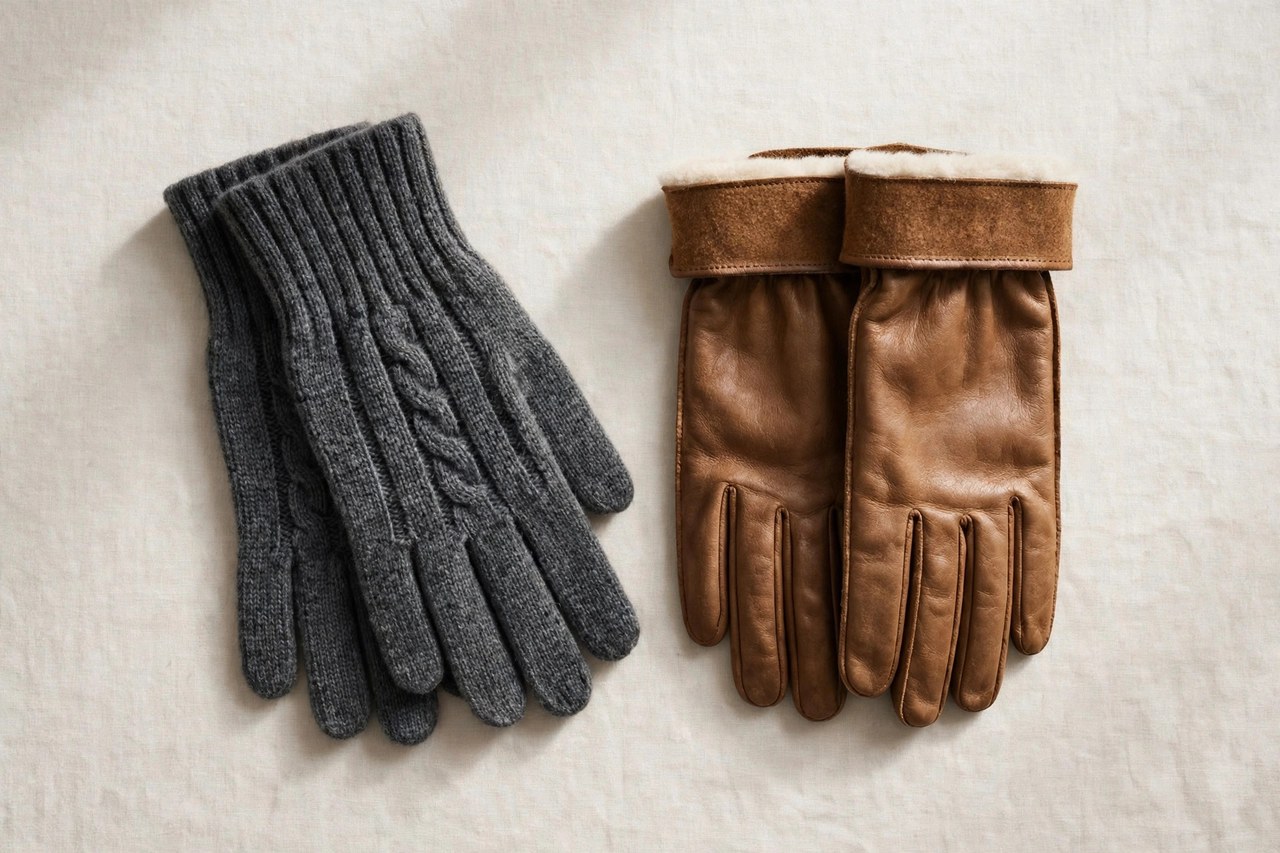
Men's wool gloves are the knitted and wool-lined handwear of the cold months - from fine merino liners and everyday knitted gloves to rugged fisherman-style mitts converted to gloves, and leather gloves warmed with wool or cashmere linings. Wool earns its place on hands because it insulates when damp, breathes during activity and stays odor-resistant through a season of pockets and dashboards. This guide covers the styles worth knowing, the fit points that decide comfort, the fabrics and construction that separate a good buy from a regret, and the simple care that makes the garment last.
Styles and Construction
Knitted wool gloves divide by yarn and gauge: fine merino knits give dexterity and layer under shell gloves for serious cold; lambswool and Shetland mid-gauges are the everyday standard; chunky hand-knit styles trade dexterity for maximum loft. Construction details that matter: shaped, fully-fashioned fingers rather than a flat stamped outline, a ribbed cuff long enough to seal the coat sleeve gap, and reinforced palm patches on gloves that will grip steering wheels, railings and tools. Touchscreen tips woven with conductive yarn keep phones usable; leather gloves with wool linings move the wool inside, where its job is pure insulation under a windproof skin.
Wool accessories live or die on fiber and finishing: a scarf, hat or pair of gloves in fine merino feels soft at the throat and skin, while lambswool and Shetland yarns trade a little softness for loft and durability. Look for fully-fashioned shaping on knitted pieces, linked or neatly seamed joins, ribbing that recovers after stretching, and - on felt hats - even, dense felting with a clean brim edge and a sweatband that is stitched, not glued. Woven scarves should have straight, tight fringes and even selvedges; woven labels should state fiber content honestly, because acrylic blends wear warmer-looking than they feel.
Fit and Sizing
Size gloves by the circumference of your dominant hand around the knuckles, and fit them snug: wool knit relaxes with wear, and fingertip length beyond your fingers destroys the dexterity you bought gloves for. Fingers should reach the ends, the palm should lie smooth without webbing between the fingers being pulled tight, and the cuff should overlap your coat sleeve when you reach. Lined leather gloves fit closer than work gloves - allow the lining its room by fitting late in the day when hands are slightly fuller.
Wash wool accessories gently and rarely: cool water, wool detergent, no wringing - press the water out, roll in a towel, and dry scarves and knits flat, reshaped to size. Gloves dry flat away from heat so the leather or knit palms do not stiffen; felt hats are brushed, never washed, steamed back to shape if they droop, and stored crown-down on a stand or in a box. Keep all wool accessories clean before seasonal storage and use cedar or lavender against moths - a scarf or hat put away with skin oils on it is the piece the moths will find.
Wearing and Care
Air wool gloves after wear - hands sweat even in cold weather - and wash knitted pairs gently in cool water with wool detergent, pressing water out rather than wringing, then dry flat reshaped to size. Leather-and-wool gloves are specialist-cleaned or wiped and air-dried only. Store gloves clean, in pairs, with cedar nearby; a glove put away with road salt and skin oils on the wool is a moth's first course.
Size wool accessories by measurement, not habit: hat size is head circumference measured above the ears, glove size is the circumference of the dominant hand around the knuckles, and a scarf's useful size is its length against your coat - long enough to cross and tuck, or to loop once with ends at the chest. Knitted wool relaxes with wear, so gloves and hats should start snug but never tight enough to leave marks; felt hats do not stretch meaningfully and must start right. Socks should reach mid-calf or over it so they stay up by their own ribbing rather than by elastic alone.
Common Questions
Are wool gloves warm enough for serious cold?
For everyday winter - commuting, walking, driving - a good knitted wool glove is warm enough, especially with a ribbed cuff sealing the sleeve. For prolonged exposure well below freezing, layer fine merino wool liners under windproof mittens or choose leather gloves with thick wool linings; wool alone is wind-permeable.
Wool or fleece gloves - which is better?
Wool insulates when damp, resists odor through repeated wear and keeps working after seasons of use; synthetic fleece is lighter, cheaper and quicker to dry but picks up smells and loses loft as it packs. For gloves worn daily all winter, wool is the longer-lived and pleasanter material.
Why do my wool gloves pill and thin at the fingers?
Fingertips and palms are friction zones: loose fibers migrate into pills, and abrasion thins the knit. Depill gently rather than pulling, choose gloves with nylon-blended yarn or palm patches for driving and gripping, and rotate two pairs so each rests and dries fully.
More in Men's Clothes Guide W
Background
If the glove fits, wear it. Everyone enjoys a nice pair of gloves . However, selecting the right fiber or fabric is sometimes a bit tricky. It really depends on the purpose of the glove. Are you wearing them for gardening? Or maybe you own a Ferrari and need a nice pair of driving gloves to keep your hands from slipping off the steering wheel. A glove is a type of garment which is designed to cover our hands. They can keep our hands protected & warm. Gloves come in many different fabrics, colors, and purposes. There are gloves designed specifically for sports, cold weather, recreation, gardening, industrial purposes, etc. Some gloves are meant to keep us warm and others are meant entirely with the purpose of protection in mind. Wool is the fine soft hair forming the coat of a sheep, goat, or similar animal. It is a textile fiber that has many benefits. One of which is keeping our hands warm.
Looking for Men's Clothing Stores?
This guide explains men's wool gloves. To browse where to buy, visit our men's clothing store directory, where you can find retailers that carry them.