Men's Double Gore Slip-on Shoes Guide
Men's double gore slip-on shoes are laceless shoes and boots held to the foot by elastic gore panels on both sides of the ankle - the construction the world knows best in the Chelsea boot. 'Gore' is the shoemaker's word for the elastic gusset itself (a triangular insert, borrowed from sewing), and 'double' means a panel on each side rather than one: the two panels stretch as the foot enters, then close around the ankle with even pressure, giving a laceless shoe a fitted hold that a simple loafer last cannot match.
Shop Men's Double Gore Slip-on Shoes Now
Shop Men's Double Gore Slip-on Shoes on Amazon Shop Men's Double Gore Slip-on Shoes on eBayThe Amazon and eBay links on this page are affiliate links. If you make a purchase through them, Apparel Search may earn a commission.
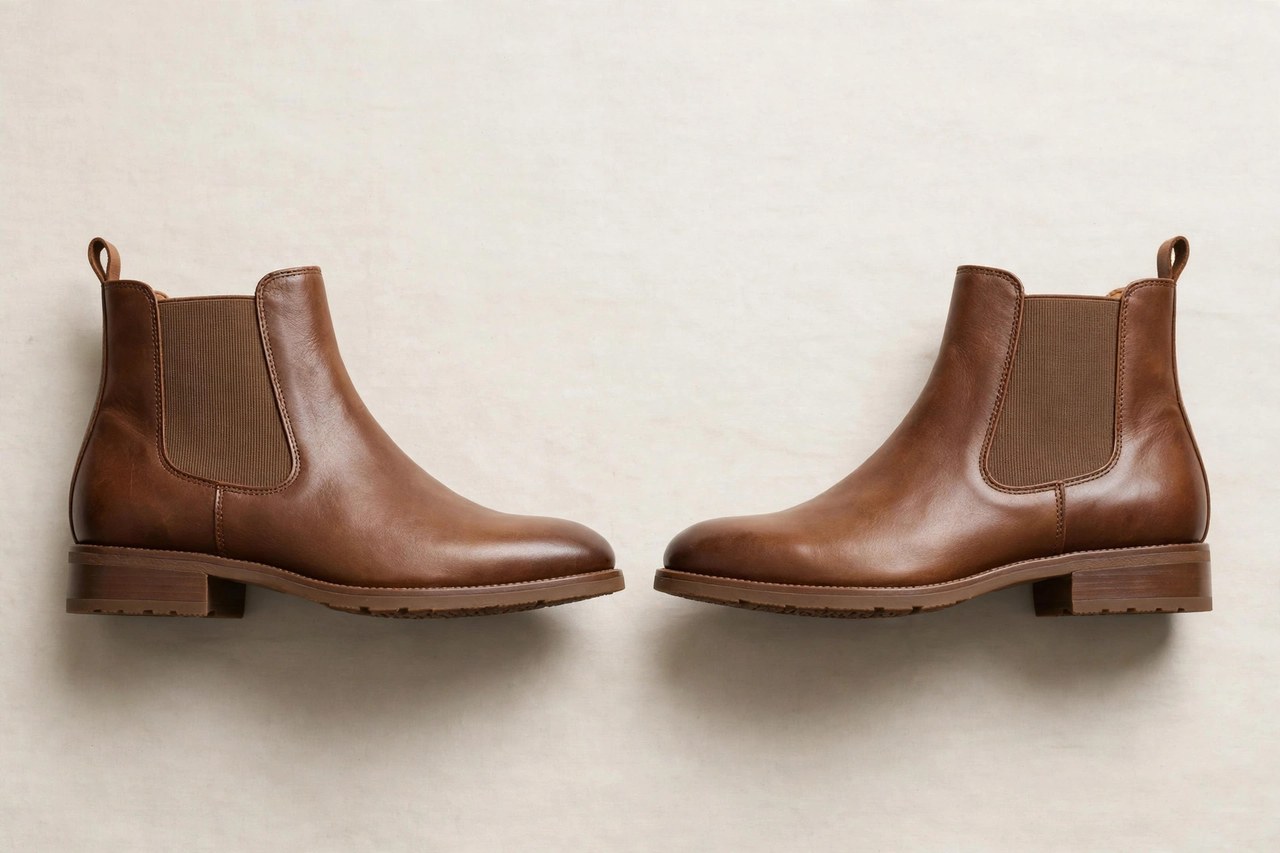
Men's double gore slip-on shoes are laceless shoes and boots held to the foot by elastic gore panels on both sides of the ankle - the construction the world knows best in the Chelsea boot. 'Gore' is the shoemaker's word for the elastic gusset itself (a triangular insert, borrowed from sewing), and 'double' means a panel on each side rather than one: the two panels stretch as the foot enters, then close around the ankle with even pressure, giving a laceless shoe a fitted hold that a simple loafer last cannot match. This guide explains what to look for, how the sizing actually works, which fabrics and constructions earn their price, and how to care for the garment so it keeps doing its job season after season.
Styles and Construction
The pattern's home is the boot: the Chelsea, close-fitting, ankle-high, with a plain toe and a pull tab at the back, in leather for town and suede for everything softer. The same construction appears in low shoes - gore-front slip-ons that dress like loafers - and in rugged chelsea work boots with lugged soles. Quality lives in the elastic and the last: good gore is woven heavy, recovers fully, and is stitched under reinforced seams, because the panel is both the door and the lock of the shoe. Leather grades the rest - full-grain calf for dress, waxed and suede finishes for casual, with Goodyear welting at the tier where the boot is meant to be resoled.
Judge footwear by attachment and compound: cemented soles are light and affordable, stitched or welted constructions cost more and can be repaired, and the outsole rubber decides grip against longevity - soft compounds bite, hard compounds endure. Linings decide comfort over hours, removable insoles decide whether your own supports can come along, and honest weight decides whether the pair disappears on the foot or taxes every mile of the day.
Fit and Sizing
Fit is the whole purchase, because there are no laces to negotiate with: the boot must hold the heel without slip and the instep without pressure, from the first try-on. A thumb's pressure at the ankle should meet resistance from the gore, not looseness - elastic only ever relaxes with years, never tightens, so a sloppy new fit is a failed fit. Judge them in a full walk, including stairs, where a heel that lifts will announce itself. Between sizes, dress versions usually serve the smaller size once the leather eases; suede eases most of all.
Fit footwear late in the day in the socks you will actually wear, with roughly a thumb's width beyond the longest toe, the heel held without lift, and the foot's widest point meeting the shoe's widest point. Sizes are unstandardized between makers - trust your measured length and width over the printed number, and require no break-in argument: a shoe that needs excuses in the shop delivers them on the road.
Wearing and Care
Care for the gore as a material with a lifespan: put the boots on with the pull tab and a shoehorn, never by hauling on the elastic - stretched-out gore is the pattern's one unrepairable failure short of a cobbler's panel replacement. Trees hold the last's shape, rotation rests the elastic as much as the leather, and suede versions get protector spray and a brush. Heat is elastic's enemy: dry the boots slowly, away from radiators. The leather will outlast the gore if you mistreat it; treat it kindly and the pair ages together.
Rotation is the first care rule: a day of rest between wears lets linings dry and cushioning rebound, and it doubles a rotation's life compared with daily wear of one pair. Clean after use, dry at room temperature away from radiators, hold shape with trees or paper, and condition leather on a schedule rather than when it looks thirsty. Reproof weather finishes when water stops beading, and resole stitched footwear before the wear reaches the welt.
Common Questions
What does 'gore' mean in a slip-on shoe?
A gore is an elastic gusset - a panel of woven elastic inserted into the shoe's upper. In a double-gore shoe there are two, one on each side of the ankle. They stretch apart to admit the foot, then contract to hold it, which is what lets a laceless boot fit closely instead of flopping like a wellington. The term comes from dressmaking, where a gore is a triangular panel set into a garment.
Are Chelsea boots the same as double gore slip-ons?
The Chelsea boot is the famous member of the family - ankle boot, plain toe, pull tab, elastic sides - but the construction is wider than the style: low double-gore shoes, gore-front loafers and rugged work chelseas all use the same two-panel principle. When a listing says double gore slip-on without 'boot', expect a low shoe built like a loafer with elastic sides. The fitting rule is shared: heel held, instep snug, no reliance on breaking in the elastic.
How long does the elastic in gore shoes last?
Quality woven gore, used with a shoehorn and rested between wears, holds its recovery for many years - typically the life of a resole cycle or two. Heat, daily wear without rest, and pulling the boots on by the panels shorten it sharply. When the ankle starts to feel loose and the heel lifts, a cobbler can replace the panels on a welted boot, which is one more argument for buying the welted tier if the style is a staple of your wardrobe.
More in Men's Clothes Guide D
Looking for Men's Clothing Stores?
This guide explains men's double gore slip-on shoes. To browse where to buy, visit our men's clothing store directory, where you can find retailers that carry them.