Men's Designer Shoes Guide
Men's designer shoes are footwear from fashion houses and luxury labels - dress shoes, sneakers and boots where the designer's eye and the house's materials budget replace the shoemaker's tradition as the headline. The category spans two different products sharing a name: luxury versions of classic shoes, built by real shoemakers for houses; and fashion shoes proper, above all the designer sneaker, where silhouette and branding lead and construction follows. Knowing which of the two you are buying is the whole skill this page teaches.
Shop Men's Designer Shoes Now
Shop Men's Designer Shoes on Amazon Shop Men's Designer Shoes on eBayThe Amazon and eBay links on this page are affiliate links. If you make a purchase through them, Apparel Search may earn a commission.
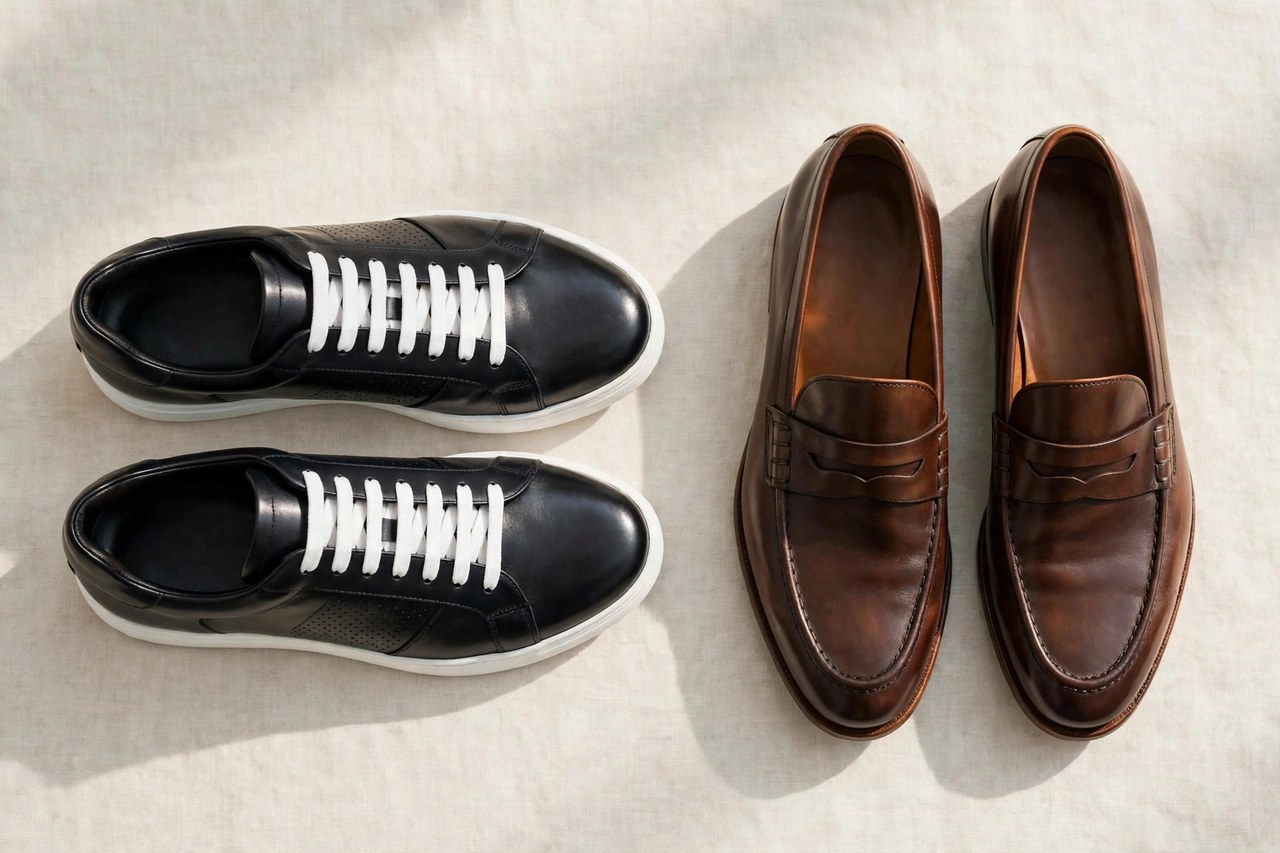
Men's designer shoes are footwear from fashion houses and luxury labels - dress shoes, sneakers and boots where the designer's eye and the house's materials budget replace the shoemaker's tradition as the headline. The category spans two different products sharing a name: luxury versions of classic shoes, built by real shoemakers for houses; and fashion shoes proper, above all the designer sneaker, where silhouette and branding lead and construction follows. Knowing which of the two you are buying is the whole skill this page teaches. This guide covers the styles worth knowing, the fit points that decide comfort, the fabrics and construction that separate a good buy from a regret, and the simple care that makes the garment last.
Styles and Construction
In classic designer shoes, the premium buys leather (full-grain, vegetable-tanned, from named tanneries), construction (Goodyear welting and hand-lasting survive at this tier), and lasts designed for elegance - longer, sleeker, narrower than comfort-brand lasts. In designer sneakers, it buys design language: the silhouette, the color blocking, the sole mold that exists for one house alone, and materials like full leather uppers and Margom-style rubber soles in place of molded foam. What it rarely buys is repairability in sneakers - luxury sneakers are still glued products with a fashion lifespan.
Judge footwear by attachment and compound: cemented soles are light and affordable, stitched or welted constructions cost more and can be repaired, and the outsole rubber decides grip against longevity - soft compounds bite, hard compounds endure. Linings decide comfort over hours, removable insoles decide whether your own supports can come along, and honest weight decides whether the pair disappears on the foot or taxes every mile of the day.
Fit and Sizing
Designer lasts run narrow and long: most men take the same size as in dress shoes, but width is the trap - a sleek last that pinches in the shop will not forgive later. Try late in the day, in dress socks for classics and athletic socks for sneakers, and walk on hard floor. For classic shoes, buy the rotation logic: a designer pair worn daily dies like any other; rested on trees between wears, it can be resoled and serve a decade. For sneakers, buy the colorway your wardrobe actually uses, not the season's loudest.
Fit footwear late in the day in the socks you will actually wear, with roughly a thumb's width beyond the longest toe, the heel held without lift, and the foot's widest point meeting the shoe's widest point. Sizes are unstandardized between makers - trust your measured length and width over the printed number, and require no break-in argument: a shoe that needs excuses in the shop delivers them on the road.
Wearing and Care
Care classics as fine shoes demand: cedar trees from the moment they come off, rotation days, conditioner before polish, and a cobbler relationship for welts and heels. Designer sneakers need gentler handling than their athletic cousins - leather uppers cleaned with proper products, never machine-washed, air-dried away from heat, and white soles wiped before the grime sets into the rubber. Store both in bags or boxes; a designer's finish is a surface, and surfaces are what storage destroys.
Rotation is the first care rule: a day of rest between wears lets linings dry and cushioning rebound, and it doubles a rotation's life compared with daily wear of one pair. Clean after use, dry at room temperature away from radiators, hold shape with trees or paper, and condition leather on a schedule rather than when it looks thirsty. Reproof weather finishes when water stops beading, and resole stitched footwear before the wear reaches the welt.
Common Questions
Are designer sneakers worth it compared with regular sneakers?
In materials and design, sometimes; in durability and comfort engineering, rarely. A leather designer sneaker with a proper rubber sole will out-wear and out-age a mesh athletic shoe, and its silhouette is the point of the purchase. But it will not cushion like a performance shoe, and it cannot be resoled. Buy it as a leather casual shoe with a fashion voice - judged on leather, stitching and sole quality - and it can be worth it. Buy it as an athlete or as an investment, and it is neither.
How can you judge a designer shoe's quality in the store?
Four checks: leather first - full-grain bends with fine creases and smells like a tannery, coated splits crease coarsely. Stitching - even, dense, with no loose ends, including inside. Construction - a welted classic shows its stitch ring around the sole edge; a sneaker should show a cupsole stitched or cleanly cemented with no glue squeeze-out. And symmetry - pairs are graded together; mismatched grain or color between left and right is a rejection, at any price.
Do designer dress shoes fit differently from regular dress shoes?
Yes - fashion lasts are cut longer in the toe and narrower through the waist and heel for silhouette, so the printed size is a starting point, not an answer. Men with wide feet often need the house's wide fitting (not every house offers one) or a different house entirely. Judge fit by the heel hold and the ball's position - the shoe's widest point meeting your foot's - and never by toe room alone, which long fashion lasts provide in deceptive surplus.
More in Men's Clothes Guide D
Looking for Men's Clothing Stores?
This guide explains men's designer shoes. To browse where to buy, visit our men's clothing store directory, where you can find retailers that carry them.