Micro gingham
Tiny checks that merge into texture at a distance. The quietest scale — it reads almost as a solid, suits shirts and workwear, and is the easiest entry point.
Apparel Search · Pattern Outfits
The even two-colour check — spring dresses, summer shirts, and a check that works harder than it looks.
The Fourth Classic Pattern
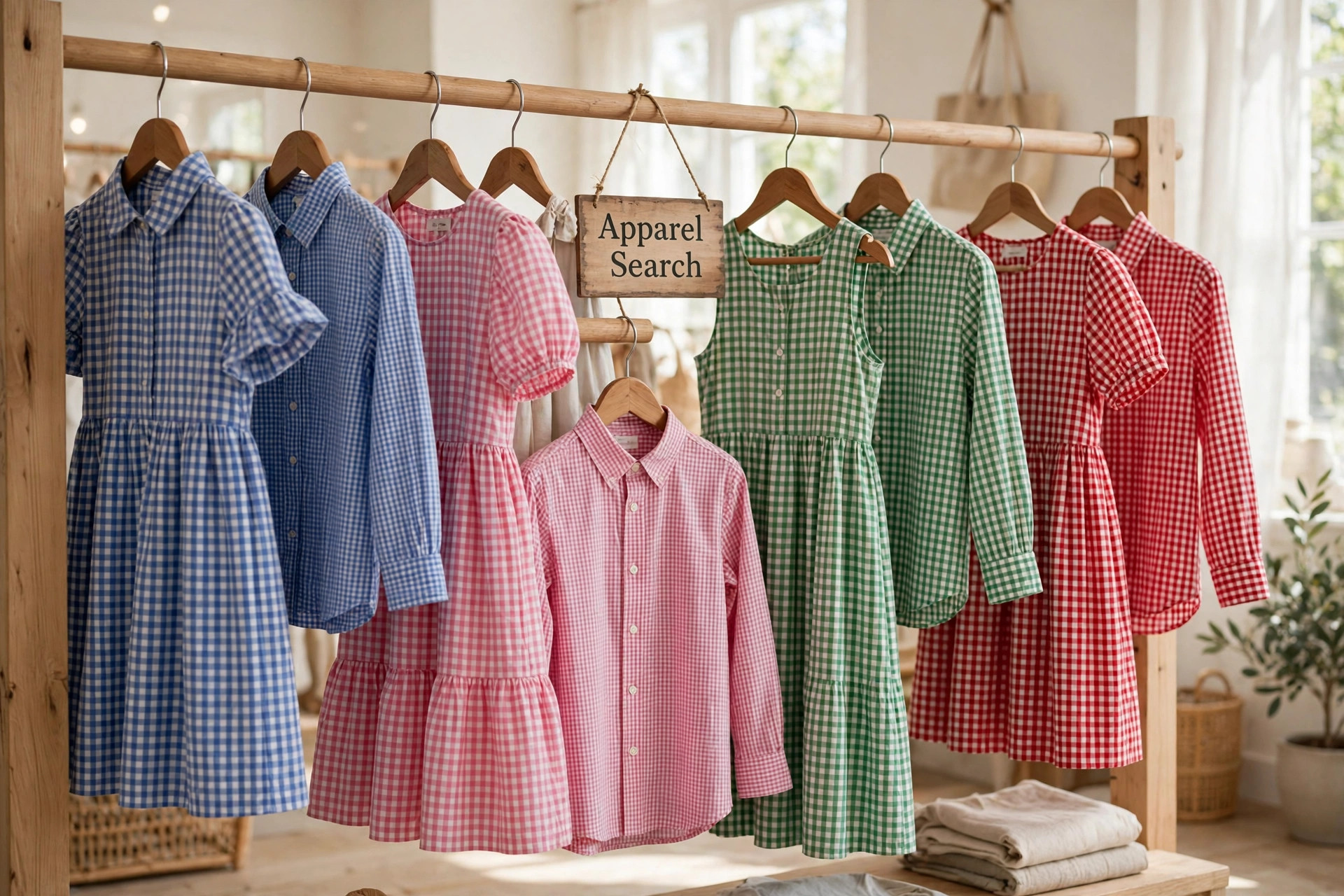
Gingham is the friendliest of the classic checks: one colour crossed with white in even stripes, woven the same way in both directions, so the squares are uniform and the pattern looks identical on both sides of the cloth. It is the fourth pattern in the classic set — after plaid, stripes and polka dots — and the one most tied to warm weather, picnics, school uniforms and summer dresses.
This page is the outfit side of gingham. It sits inside the Pattern Outfits Guide alongside its siblings — Plaid Outfits, Striped Outfits and Polka Dot Outfits — and it covers the scales, the colours, the seasons, and how the check works for men, for children and for the office. For the cloth itself, the gingham fabric definition explains how the check is woven.
Scale First
Before colour, before garment, decide the scale. Gingham’s even grid makes scale unusually easy to read, and the comparison below is the whole styling system in miniature.
Tiny checks that merge into texture at a distance. The quietest scale — it reads almost as a solid, suits shirts and workwear, and is the easiest entry point.
The standard dress-and-shirt check, clearly visible without shouting. The everyday centre ground for dresses, skirts, shirts and shorts.
Large, bold squares that behave like a statement print. Best on one simple garment — a dress, a skirt, a shirt — with plain companions.
The rule that follows from the strip: the larger the check, the simpler everything else in the outfit should be. Micro gingham can sit under a blazer or beside another subtle pattern; overscale gingham wants plain shoes, plain bags and no competing print at all.
By Season
Spring is gingham’s home season. A classic-scale gingham dress in blue, pink or green, worn with a plain cardigan and simple flats, is the pattern’s signature outfit — fresh without being loud. Shirt dresses and wrap dresses carry the check best, because their clean lines let the grid do the work.
Summer belongs to gingham shirts and shorts. A short-sleeved gingham shirt with plain shorts or chinos is a complete warm-weather outfit for almost anyone, and gingham shorts with a plain white or navy top reverse the same formula. Cotton and cotton blends keep the fabric breathable, which is part of why the check and the season belong together.
Fall is layering season: a micro or classic gingham shirt under a plain sweater, with only the collar and cuffs of the check showing, or a darker gingham — navy, burgundy, forest — under a solid jacket. The check becomes an accent inside a plainer outfit, which is how it survives into the colder months.
For Everyone
The gingham shirt is a menswear staple with a long history — worn by mods in the 1960s and a standard smart-casual shirt ever since. The men’s gingham shirts guide covers fits and construction in detail; as an outfit, the reliable formulas are a blue or burgundy classic-check shirt with chinos and loafers, the same shirt under a navy blazer for a dressed-up version, and micro gingham when the shirt needs to sit quietly beside a patterned tie or jacket.
Gingham is a natural children’s fabric — durable cotton, a cheerful check, and a long school-uniform tradition. Look for gingham dresses, shirts and shorts in sturdy cotton that washes well and allows movement; the children’s gingham shirts guide covers the shirt versions. Keep the focus on the garment: a well-made checked shirt or dress in a colour the child likes will outlast several novelty prints.
Mixing & Work
Gingham mixes more easily than most checks because its grid is so regular. With stripes, share a colour and contrast the scale: a classic gingham skirt with a fine Breton stripe top is the standard pairing. With florals, let the gingham be the structure and the floral be the softness — a gingham shirt under a floral dress’s cardigan, or floral shoes with a gingham dress, rather than two large prints competing. The full method is in How to Mix Patterns.
Gingham works at the office when three things hold: the scale is micro or classic, the colour is restrained (blue, navy, burgundy, grey, black-and-white), and the rest of the outfit is plain. A fine gingham shirt under a solid blazer, gingham trousers with a plain knit — the women’s gingham pants guide covers the trouser versions — or a small-check dress with plain shoes all pass in most workplaces. Save the overscale and the brightest picnic colours for the weekend.
Questions
Gingham is a woven check of two colours — one colour crossed with white in even stripes in both directions, so the squares are uniform and the pattern is the same on both sides of the cloth. Plaid is the broader family of checks, with bands of different widths and often several colours; gingham is its simplest and most regular member.
Yes, in a micro or classic scale and a restrained colour. A fine blue or burgundy gingham shirt under a solid blazer, or a small-check gingham skirt or trousers with a plain knit, reads as texture at a distance and sits comfortably in most offices. Save overscale and bright picnic checks for weekends.
It mixes well because its grid is regular. Pair it with a stripe that shares one of its colours, or with a soft floral where the gingham acts as the structured half of the pairing. Keep one pattern clearly larger in scale than the other so the two do not compete.
Search Apparel Search