Gingham
Fabric Definitions — fabric and textile definitions from Apparel Search
Search Apparel Search
At a Glance
Definition: Gingham is a fabric woven from dyed cotton yarn in checked or plaid patterns, most often blue and white, with the colour built into the cloth itself so there is no right or wrong side for colour.
Category: Fabric Definitions
Word Origin
The name is Malay in origin and came into English via Dutch, travelling with the cloth itself: gingham was originally an imported fabric before it was woven in England.
Gingham is a fabric made from dyed cotton yarn. It is made of carded or combed, medium or fine yarns, with the colouring on the warp yarns and always along the grain. When the cloth was originally imported, in the 17th century, it was striped; by the mid-18th century, when it was being produced in the mills of Manchester, it had become woven into checked or plaid patterns, often blue and white. Because the colour lives in the yarns rather than on a finished surface, gingham has no right or wrong side regarding colour.
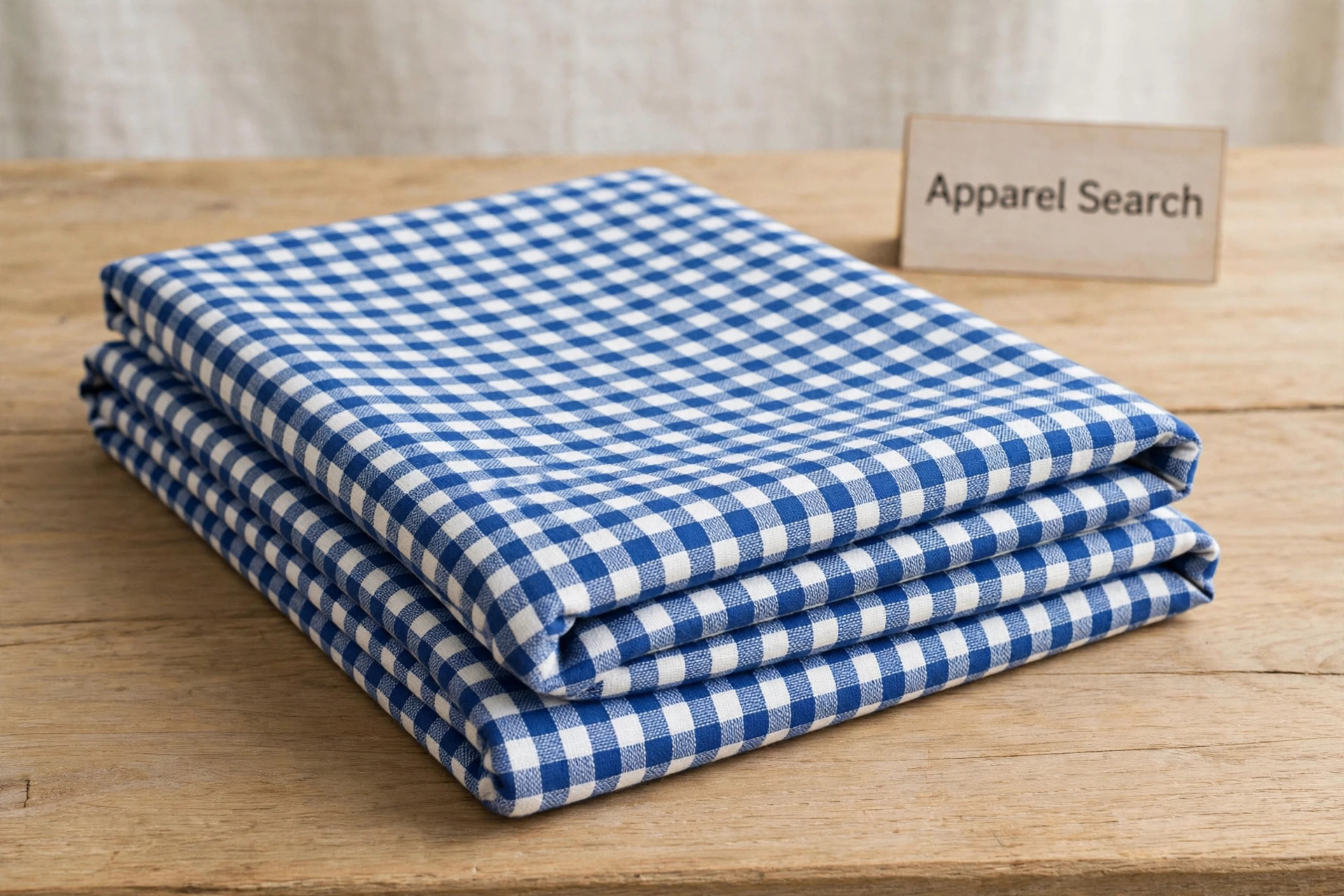
Yarn-Dyed, Not Printed: Reading a True Gingham
Gingham is a useful test case for the difference between a woven pattern and a printed one. In a print, pigment sits on one face of a finished cloth: turn it over and the pattern is faint, and rubbing or fading wears the pattern off the surface. In gingham the pattern cannot wear off, because it is the cloth — dyed yarns in a plain weave, medium or fine, carded or combed. The checks align with the grain because they are literally counted threads: a set number of coloured warp ends, a set number of white, repeated; the weft repeats the same count, and the squares register where the counts cross.
That crossing produces the classic three-tone grid. Where two coloured yarns cross, the colour is full strength; where coloured crosses white, it is halved; where white crosses white, the square stays white. Misalignment is impossible in a true gingham and common in prints, which makes it the quickest authenticity check, along with the identical colour on both faces.
From Imported Stripe to Everyday Check
The cloth's career is a story of localisation. An imported striped cotton of the 17th century was, by the mid-1700s, being woven in Manchester in checked and plaid patterns instead, and the checked version fixed the word's meaning ever since. Gingham's characteristics suited the roles it settled into: a light, washable, inexpensive cotton whose pattern hides everyday marks, in a check that reads cheerful and neat. School uniforms, summer dresses, shirts, aprons, table linens and café curtains all exploit the same combination, and the blue-and-white version became so standard that the pattern alone signals gingham even in other colours — red and white for tablecloths is the other enduring scheme.
As clothing, the checked cotton defined here becomes shirts, dresses and summer outfits — see the gingham outfits guide for scales, colours and outfits by season, including work-appropriate gingham.
A Built-In Grid for Sewing
For sewing, gingham has a practical bonus: the woven checks form a ready-made grid for cutting on grain, matching patterns at seams and keeping embroidery and smocking evenly spaced. That is one reason it remains a first fabric for learners and a staple ground for cross-stitch and appliqué.
Common Questions
Why does gingham look the same on both sides?
Gingham is yarn-dyed before weaving, so colour is carried in the yarns themselves rather than printed on a finished surface. Because the check is the weave — coloured and white yarns crossing in both directions — the pattern is built through the cloth, so there is no right or wrong side regarding colour.
How is a gingham check formed?
Coloured warp stripes cross coloured weft stripes of the same spacing. Where two coloured yarns cross, the colour is full strength; where coloured crosses white, it is halved; where white crosses white, the square stays white. That three-tone grid is the classic gingham check, most often blue and white.
Is gingham a pattern or a fabric?
Historically a fabric that became inseparable from its pattern. The name arrived with an imported striped cloth in the 17th century and attached itself to the checked cotton woven in Manchester from the mid-18th century. In modern trade, gingham names the checked yarn-dyed cotton itself; a printed imitation check on plain cloth copies the look without the woven structure.