The System
Pattern Is a System, Not a Gamble
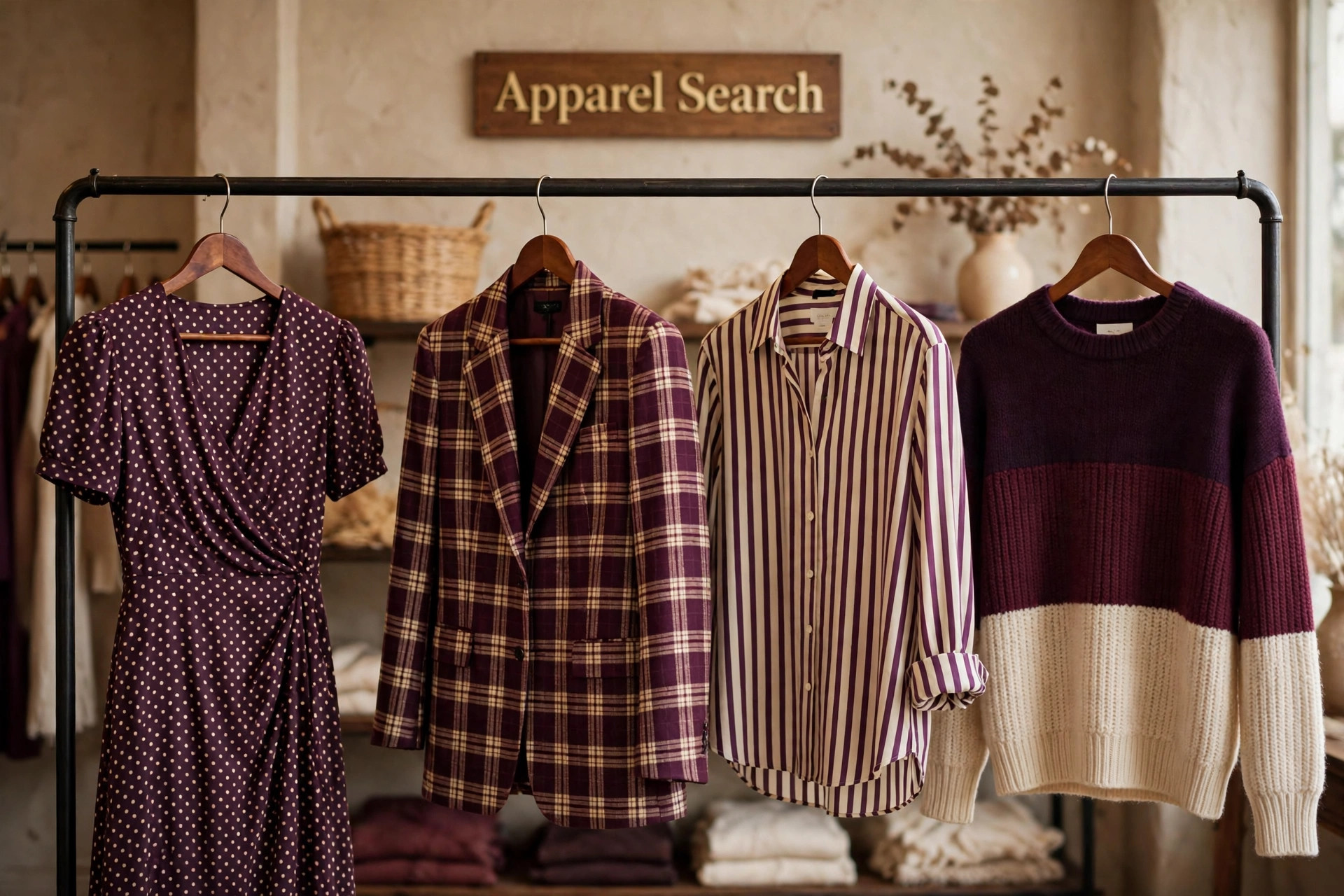
A good pattern outfit is rarely an accident. It follows a simple system: choose one pattern to lead, keep its colours in charge, decide how large the print should be, and let everything else in the outfit support it. This hub gathers the five pattern families that do most of the work in a modern wardrobe — dots, plaid, stripes, deliberate pattern mixing and color blocking — and shows how they connect.
Pattern does jobs that plain cloth cannot. It adds interest to a simple silhouette, it can suggest texture on a flat fabric, it carries colour across an outfit, and it gives an otherwise basic dress, shirt or blazer a clear identity. That is why the same plain shapes return season after season in new prints: the cut stays familiar while the pattern supplies the news. Start with the family that suits your life, then borrow the mixing method when you are ready for a second pattern.
Search Apparel Search
The Five Families
Choose Your Pattern Family
Each family has its own character, its own best garments and its own level of difficulty. The cards below are the quick map; each one leads to a full guide.
Dots suit dresses, skirts and coordinated sets. Plaid suits blazers, trousers, skirts and flannel shirts. Stripes suit shirts, knitwear and dresses in almost every season. Mixing suits anyone who already owns two patterns that share a colour. Color blocking suits simple, well-cut shapes that can carry strong colour without print competing for attention.
Scale and Occasion
Scale, Print Size and Occasion
Scale is the most useful idea in this whole guide. A pattern’s scale — the size of one repeat and how far apart the motifs sit — changes its effect more than its colour does. Tiny dots, fine pinstripes and small checks merge into texture at conversational distance; they read as almost plain, which makes them the safest choice for work, formal settings and anyone easing into pattern. Medium scales are the everyday centre ground: a standard Breton stripe, a dress-sized dot or a classic tartan that is recognisable without shouting.
Large scales make a deliberate statement. An oversized dot, a wide awning stripe or a bold windowpane needs simpler companions and a calmer setting, and it tends to suit weekends, evenings and creative workplaces better than a boardroom. Body comes into it only loosely: petite frames can be swamped by a very large repeat on a long dress, and tall frames can carry bigger prints easily, but fit, fabric and confidence matter far more than any formula. If a print feels too much, shrink the garment, not just the print — the same bold pattern on a scarf, a skirt or a pair of shoes is a smaller commitment than on a full dress. For knitted pattern in particular, see the Fair Isle outfits guide, where scale is built into the yoke of the sweater itself.
Building a Wardrobe
Building a Pattern Wardrobe, Piece by Piece
You do not need a closet full of prints to use this system. A working pattern wardrobe can be as small as five pieces: one striped top, because it goes with everything; one dot or small-print blouse, for softness; one plaid blazer or overshirt, for structure; one patterned skirt or trouser, to carry an outfit from the waist down; and one color-block or bold solid dress, for the days when print feels like too much. Each piece should share the wardrobe’s main colours, so that any two of them can be worn together and every one of them works with your plain basics.
Buy in that order and the wardrobe teaches you as it grows. The stripe shows you which colours you actually wear. The blouse tests your comfort with scale. The blazer tests pattern at its most visible, close to the face. By the time you reach mixing, you will already know your palette, your preferred scale and the settings your patterns need to suit — which is the whole system, learned from your own clothes rather than from a rule book.
Questions
Common Questions
What is the easiest pattern to start with?
Stripes are usually the easiest starting point, because a classic navy and white stripe behaves almost like a neutral and pairs with plain denim, tailoring and most solid colours. Dots are the next step, then plaid, then mixing two patterns together.
How does print size change how a pattern looks?
Small prints read as texture from a distance and feel quieter and more formal, while large prints read as a statement and draw the eye to that part of the outfit. As a rough guide, let the scale suit the garment and the occasion rather than following a rigid body rule.
Can patterns be worn to work?
Yes, when the scale is small, the colours are restrained and the rest of the outfit is plain. A fine stripe shirt, a small dot blouse or a subtle windowpane trouser all work in most offices, especially under a solid blazer.