Men's Kilts Guide
A kilt is a knee-length, non-bifurcated skirt-type garment with pleats at the rear, originating in the traditional dress of men and boys in the Scottish Highlands of the 16th century. Since the 19th century it has become associated with the wider culture of Scotland and with Celtic - more specifically Gaelic - heritage, and it is most often made of woolen cloth in a tartan pattern. What should be worn under one is entirely up to the person wearing the kilt.
Shop Men's Kilts Now
Shop Men's Kilts on Amazon Shop Men's Kilts on eBayThe Amazon and eBay links on this page are affiliate links. If you make a purchase through them, Apparel Search may earn a commission.
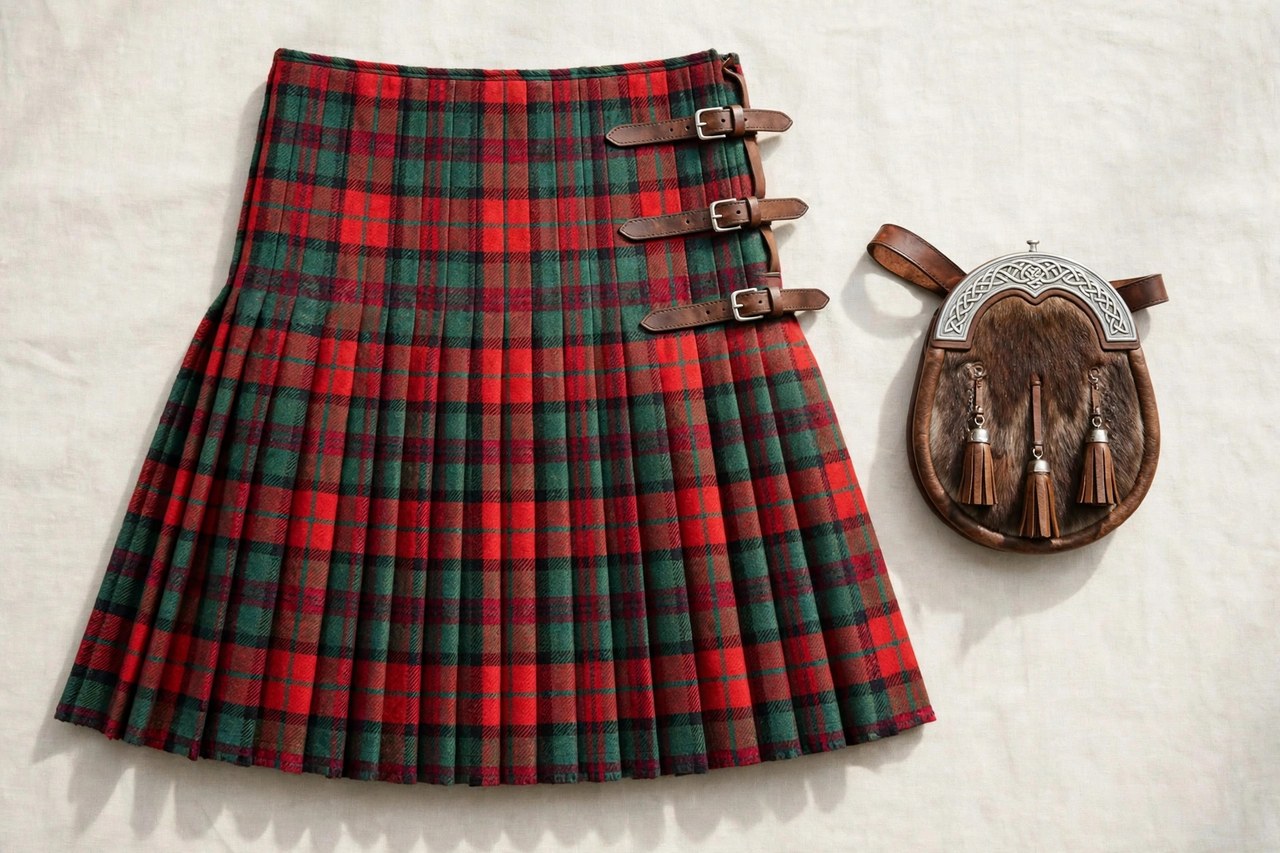
A kilt is a knee-length, non-bifurcated skirt-type garment with pleats at the rear, originating in the traditional dress of men and boys in the Scottish Highlands of the 16th century. Since the 19th century it has become associated with the wider culture of Scotland and with Celtic - more specifically Gaelic - heritage, and it is most often made of woolen cloth in a tartan pattern. What should be worn under one is entirely up to the person wearing the kilt. This guide is built around the questions buyers actually ask: which style, which size, which fabric, and what will it look like after a year of real use - answered in order, with the trade-offs stated plainly.
Yardage, Pleating, Tartan and the Kit
A modern kilt is an engineered garment, and its numbers tell you most of what the price bought. It is built from several yards of tartan wool - a full traditional kilt uses around eight yards - with the front formed by two flat, overlapping aprons and the back and sides taken up by deep knife pleats, each folded to show either the same stripe of the tartan sett (pleating to the stripe, the military style) or the full pattern repeat (pleating to the sett). The cloth matters: woolen yarn is spun from carded wool - soft, light, stretchy and full of air - which makes it a good insulator and gives the kilt its swing and its surprisingly practical warmth for an open garment. Closures are leather straps and buckles at the waist and hip, sometimes with a kilt pin weighing the corner of the outer apron - decoration with a job, since it keeps the apron corner down in wind without ever pinning through both layers. The kit around it has settled conventions: a sporran - the pouch worn at the front, in plain leather for day wear and fur-fronted for dress - kilt hose worn with the tops folded and flashes showing, and a sgian-dubh tucked into the hose for formal dress. Modern utility kilts trade the tartan wool for cotton canvas or ripstop with cargo pockets and snap closures - same silhouette, worksite brief.
The durable buying order is job, specification, budget - in that sequence. Decide what the garment must do, translate that into fiber, weight, construction and size numbers, and only then shop price. Read labels as specifications, inspect the garment inside out where finishing is unposed, and prefer the maker who publishes measurements to the one who publishes adjectives. A garment that matches your measurements, climate and laundry will be worn; one that misses any of the three becomes expensive storage.
Measuring and Fit: Waist, Hip, Length
Fit is measured, not guessed, and the tape goes where kiltmakers say, not where trousers sit. Measure the waist at the navel - kilts sit at the natural waist, noticeably higher than jeans - the hips at their fullest, and the length from that waist point to the middle of the kneecap while kneeling if you want the traditional check: the hem should touch the floor when you kneel, which puts it at mid-knee standing. Between sizes, size to the hip and take the waist in with the straps, because the pleats need their room to hang and swing; a kilt that is tight at the hip pulls the aprons apart and opens the pleats like a fan. Length errors are the unforgivable ones - too long reads as a skirt borrowed from someone taller, too short loses the gravity that makes the garment work - so treat the length measurement as the one to take twice. A well-fitted kilt hangs from the waist with the aprons flat, the pleats vertical, and enough ease to sit, climb stairs and march a parade route without adjustment.
Measure yourself once a year and keep the numbers - chest, waist, inseam, foot, head - because bodies drift gradually while size habits never do. Shop from measurements, try garments under real conditions (over layers, in your own shoes, late in the day for footwear), and be honest about alterations: lengths and small waist changes tailor beautifully; shoulders, rises and patterns are the garment you bought forever.
Wearing and Care
Care for a kilt as the wool garment it is. Rest it between wears, aired over a wide hanger by its straps, and brush the wool after use - most soil leaves with a stiff brush rather than a wash. Dry cleaning is the default for a pleated wool kilt, and tell the cleaner the pleats are the point: a bad pressing that flattens or shifts them costs more to fix than the cleaning saved, so basting the pleats before cleaning, as traditional kiltmakers recommend, is cheap insurance. Store it hung in a breathable garment bag with cedar against moths - wool tartan is exactly what moths evolved to find - and never compressed under a pile of bedding. The leather straps take a little conditioner once a year, and the sporran's fur, if you have one, wants cool, dry, uncrushed storage. Worn for games, weddings and formal evenings and rested properly between, a good wool kilt is measured in decades, and is routinely the oldest garment its owner still wears in public.
Five minutes when a garment comes off - shake it out, hang or fold it correctly, note the stain and the loose button - prevents most of the damage later blamed on quality. Keep a small kit where the clothes live: brush, lint roller, conditioner suited to your leathers, black, navy and grey thread. Clothing rarely dies at once; it fades by small neglects, and small attentions reverse the process at the same pace.
Common Questions
What is the difference between the great kilt and the modern kilt?
The great kilt - the breacan or belted plaid, the filleadh mor of the 16th century - was a full length of cloth belted at the waist, whose upper half could be worn as a cloak draped over the shoulder or brought up over the head. The modern kilt descends from the filleadh beag, the small or walking kilt: a version similar to today's garment, with the pleats already sewn, credited to Thomas Rawlinson, an English Quaker from Lancashire, sometime in the 1720s - he found the belted plaid cumbrous and unwieldy, separated the skirt from the plaid, and the style spread among Highlanders in the shortest space once his associate Iain MacDonnell, chief of the MacDonnells of Inverness, began wearing it.
How is a kilt supposed to fit and where should the hem fall?
At the natural waist - measured at the navel, higher than trousers sit - with the hem at the middle of the kneecap. Kiltmakers check length by kneeling: measured from the waist, the kilt should just touch the floor when you kneel, which lands it at mid-knee when you stand. Fit the hips first so the pleats hang closed and vertical, then take up the waist with the straps; the front aprons should lie flat and overlap cleanly, and you should be able to sit and climb stairs without the aprons pulling apart.
What is worn with a kilt for formal occasions?
The settled formal kit: the tartan kilt itself with its straps and a kilt pin at the outer apron's corner, a dress sporran at the front - fur-fronted for evening, plain leather for day - kilt hose with folded tops and flashes, formal shoes, and a jacket cut for the kilt's high waist, traditionally a Prince Charlie or Argyll jacket with a waistcoat. A sgian-dubh, the small ceremonial knife, is tucked into the top of the right hose for formal dress. Utility kilts in canvas with cargo pockets are the informal modern branch of the same garment - same pleated silhouette, entirely different brief.
More in Men's Clothes Guide K
The Kilt, From Great Plaid to Walking Kilt
A kilt is a knee-length non-bifurcated skirt-type garment with pleats at the rear, originating in the traditional dress of men and boys in the Scottish Highlands of the 16th century; since the 19th century it has become associated with the wider culture of Scotland and with Celtic, more specifically Gaelic, heritage, and it is most often made of woolen cloth in a tartan pattern. Woolen yarn is made from carded wool — soft, light, stretchy and full of air, a good insulator and a good knitting yarn. The kilt first appeared as the great kilt, the breacan or belted plaid, a full-length garment whose upper half could be worn as a cloak draped over the shoulder or brought up over the head. A version of the filleadh beag, or small kilt — the walking kilt, similar to the modern kilt — was invented by an English Quaker from Lancashire named Thomas Rawlinson sometime in the 1720s, who found the belted plaid “cumbrous and unwieldy” and separated the skirt into a distinct garment with pleats already sewn; his associate Iain MacDonnell, chief of the MacDonnells of Inverness, also began wearing it, and the clansmen they employed in logging, charcoal manufacture and iron smelting soon followed suit. The philibeg with unsewn pleats may have been worn from the 1690s. The kilt’s modern life at Highland games, formal occasions and, increasingly, as everyday dress. And what should be worn under one? The only ruling: watch out for the tilted kilt.
Looking for Men's Clothing Stores?
This guide explains men's kilts. To browse where to buy, visit our men's clothing store directory, where you can find retailers that carry them.