Men's Wool Dress Pants Guide
Men's wool dress pants are the formal end of the trouser wardrobe: smooth worsted or fine flannel trousers cut to be worn with a blazer, sports coat or suit jacket, with a pressed crease, a clean waistband and cloth that drapes rather than wrinkles. They are the trousers that make the top half of a man's wardrobe look deliberate.
Shop Men's Wool Dress Pants Now
Shop Men's Wool Dress Pants on Amazon Shop Men's Wool Dress Pants on eBayThe Amazon and eBay links on this page are affiliate links. If you make a purchase through them, Apparel Search may earn a commission.
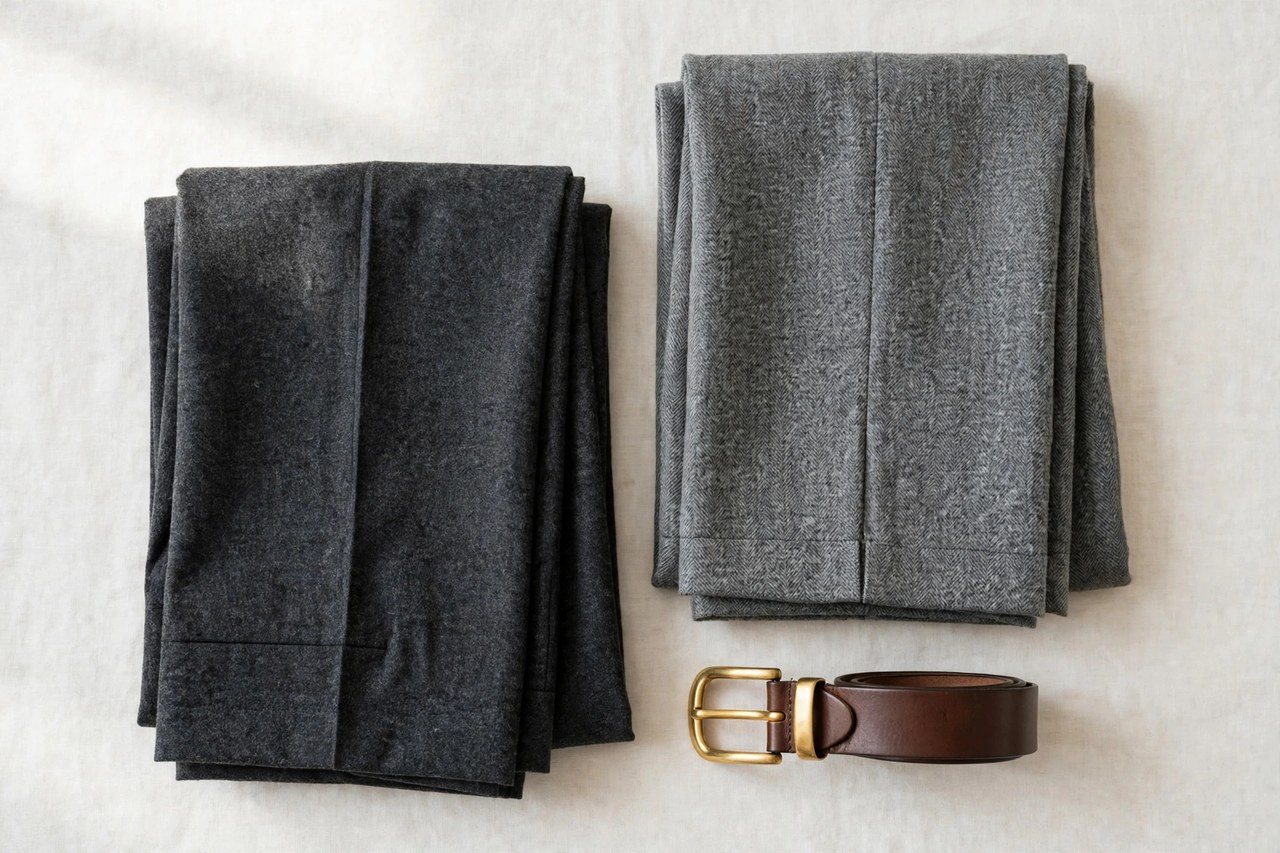
Men's wool dress pants are the formal end of the trouser wardrobe: smooth worsted or fine flannel trousers cut to be worn with a blazer, sports coat or suit jacket, with a pressed crease, a clean waistband and cloth that drapes rather than wrinkles. They are the trousers that make the top half of a man's wardrobe look deliberate. This guide covers the styles worth knowing, the fit points that decide comfort, the fabrics and construction that separate a good buy from a regret, and the simple care that makes the garment last.
Styles and Construction
Cloth first: plain-weave and twill worsteds in Super 100s to 120s give the smooth, sharp standard; flannel gives a softer, matte dress trouser for cold months; gabardine adds a subtle diagonal and excellent drape; tropical weights serve summer formality. Construction markers of the real thing: a curtained waistband with gripper strips, a split back waistband that eases in wear, lining to the knee that lets the cloth glide and hold its crease, extended tab closures that keep the front flat, and pockets cut on the seam or slanted for a clean line. Cuffs (turn-ups) add weight and a traditional finish to pleated styles; plain hems suit flat fronts and warmer weather.
For wool legwear the cloth decides the season: high-twist tropical wool and fresco weaves breathe through summer, midweight flannels carry the cold months, and cavalry twill and whipcord add durability for hard wear. Construction checkpoints are the waistband - curtain and gripper strips that keep a shirt tucked, a split back waistband that eases when you sit - plus lining to the knee on dress styles, which reduces friction and helps the crease fall clean, and bar-tacked pocket corners. A wool trouser should crease sharply, resist bagging at the knee, and recover overnight on the hanger; cloth that fails those tests was cut or spun cheaply.
Fit and Sizing
Fit dress pants at the waist where they will live - on the natural waist for traditional cuts - with two fingers of ease, a smooth seat, and a rise that lets you sit without the waistband dragging down at the back. The crease should hang straight from waist to shoe without twisting, which means the leg was cut on grain and your hem length is right: a slight break for classic dress, none for a modern cropped-adjacent line. Wool dress pants tailor beautifully - waist, seat and length are all routine alterations - so buy for the seat and thigh and have the rest finished.
Rest wool trousers at least a day between wears so the fibers shed wrinkles and moisture; hang them by the cuffs or folded over a padded bar to let the crease hang out rather than set wrong. Brush after wear, spot-clean marks, and dry clean sparingly - a press refreshes the crease more kindly than frequent cleaning. Many modern wool trousers tolerate a gentle cool wool-cycle wash, but follow the label; never tumble dry. Store with moth protection, and mend hem frays and pocket-corner stress early, because wool trousers typically fail at edges and friction points long before the cloth itself wears out.
Wearing and Care
Rest dress pants a day between wears minimum, hang them by the cuff or over a bar so the crease sets rather than doubles, and press with a cloth at moderate heat - a direct hot iron shines worsted cloth permanently. Dry clean sparingly; a press and an airing handle most refreshes. Store with moth protection, and keep the crease honest by never folding dress pants across the leg in a drawer.
Wool trousers fit at the waist first: the waistband should sit at your natural waist or just below by design, stay put without a belt doing structural work, and allow two fingers of ease for sitting and meals. The seat should be smooth without horizontal stress lines, the rise should let you sit and climb stairs without binding, and the leg should fall straight from the knee without twisting. Hem to your shoe: a clean no-break or slight break for flannels that will be pressed, keeping in mind wool trousers are usually dry cleaned or gently washed, so shrinkage is smaller than with cotton but the crease needs the first press set correctly.
Common Questions
Flannel or worsted dress pants for a first pair?
Worsted, in mid-grey: it is smoother, more formal, more wrinkle-resistant and pairs with navy, charcoal and patterned jackets alike. Flannel is the beloved second pair - warmer, softer in character, and slightly less sharp by the end of a long day.
Should dress pants have pleats or a flat front?
Pleats give room when sitting, drape straighter on fuller thighs and suit higher rises and traditional tailoring. Flat fronts give a cleaner, younger line and suit slimmer builds and lower rises. Fit and proportion decide; both are correct when the trouser is cut for its front.
Why are wool dress pants lined to the knee?
The lining reduces friction so the cloth slides over the leg instead of catching, helps the crease fall straight, protects the wool from wear at the thigh and knee, and keeps scratchier cloth off the skin. It is a construction hallmark of properly made dress trousers.
More in Men's Clothes Guide W
Background
Wool has many benefits that make the fiber a good option when selecting a pair of dress pants. Wool trousers are a staple of men's style. Suit trousers, also known as dress pants in the US, are a style of trousers intended as formal or semi-formal wear. They are often made of either wool or polyester (although many other synthetic and natural textiles can be used). When dress pants are part of a suit, they are designed to be worn with a matching suit jacket. Suit trousers have a crease on them because of their tight-fitting nature. Suit trousers can be worn at many formal and semi-formal occasions combined with a shirt that has no tie and a more relaxed fashion, which can be considered smart casual dress. Suit trousers are always made of the same material as the jacket. However, when dress pants are worn with a sport coat or blazer the pant and jacket do not have to match.
More to Explore on Apparel Search
Looking for Men's Clothing Stores?
This guide explains men's wool dress pants. To browse where to buy, visit our men's clothing store directory, where you can find retailers that carry them.