Men's Wool Trousers Guide
Men's wool trousers are the tailored foundation of the wardrobe - the worsted, flannel and gabardine trousers worn with shirts, knitwear, blazers and suits. This guide takes the trouser as a tailored garment in its own right: how cloth, cut and construction divide the field, and how trousers differ from the same cloth worn as the bottom half of a suit.
Shop Men's Wool Trousers Now
Shop Men's Wool Trousers on Amazon Shop Men's Wool Trousers on eBayThe Amazon and eBay links on this page are affiliate links. If you make a purchase through them, Apparel Search may earn a commission.
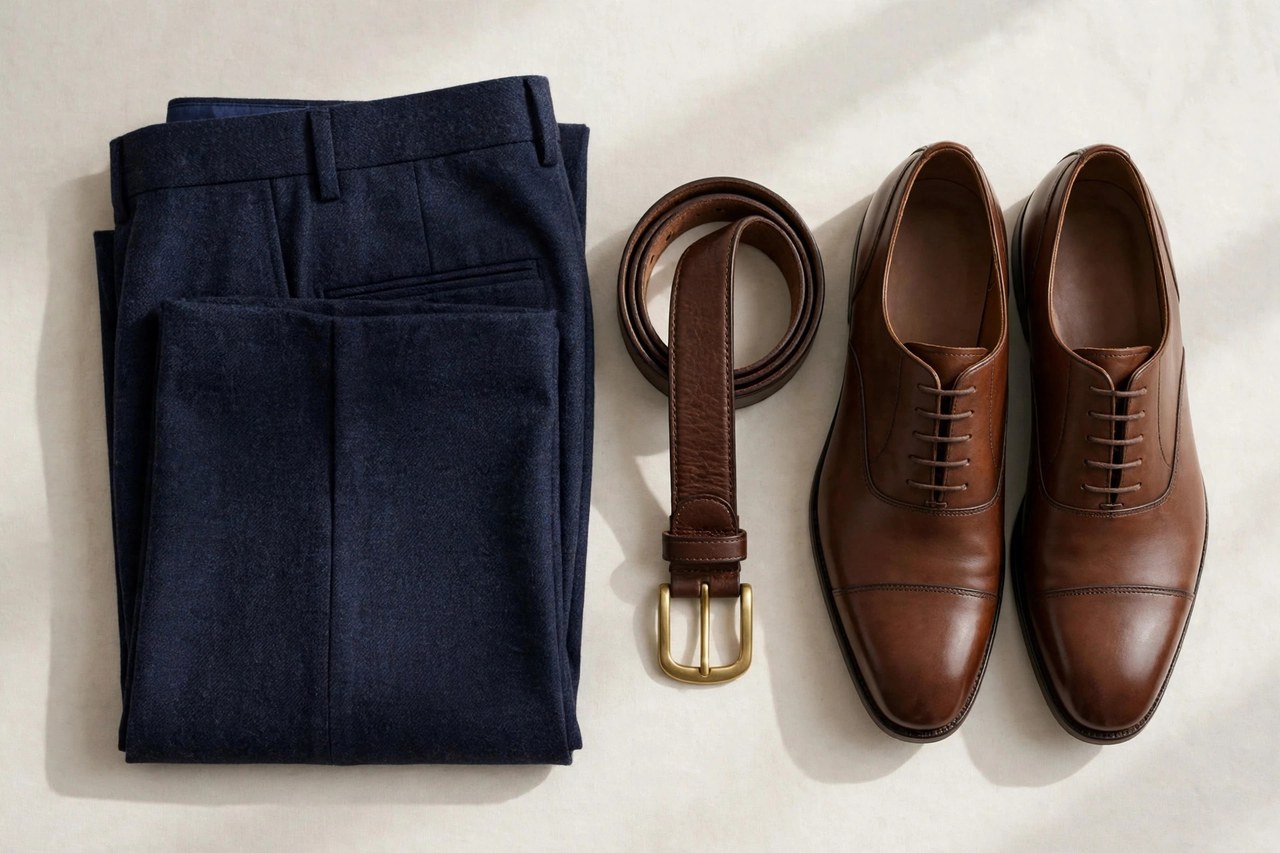
Men's wool trousers are the tailored foundation of the wardrobe - the worsted, flannel and gabardine trousers worn with shirts, knitwear, blazers and suits. This guide takes the trouser as a tailored garment in its own right: how cloth, cut and construction divide the field, and how trousers differ from the same cloth worn as the bottom half of a suit. This guide is built around the questions buyers actually ask: which style, which size, which fabric, and what will it look like after a year of real use - answered in order, with the trade-offs stated plainly.
Styles and Construction
Cloth sets the trouser's register: smooth worsteds (Super 100s to 120s) for sharp business wear, cavalry twill and gabardine for durable drape, flannel for matte cold-weather softness, high-twist tropical wool for summer. Cut divides into pleated and flat-front, high and lower rises, tapered and straight legs - each a proportion decision with the jacket and shoes you pair them with. Construction hallmarks: a curtained, gripped waistband, split back waist for sitting ease, knee lining on dress weights, deep sturdy pockets, bar-tacked stress points, and hems finished with tape at the back to survive shoe friction. A trouser is a small garment with nowhere to hide - finishing quality is visible at a glance.
For wool legwear the cloth decides the season: high-twist tropical wool and fresco weaves breathe through summer, midweight flannels carry the cold months, and cavalry twill and whipcord add durability for hard wear. Construction checkpoints are the waistband - curtain and gripper strips that keep a shirt tucked, a split back waistband that eases when you sit - plus lining to the knee on dress styles, which reduces friction and helps the crease fall clean, and bar-tacked pocket corners. A wool trouser should crease sharply, resist bagging at the knee, and recover overnight on the hanger; cloth that fails those tests was cut or spun cheaply.
Fit and Sizing
Fit wool trousers by rise and seat before leg shape: the waistband where the cut intends it, the seat smooth seated and standing, the crease falling straight without twisting (a twist means the leg is off grain or your hem is uneven). Break is a choice - none for a modern clean line, slight for classic, full for traditional - but pooling is never a style. Wool tailors alter trousers better than any other garment: buy for seat and thigh, have waist and length finished, and re-check fit after the first clean, when the cloth has fully settled.
Rest wool trousers at least a day between wears so the fibers shed wrinkles and moisture; hang them by the cuffs or folded over a padded bar to let the crease hang out rather than set wrong. Brush after wear, spot-clean marks, and dry clean sparingly - a press refreshes the crease more kindly than frequent cleaning. Many modern wool trousers tolerate a gentle cool wool-cycle wash, but follow the label; never tumble dry. Store with moth protection, and mend hem frays and pocket-corner stress early, because wool trousers typically fail at edges and friction points long before the cloth itself wears out.
Wearing and Care
Rotate trousers with a day's rest minimum, hang them clamped by the cuff or folded over a padded bar so creases set single and true, brush after wear, and press with a cloth - never a bare hot iron on worsted. Dry clean sparingly, refresh with steam and air, and store with moth protection like every wool piece. A rotation of three good wool trousers, rested and brushed, will out-dress a rack of tired ones at twice the count.
Wool trousers fit at the waist first: the waistband should sit at your natural waist or just below by design, stay put without a belt doing structural work, and allow two fingers of ease for sitting and meals. The seat should be smooth without horizontal stress lines, the rise should let you sit and climb stairs without binding, and the leg should fall straight from the knee without twisting. Hem to your shoe: a clean no-break or slight break for flannels that will be pressed, keeping in mind wool trousers are usually dry cleaned or gently washed, so shrinkage is smaller than with cotton but the crease needs the first press set correctly.
Common Questions
What color wool trousers should a man buy first?
Mid-grey, in flannel for cold months or midweight worsted for year-round. Grey mediates between navy and charcoal jackets, brown and black shoes, and every shirt color - it is the trouser that makes the rest of the wardrobe combine. Charcoal and navy follow as second and third pairs.
Pleats or flat front in wool trousers?
Pleats drape better on fuller seats and thighs, allow sitting ease, and suit higher rises and traditional jackets. Flat fronts give a leaner, more modern line and suit slimmer builds. The right answer is the front that hangs straight and smooth on your body - fit over fashion.
How long do wool trousers last compared with chinos?
In rotation, longer: worsted and twill wools resist bagging, hold a crease and shed wrinkles overnight, where cotton tires at the knee and fades. Their enemies are shine from friction and pressing, and moth in storage - both manageable with rotation and care.
More in Men's Clothes Guide W
Background
Trousers are essentially the same thing as pants. Trousers (British English) or pants (American English) are an item of clothing worn from the waist to the ankles, covering both legs separately. Please visit our men's wool pants page to learn more on this subject. See also About Wool for Menswear.
More to Explore on Apparel Search
Looking for Men's Clothing Stores?
This guide explains men's wool trousers. To browse where to buy, visit our men's clothing store directory, where you can find retailers that carry them.