|
 Royal Male
: Barbour is more than just clothing. It is a quiet passion for
something lasting and truly authentic. It belongs to the landscape,
evolved by time and weather. Barbour clothing has been made in the north
east of England and the borders of Scotland since the 19th century.
Quality has never been compromised, purpose never forgotten by the
generations of weavers, tailors and seamstresses that have made each
garment. It is this legacy which is celebrated by Barbour classics.
Unique British country clothing that could only be Barbour. Barbour's
classic range of jackets is based on the original Barbour proofing
formula which is called Sylkoil. Soft, flexible and non-sticky, the oil
proofs natural cotton drapes superbly, bringing an extra workability to
the tailoring and cut, and more comfort and style to the wearer, while
keeping out the wet for the general out-of-door man and woman.
- Bags
- Men's Outerwear Retailer
- Women's Outerwear Retailer
|
|
The Main Types of Men's Outerwear
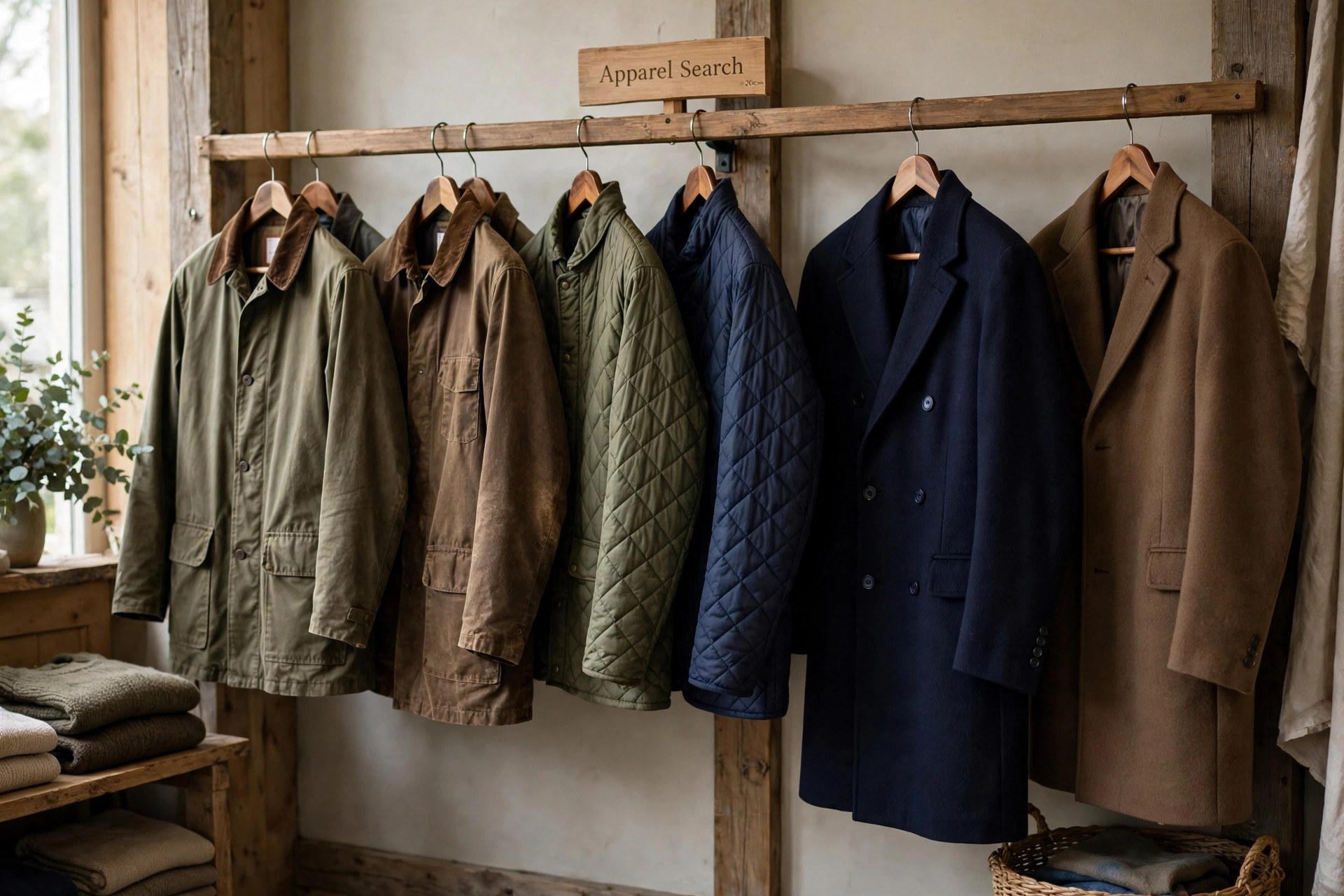
Outerwear divides by the job it does. Waxed cotton jackets, the Barbour speciality described in the listing, proof natural cotton with oil so rain beads and rolls off while the cloth stays flexible and quiet — the country jacket for walking, shooting and general wet-weather wear. Quilted jackets insulate with stitched-through padding in a lighter, less formal package. Parkas and insulated coats are the deep-winter answer, with hoods and longer coverage. The tailored overcoat — wool or a wool blend, single or double breasted — is the layer that goes over a suit, and its natural home is alongside the shirts in the men's dress shirt stores directory. Raincoats and trench coats handle wet city weather without insulation. Most men need two of these: one technical or country layer and one tailored layer.
Weatherproofing: Wax, Membranes and DWR
Three proofing ideas dominate. Waxed cotton, proofed with formulas such as Barbour's Sylkoil, can be re-waxed at home or by the maker to restore its water resistance, and it ages with a patina many wearers prize; it is showerproof-to-rainproof rather than storm-sealed. Laminated membranes inside modern shells give the highest waterproof ratings and breathability figures, at the cost of a more technical look and feel. Durable water repellent (DWR) coatings on lighter jackets shed showers but wet through in sustained rain. Sealed seams, storm flaps over zips and adjustable cuffs matter as much as the cloth: a store that specialises in outerwear will explain which of its jackets are built for a commute, which for a full day outdoors, and which for style first.
Fit, Layering and Care
Try outerwear on over the thickest layer you will wear beneath it. A coat should close without strain across the chest with a sweater underneath, sleeves should cover the wrist with arms forward, and length is a real choice: hip-length jackets move easiest, thigh and knee lengths protect and dress up more. Country jackets earn extra pockets — game pockets, handwarmer pockets — that city coats trade for a cleaner line. For care, hang coats on broad hangers to hold the shoulders, brush off mud once dry rather than washing, and re-proof waxed cotton when water stops beading on the surface. Wool overcoats want a rest day between wears and a moth-aware closet in summer. Bought for the weather you actually get, a good coat from a store in this directory is a decade-long purchase.
Common QuestionsWhat is waxed cotton outerwear?Cotton cloth proofed with oil — Barbour's formula is called Sylkoil — so rain is kept out while the fabric stays soft and flexible. It can be re-waxed to restore its proofing. How many coats does a man need?Two covers most wardrobes: a weatherproof casual or country jacket for everyday wet weather, and a tailored wool overcoat for dressing over suits and smarter clothes. How should outerwear fit?It should close comfortably over your thickest sweater, cover the wrist with arms forward, and sit on broad hangers between wears to keep its shoulder shape. | |