Men's Slipper Stores
Retailers for men's slippers and house shoes
Slippers are the footwear a man wears for more waking hours than any other — evenings, weekends, working from home — yet they are often bought with the least thought. This directory lists men's slipper retail stores, linking onward to the specialist pages in this section, including the men's sheepskin slipper retailers and the slipper factory and wholesale sources named in the listings. Styles divide into moccasins, slip-on scuffs, closed-back house shoes and lined winter slippers, and soles divide indoor from indoor-outdoor wear. The listings come first; the sections below explain the styles, the materials from sheepskin to felt, and how to size a shoe that has no laces to adjust.
More to Explore
- Men's Shoe Stores
- Menswear Clothing Stores
- Retail
- Footwear Associations
- Shopping Directory
- Slipper Definition
- Slipper Factory
- Men's Slipper Wholesaler
- Men's Slippers
- Sheepskin Slippers
- women's slippers
- Fashion Industry
- Men's Dress Shirt Stores
- Men's Jeans Stores
- Men's Outerwear Stores
- Men's Boots Stores
- Men's Rain Boot Stores
- Men's Sheepskin Boot Retailers
- Men's Sock Stores
- Men's T-Shirt Stores
- Men's Underwear Retailers
Men's Slipper Retail Stores Directory
Men's Shoe Stores Menswear Clothing Stores Retail Footwear Associations Shopping Directory Slipper Definition Slipper Factory Men's Slipper Wholesaler Men's Slippers
We know that you like men's slippers, but if you wish to search for women's slippers, you are welcome to do so.
Slipper Styles: Moccasin, Scuff, Bootie and Clog
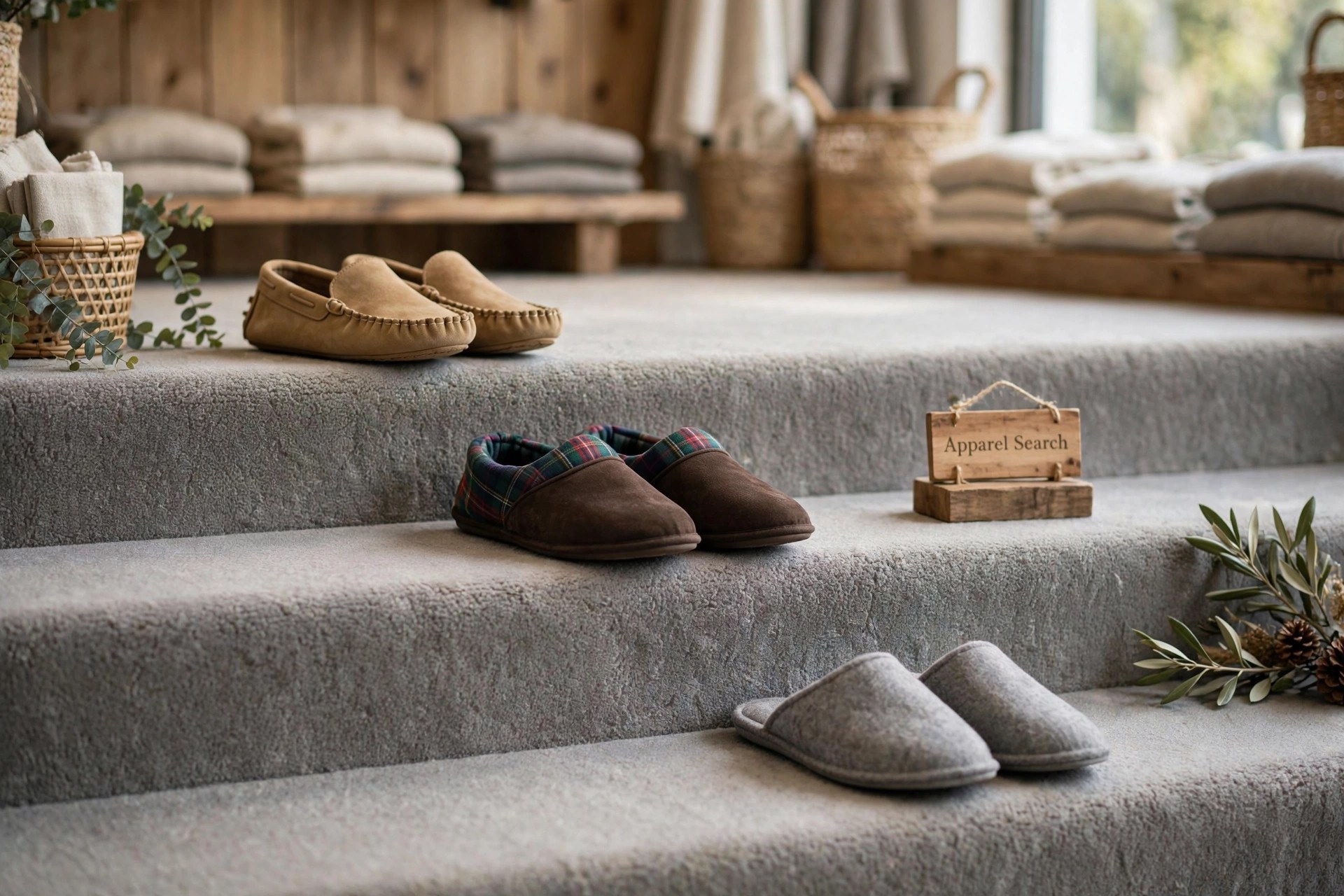
The moccasin is the classic men's slipper: a leather or suede upper wrapped around the foot in the traditional construction, often fleece or shearling lined, with a sole sturdy enough for trips to the mailbox. The scuff — backless, slip-on — is the easiest on and off and suits warm houses, but it stays on by toe grip alone, which some wearers find tiring. Closed-back slip-on slippers and clog styles hold the heel for stairs and longer wear. Bootie slippers rise over the ankle with quilted or fleece insulation for cold floors and draughty houses. The specialist sheepskin styles have their own retailer page in this section, linked from the listings. Choosing the style by your floors — carpet, hardwood, tile — and by whether the slippers will step outside settles most of the decision.
Soles and Materials
Soles decide where a slipper can go. Soft suede or leather soles are silent and flexible but strictly indoor, and slippery on tile. Moulded rubber or EVA soles grip, tolerate a wet doorstep, and support the foot over a full day — the right choice for working from home. Memory foam and cushioned insoles add comfort but compress over months; sheepskin insoles keep their spring and manage moisture best. For uppers, sheepskin regulates temperature year-round, wool felt is light and breathable, cotton terry suits warm climates and post-shower wear, and flannel or plaid textiles give the classic lined winter slipper. A retailer that specialises in slippers will stock several sole and lining combinations in the same style, which a general shoe store rarely does.
Sizing and Replacing Slippers
Slippers have no laces, so fit comes from length and from how the upper holds the foot. Most men take their shoe size; lined slippers should feel snug at first because the lining beds down, while unlined leather stretches slightly. Between sizes, size up for closed styles and consider that scuffs run forgiving. Replace slippers when the insole stays flattened, the sole smooths out and starts to slide, or the upper tears at the flex point — worn-out slippers change how you walk around the house and can genuinely become a trip hazard on stairs. With daily wear, a quality pair from a specialist retailer lasts one to two years; rotating two pairs, as with boots, roughly doubles the life of each.
Common Questions
What is the warmest type of men's slipper?
Sheepskin and shearling-lined slippers, especially bootie styles that cover the ankle. The dedicated sheepskin slipper retailers page in this section lists the specialists.
Can slippers be worn outside?
Only indoor-outdoor styles with moulded rubber or EVA soles. Soft suede soles are strictly indoor and become slippery and damaged outdoors.
When should slippers be replaced?
When the cushioning stays flat, the sole wears smooth, or the upper tears — typically after one to two years of daily wear for a quality pair.