Men's Slippers Guide
Men's slippers are soft indoor footwear - moccasin slippers, scuffs, clog slippers and lined house shoes - made for the hours at home: warmth, quiet, protection from cold floors, and a grip that stairs respect. The slipper is the most-worn and least-considered shoe in a man's life, which is a pity, because its jobs (warmth without overheating, safety on hard floors, kindness to feet that work all day) are more specific than they look.
Shop Men's Slippers Now
Shop Men's Slippers on Amazon Shop Men's Slippers on eBayThe Amazon and eBay links on this page are affiliate links. If you make a purchase through them, Apparel Search may earn a commission.
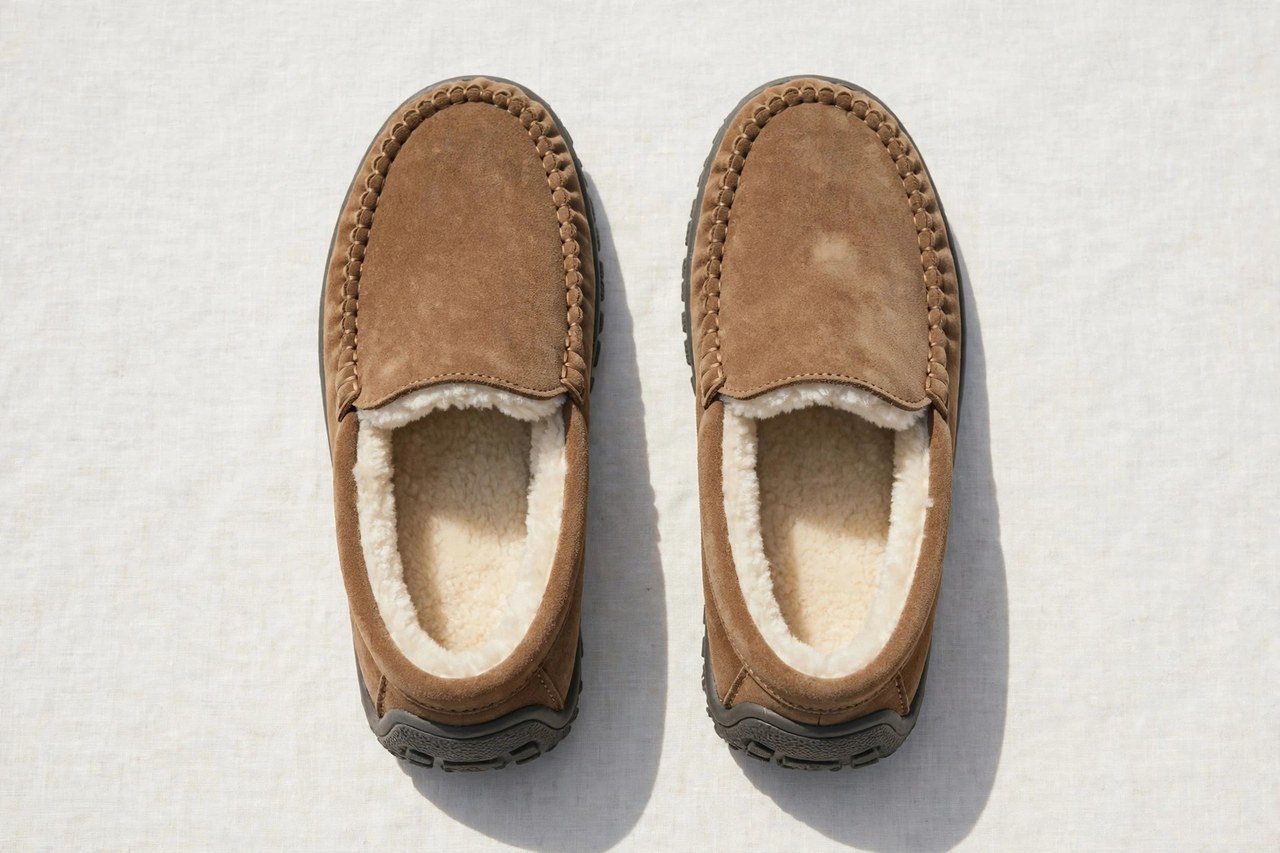
Men's slippers are soft indoor footwear - moccasin slippers, scuffs, clog slippers and lined house shoes - made for the hours at home: warmth, quiet, protection from cold floors, and a grip that stairs respect. The slipper is the most-worn and least-considered shoe in a man's life, which is a pity, because its jobs (warmth without overheating, safety on hard floors, kindness to feet that work all day) are more specific than they look. This guide covers the styles worth knowing, the fit points that decide comfort, the fabrics and construction that separate a good buy from a regret, and the simple care that makes the garment last.
Soles, Linings and the House Patterns
Slippers divide by sole and lining, and the sole comes first: a slippers-only suede or crepe sole is silent and floor-kind but helpless on a wet step outside; a rubber-soled house shoe handles the doorstep, the garage run and the basement stairs, and is the honest default for a house with hard floors. Linings set the season - shearling and fleece for winter warmth that breathes, terry and cotton for summer, memory foam footbeds for men whose feet file complaints by evening. Patterns follow: the moccasin (dressed enough to answer the door), the scuff (backless, the summer pattern), the bootie slipper (ankle warmth for cold houses and cold sleepers). Stitching beats glue everywhere, because slippers flex at every step and are rarely rested.
Judge footwear by attachment and compound: cemented soles are light and affordable, stitched or welted constructions cost more and can be repaired, and the outsole rubber decides grip against longevity - soft compounds bite, hard compounds endure. Linings decide comfort over hours, removable insoles decide whether your own supports can come along, and honest weight decides whether the pair disappears on the foot or taxes every mile of the day.
Fit and Sizing
Fit slippers for their actual shift: they are worn on bare or thin-socked feet, often in the evening when feet are at their largest and most tired. You want length with a small margin, a heel that the scuff's lip or the moccasin's collar holds without gripping, and room for the toes to spread - the slipper is the foot's off-duty hour and should feel like it. Shearling and fleece linings compress with wear, so a new slipper that is snug through the lining is usually perfect by the second week, while loose stays loose.
Fit footwear late in the day in the socks you will actually wear, with roughly a thumb's width beyond the longest toe, the heel held without lift, and the foot's widest point meeting the shoe's widest point. Sizes are unstandardized between makers - trust your measured length and width over the printed number, and require no break-in argument: a shoe that needs excuses in the shop delivers them on the road.
Wearing and Care
Slippers absorb a house's worth of dust and a body's worth of evening hours, so they need washing more than any other footwear you own: check the label - many fleece and fabric slippers machine wash cool and air dry; shearling and leather want spot cleaning and patience. Air them daily on a rack rather than in a heap, and retire them when the footbed is packed flat and the sole's grip is polished smooth - a slipper's failure mode is a fall on the stairs, which makes its replacement the cheapest safety purchase in the house.
Rotation is the first care rule: a day of rest between wears lets linings dry and cushioning rebound, and it doubles a rotation's life compared with daily wear of one pair. Clean after use, dry at room temperature away from radiators, hold shape with trees or paper, and condition leather on a schedule rather than when it looks thirsty. Reproof weather finishes when water stops beading, and resole stitched footwear before the wear reaches the welt.
Common Questions
Should slippers have hard or soft soles?
For most houses, a rubber or other firm sole: it grips stairs, survives the doorstep and the garage, and protects against the dropped and the stepped-on. Soft suede soles are quieter and kinder to delicate floors, and belong in carpeted, single-level living. Judge by your floors and your stairs honestly - the slipper that meets your actual house beats the theoretically finer one.
How long do slippers last?
A year or two of daily wear for most - they are worn more hours than any other shoe and are rarely rotated or rested. The lining packs down and the footbed flattens first; when warmth and cushion are gone and the sole's tread is polished, the slipper has done its service. Men who keep two pairs in rotation get noticeably more than double the life from each, as with every other shoe.
Are moccasin slippers the best kind?
They are the most versatile: warm, durable in stitched suede or leather, presentable at the door, and available with rubber soles for real house duty. Scuffs ventilate better in summer; bootie slippers warm ankles nothing else reaches; memory-foam house shoes cushion tired feet best. 'Best' follows the house - cold floors argue for the lined moccasin, warm climates for the scuff.
More in Men's Clothes Guide S
The Indoor Shoe
Slippers are light shoes that are easy to put on and off, intended to be worn indoors, particularly in the home - the perfect footwear for lounging around the house, worn with pajamas and a bathrobe tossed on if the weather is cold - and they are a type of slip-on shoe. For readers tempted to wear them out, moccasins are the alternative: a shoe made of deerskin or other soft leather, its sole and sides one piece of leather stitched together at the top, sometimes with a vamp.
More to Explore on Apparel Search
Looking for Men's Clothing Stores?
This guide explains men's slippers. To browse where to buy, visit our men's clothing store directory, where you can find retailers that carry them.