Men's Sandals Guide
Men's sandals are open footwear that holds the foot by straps over the instep, leaving the toes - and usually much of the foot - exposed to the air. The family runs from the thong flip-flop through the strapped leather sandal to the rugged sport sandal with a closed, lugged sole, and its job is constant across all of them: warm-weather walking with ventilation no closed shoe can match.
Shop Men's Sandals Now
Shop Men's Sandals on Amazon Shop Men's Sandals on eBayThe Amazon and eBay links on this page are affiliate links. If you make a purchase through them, Apparel Search may earn a commission.
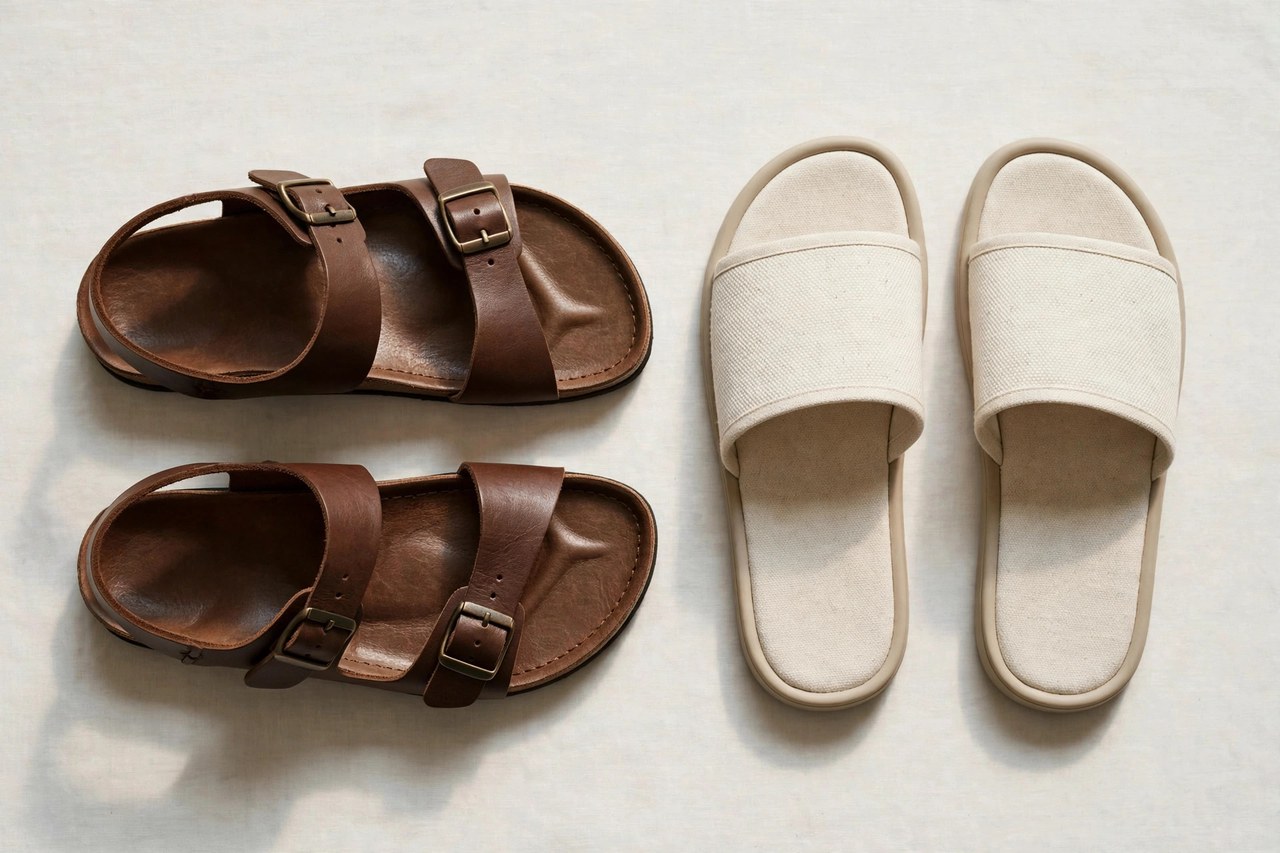
Men's sandals are open footwear that holds the foot by straps over the instep, leaving the toes - and usually much of the foot - exposed to the air. The family runs from the thong flip-flop through the strapped leather sandal to the rugged sport sandal with a closed, lugged sole, and its job is constant across all of them: warm-weather walking with ventilation no closed shoe can match. This guide covers the styles worth knowing, the fit points that decide comfort, the fabrics and construction that separate a good buy from a regret, and the simple care that makes the garment last.
Footbeds and Straps: What Separates Footwear From Beach Equipment
Judge a sandal by its footbed and its straps, because there is nothing else. A molded, contoured footbed (cork-latex, EVA or polyurethane) that matches your arch will out-walk a flat slab every time; leather footbeds mold to the individual foot over the first weeks and reward patience. Straps divide the market: full-grain leather for the classic sandal that dresses up with linen trousers, nylon webbing with hook-and-loop for sport sandals that go in water, and synthetic thongs for the beach. Check the strap anchor points - stitching through the sole outlasts glue and staples - and bend the sole: it should flex at the ball and resist twisting through the arch. A sandal with heel support and arch structure is footwear; a flat flip-flop is beach equipment, and your feet know the difference by mile two.
Judge footwear by attachment and compound: cemented soles are light and affordable, stitched or welted constructions cost more and can be repaired, and the outsole rubber decides grip against longevity - soft compounds bite, hard compounds endure. Linings decide comfort over hours, removable insoles decide whether your own supports can come along, and honest weight decides whether the pair disappears on the foot or taxes every mile of the day.
Fit and Sizing
Size sandals by length first: the heel should sit inside the footbed's cup and the toes should end a short margin before the edge, because a foot that overhangs front or back collects every stub and stone. Straps should hold the foot without carrying it - snug at the instep, no digging at the edges, and the thong post (if any) comfortable between the toes without pressure. Walk on hard floor and listen: a well-fitted sandal stays quiet, while slapping means the foot is swimming and the straps need adjusting or a different last.
Fit footwear late in the day in the socks you will actually wear, with roughly a thumb's width beyond the longest toe, the heel held without lift, and the foot's widest point meeting the shoe's widest point. Sizes are unstandardized between makers - trust your measured length and width over the printed number, and require no break-in argument: a shoe that needs excuses in the shop delivers them on the road.
Wearing and Care
Rinse sand and salt off sport sandals the same day, and let all sandals dry fully between wears - open construction dries fast, but the straps and footbed absorb more than they show. Condition leather straps and footbeds a few times a season, keep cork footbeds out of prolonged soaking, and store sandals out of dashboard heat, which warps molded soles and dries glue joints in a single afternoon.
Rotation is the first care rule: a day of rest between wears lets linings dry and cushioning rebound, and it doubles a rotation's life compared with daily wear of one pair. Clean after use, dry at room temperature away from radiators, hold shape with trees or paper, and condition leather on a schedule rather than when it looks thirsty. Reproof weather finishes when water stops beading, and resole stitched footwear before the wear reaches the welt.
Common Questions
What is the difference between sandals, slides and flip-flops?
Structure. A sandal fastens around the foot with straps over the instep and usually around the heel or ankle, so it stays on through real walking. A slide has one wide band and no heel strap - easy on, easy off, limited range. A flip-flop (thong) is held by a post between the toes alone: ideal for the beach and pool deck, the least supportive thing in the footwear drawer, and not a walking shoe.
Are sandals bad for your feet?
Flat ones, worn all day, can be. A flip-flop or flat slab gives the arch nothing to work against and makes the toes grip, which tires the whole leg. A sandal with a contoured footbed, real arch support and a held heel is genuine footwear and fine for full days of warm-weather walking. The honest test is the same as any shoe: distance reveals the design.
How should men's sandals fit?
The whole foot inside the footbed - heel cupped, toes short of the front edge - with straps snug at the instep and silent when you walk. Buy sandals late in the day like shoes, because feet swell in heat exactly when sandals are worn, and remember that leather straps give a little over the first weeks while webbing straps are adjusted rather than stretched.
More in Men's Clothes Guide S
What a Sandal Is
Sandals are an open type of footwear consisting of a sole held to the wearer’s foot by straps passing over the instep and sometimes around the ankle; sandals can also have a heel, and while the distinction from other footwear can blur (the woven leather huaraches of Mexico, peep-toe pumps), a sandal leaves most of the upper part of the foot exposed. Sandals are worn for comfort in warm weather, economy of material and construction, and fashion, and some very important men in history have worn sandals (think of the bible). For more open footwear, see flip flops.
Looking for Men's Clothing Stores?
This guide explains men's sandals. To browse where to buy, visit our men's clothing store directory, where you can find retailers that carry them.