Men's Fisherman Sandals Guide
Men's fisherman sandals are the closed branch of the sandal family: an open, ventilated sandal built like a low shoe at the front. A center strap runs from the toe up the foot and connects to a thick sole at intervals with side straps, forming a woven cage over the toes and instep, while a strap around the back of the ankle - usually closed with an adjustable hook-and-loop or buckle fastening - secures the heel. The design keeps the foot cool and aired like a sandal while protecting the toes like a shoe, which is why it has served fishermen, walkers and warm-weather travelers for generations.
Shop Men's Fisherman Sandals Now
Shop Men's Fisherman Sandals on Amazon Shop Men's Fisherman Sandals on eBayThe Amazon and eBay links on this page are affiliate links. If you make a purchase through them, Apparel Search may earn a commission.
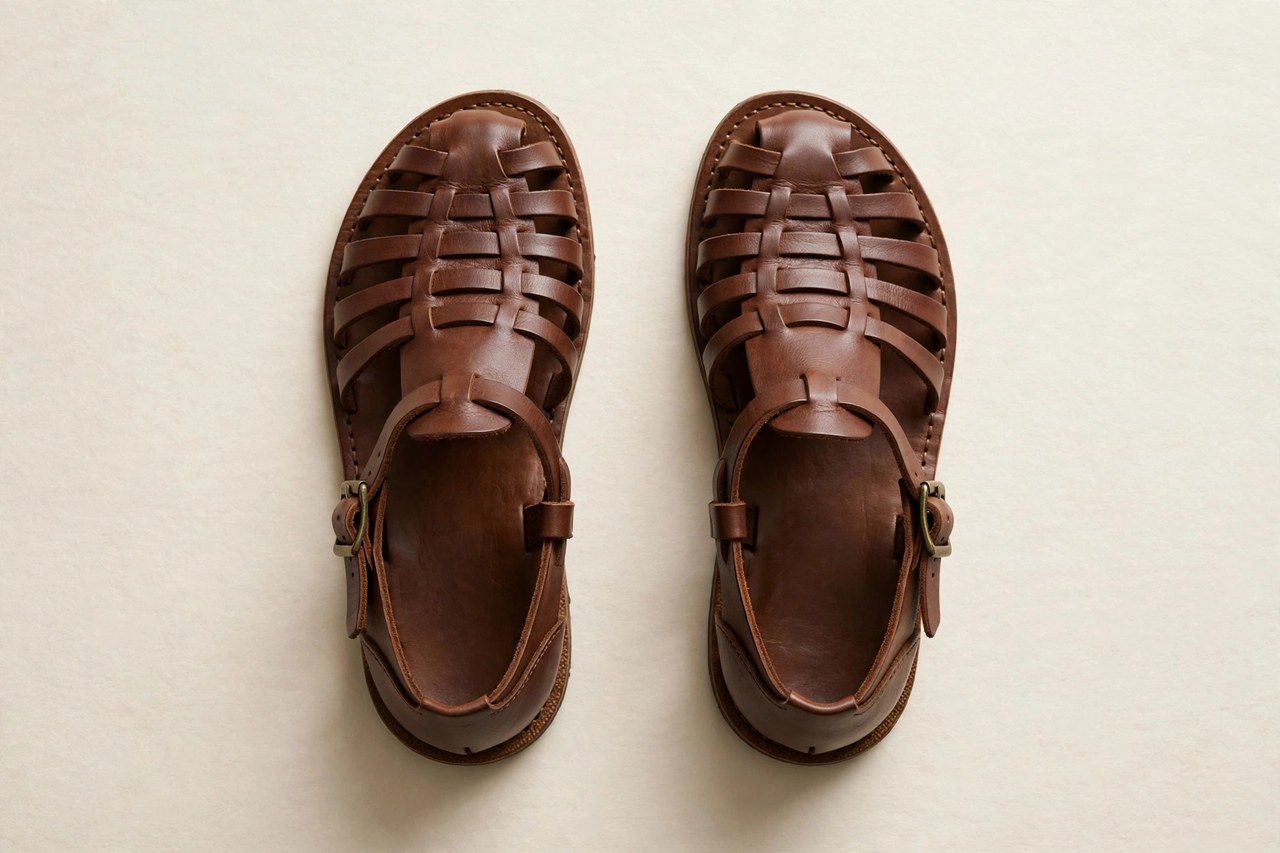
Men's fisherman sandals are the closed branch of the sandal family: an open, ventilated sandal built like a low shoe at the front. A center strap runs from the toe up the foot and connects to a thick sole at intervals with side straps, forming a woven cage over the toes and instep, while a strap around the back of the ankle - usually closed with an adjustable hook-and-loop or buckle fastening - secures the heel. The design keeps the foot cool and aired like a sandal while protecting the toes like a shoe, which is why it has served fishermen, walkers and warm-weather travelers for generations. This guide covers the styles worth knowing, the fit points that decide comfort, the fabrics and construction that separate a good buy from a regret, and the simple care that makes the garment last.
Styles and Construction
Construction starts at the sole, which on a true fisherman sandal is thick and cushioned for long days standing and walking - the original working brief was hours on a deck or a dock. Uppers are traditionally leather, prized because it molds to the foot and tolerates getting wet and drying repeatedly; synthetic uppers cost less and shrug off water faster but mold less and breathe less. The cage straps are generally not adjustable - the fit is in the last, not the straps - so the quality tells are strap spacing that ventilates without letting the foot slide, stitching or rivets where straps meet sole, and a heel strap that adjusts without digging into the Achilles.
Judge footwear by attachment and compound: cemented soles are light and affordable, stitched or welted constructions cost more and can be repaired, and the outsole rubber decides grip against longevity - soft compounds bite, hard compounds endure. Linings decide comfort over hours, removable insoles decide whether your own supports can come along, and honest weight decides whether the pair disappears on the foot or taxes every mile of the day.
Fit and Sizing
Fit a fisherman sandal by the cage, not just the length: the toes should sit behind the front of the cage with a small margin - this style exists to protect them - the center strap should lie along the instep without pressing, and the heel strap should hold the foot so it does not piston forward on a slope. Try them late in the day and walk, because a cage that is kind standing still can rub where the side straps flex. Socks divide wearers: the style was made for bare feet, but a thin sock is the honest cure for a new pair's first-week rub points.
Fit footwear late in the day in the socks you will actually wear, with roughly a thumb's width beyond the longest toe, the heel held without lift, and the foot's widest point meeting the shoe's widest point. Sizes are unstandardized between makers - trust your measured length and width over the printed number, and require no break-in argument: a shoe that needs excuses in the shop delivers them on the road.
Wearing and Care
Care follows the material. Leather pairs: rinse off grit and salt, dry slowly at room temperature away from radiators - forced heat cracks wet leather - and condition once dry so the straps stay supple. Synthetic pairs rinse and air-dry with no ceremony. Check the heel strap's closure each season, since hook-and-loop loses grip as it fills with lint, and clean it out with a stiff brush. Store the pair unbuckled and unstacked so the cage keeps the shape it was lasted with.
Rotation is the first care rule: a day of rest between wears lets linings dry and cushioning rebound, and it doubles a rotation's life compared with daily wear of one pair. Clean after use, dry at room temperature away from radiators, hold shape with trees or paper, and condition leather on a schedule rather than when it looks thirsty. Reproof weather finishes when water stops beading, and resole stitched footwear before the wear reaches the welt.
Common Questions
Are fisherman sandals good for walking long distances?
They are among the best sandals for it, provided the pair has a genuinely thick, cushioned sole and a secure heel strap - the two features the style was built around. The cage protects toes on rough ground where an open sandal cannot. What they are not is a hiking shoe: on steep, loose or very wet terrain a closed shoe's grip and ankle support win. For town miles, travel days and waterfront walking, a good fisherman sandal is the honest middle choice.
Can fisherman sandals get wet?
Leather ones tolerate wetting - the style's working life was spent around water - but they should be dried slowly and conditioned afterward, and repeated soaking shortens any leather's life. Synthetic fisherman sandals are the buy for deliberate water use: boats, beaches and rainy travel, since they dry fast and do not stiffen. In both cases, rinse salt water out the same day; salt is the real enemy, not water.
What is the difference between fisherman sandals and regular sandals?
Coverage and protection. A regular open sandal leaves most of the upper foot exposed, held by straps over the instep. A fisherman sandal closes the front into a woven cage of straps over a center strap, shielding the toes while still ventilating through the gaps, and typically stands on a thicker sole. Think of it as the sandal that kept the shoe's toe box - chosen when the day involves crowds, docks, bikes or rough ground as well as heat.
More in Men's Clothes Guide F
The Caged Sandal
Sandals are an open type of footwear, a sole held to the foot by straps over the instep and sometimes around the ankle, leaving most of the upper foot exposed — but the fisherman sandal is the exception that closes the front. Its soles are typically thick and comfortable for long days of fishing; a center strap runs from the toe up the foot and connects to the sole at intervals with side straps; the straps are generally not designed to be adjustable; and the sandal is secured with a loop along the back of the ankle, its closures often adjustable with hook-and-loop tape. The open design keeps feet cool and ventilated but somewhat protected; most are leather though synthetics are common, and black and brown are the usual colors.
Looking for Men's Clothing Stores?
This guide explains men's fisherman sandals. To browse where to buy, visit our men's clothing store directory, where you can find retailers that carry them.