Fisherman and Coastal Style Guide: Fisherman Sweaters, Sandals and Fisherman Prep
Fisherman and coastal style explained: the cable-knit fisherman sweater, woven fisherman sandals for women and men, the 2026 fisherman prep look, and evergreen coastal dressing.
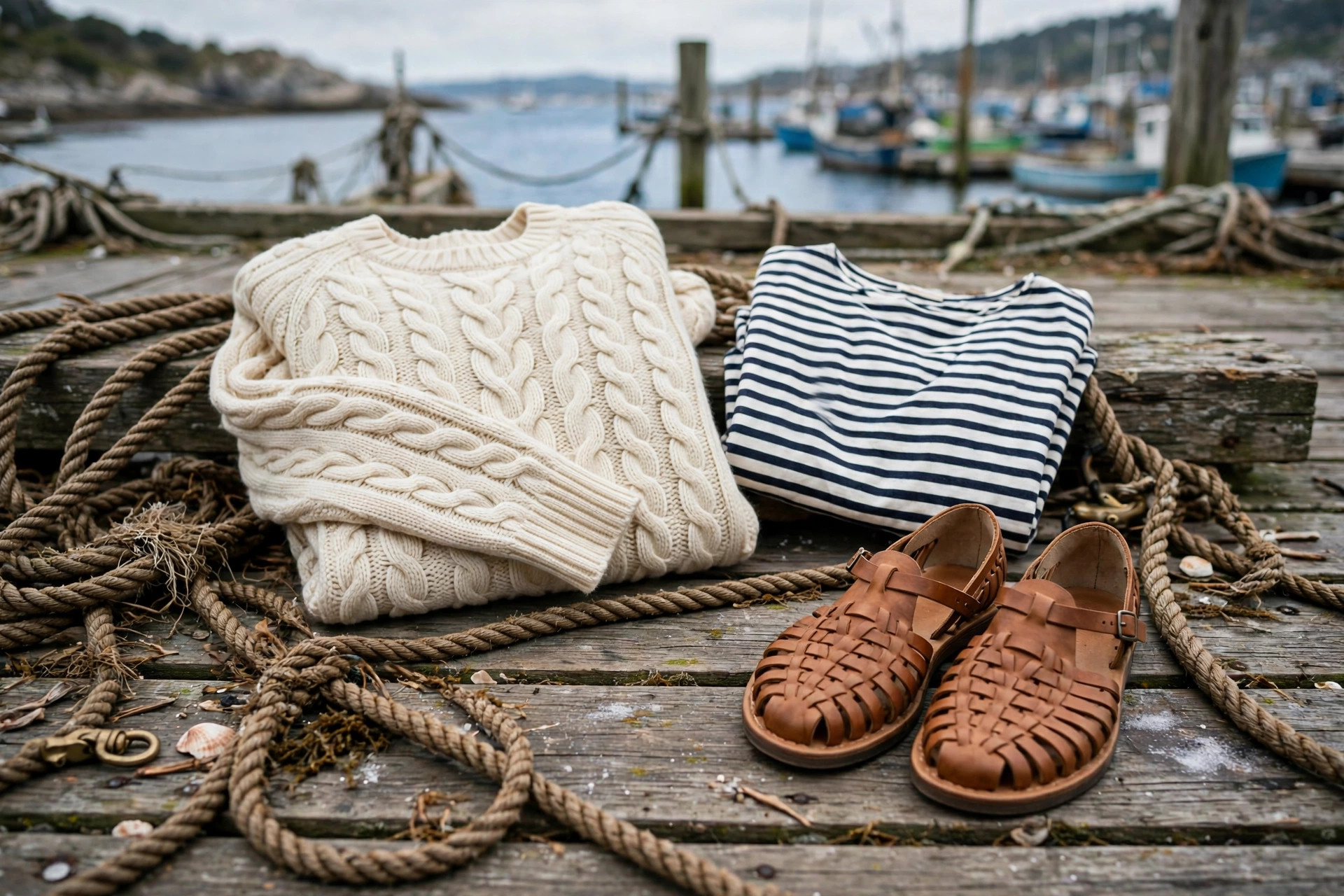
Fisherman style is coastal work clothing worn as everyday dress: the heavy cable-knit fisherman sweater, woven leather fisherman sandals, Breton stripes, canvas and oilskin. In 2026 the look has been nicknamed fisherman prep — the working harbour wardrobe polished with preppy neatness.
The Sweater at the Centre
Everything in this family orbits the fisherman sweater: a heavy, cream or navy knit, traditionally in oiled wool that shed seawater, patterned with cables said to echo fishermen's ropes and nets. Its Irish cousin, the Aran sweater, carries the same cable language in more elaborate stitch panels. Worn with jeans, chinos or a midi skirt, the fisherman sweater is a complete top half — it needs no layering tricks, only trousers or a skirt plain enough to let the cables show. Because the knit is bulky, fit it close: a fisherman sweater should be warm, not swamping.
Fisherman Sandals: The Summer Half
The family's footwear is the closed-toe woven leather sandal that took the fisherman's name: interlaced straps over a sturdy sole, protective at the toe and open to the air. The dedicated guides cover women's fisherman sandals and men's fisherman sandals in full. They pair naturally with everything in this guide — linen trousers, cotton dresses, shorts and the lighter knits of spring — and their woven texture matches the family's handmade, rope-and-canvas character. A Greek fisherman hat completes the harbour reference, used once and sparingly.
Fisherman Prep: The 2026 Reading
The current version of the look, widely labelled fisherman prep in 2026 coverage, keeps the work pieces and tidies the styling: the cable sweater worn neat over a collared shirt, sandals with tailored shorts or a crisp cotton dress, stripes from the nautical style guide mixed in, and a palette held to cream, navy, white and weathered tan. The difference from plain nautical style is texture — nautical is smooth stripes and canvas, fisherman style is cables, woven leather and rope. Mixing the two is easy and usually right: a Breton top under a fisherman sweater, or boat shoes standing in for sandals, sits comfortably in both families.
Evergreen Coastal Dressing
None of these pieces depends on a season's trend. The sweater is winter weight, the sandals are summer footwear, and the stripes and canvas between them cover spring and autumn, so a coastal wardrobe built this way works all year in rotation. Buy the sweater in real wool and the sandals in real leather and both will outlast a decade of summers and winters — which is, in the end, the point of clothing designed for work at sea.
Common Questions
What is fisherman prep?
Fisherman prep is the 2026 name for styling traditional fisherman clothing — cable-knit sweaters, woven leather sandals, Breton stripes and canvas — with preppy neatness: collared shirts under the sweater, tailored shorts, and a tidy cream, navy and white palette. The pieces are old; the polished combination is the current reading.
What is the difference between fisherman style and nautical style?
Texture and origin. Nautical style comes from naval and yachting dress — smooth stripes, blazers, boat shoes. Fisherman style comes from working fishing clothing — heavy cable knits, woven sandals, oilskin and canvas. They share the coastal palette and mix freely, which is why this guide treats them as one family.
Can fisherman sandals be worn with socks?
In the current styling, yes — plain ribbed cotton socks with fisherman sandals appear in the fisherman prep look, especially in spring and autumn. Keep the socks plain and in a palette colour; the woven sandal remains the textured piece.