Start Here
What Makes a Boot a Winter Boot
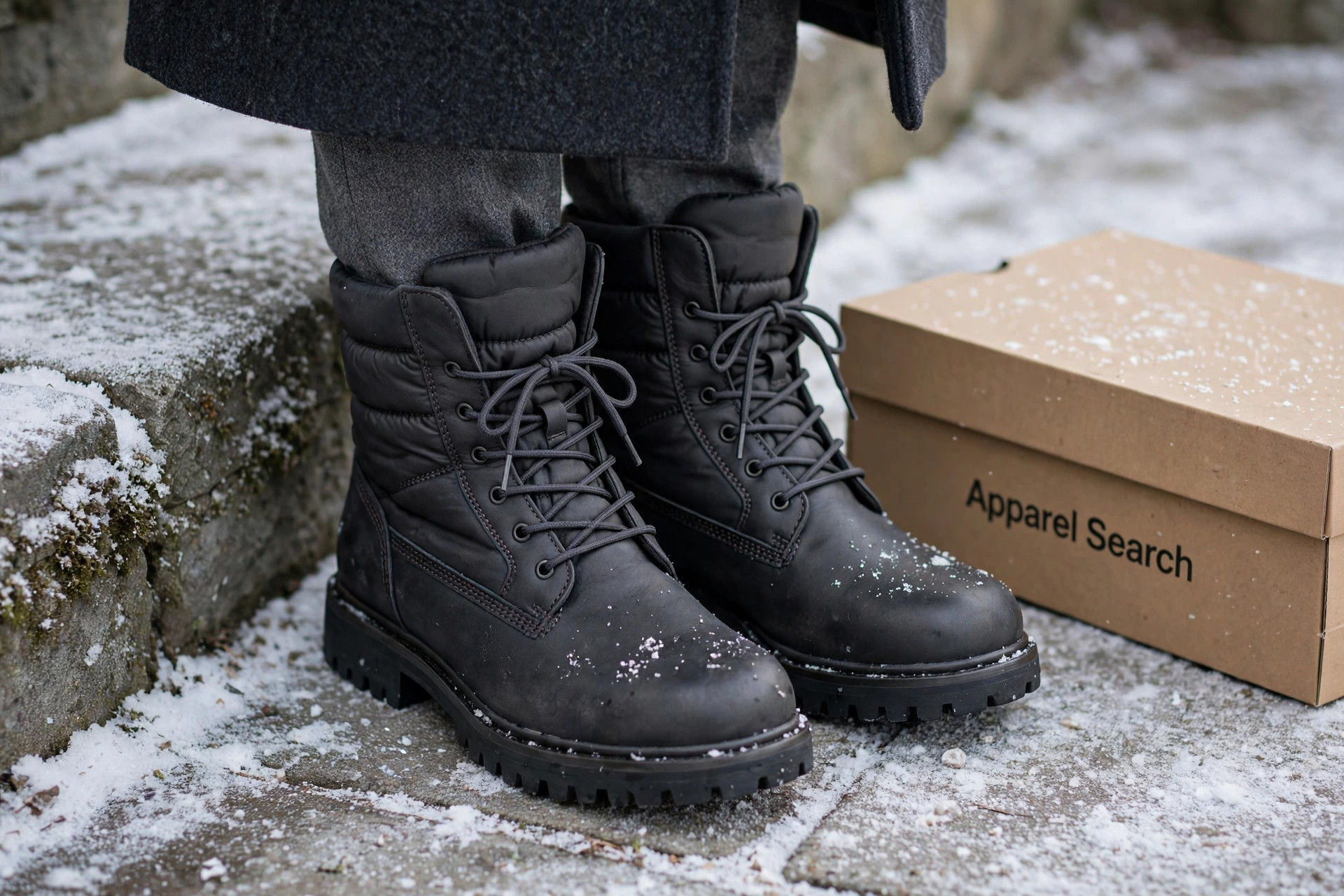
A winter boot earns its name three ways at once: insulation that holds heat in, a waterproof build that keeps meltwater out, and a sole that still grips when the pavement turns to ice. An ordinary boot with a thick sock manages none of the three reliably — which is why this guide treats warmth, waterproofing and traction as a single buying decision.
Winter boots sit apart from the trail footwear in the men’s walking boots guide and the men’s hiking boots guide: those are built for miles and terrain, while a winter boot is built for temperature and footing — the walk to the station, the icy pavement, the car park in February. The women’s winter boots guide covers the same ground for women.
Warmth
Insulation Types and Temperature Ratings
Most men’s winter boots use synthetic fill, sold by weight in grams: the higher the number, the more fill around the foot. Felt and fleece linings — sometimes removable, which speeds drying — add warmth without bulk, and shearling lines the dressier styles. Read any temperature rating as an estimate for a wearer in motion: walking generates heat, standing still does not, so a boot rated well below freezing can still feel cold at a bus stop.
| Insulation | Typical fill | Best suited to |
|---|---|---|
| Light | 100–200 g synthetic, or fleece lining | Mild winters and city commuting; roughly freezing and above |
| Mid-weight | 200–400 g synthetic | General winter wear in sustained cold below freezing |
| Heavy | 400–800 g+ synthetic, often with a felt liner | Deep cold, snow clearing and long periods standing outdoors |
| Shearling / wool lined | Natural lining, no gram rating | Dressier boots and insulated Chelseas; warm, breathable commuting warmth |
One warning: insulation traps air, so a boot squeezed tight by thick socks or a small size compresses its fill and feels colder. Warmth needs a little room.
Weatherproofing & Grip
Waterproofing, Traction and Soles for Ice
Waterproofing comes in layers. A sealed membrane inside the boot is the most complete answer; taped seams stop meltwater through the stitching; and a gusseted tongue — attached up its sides — keeps slush out at the laces. Treated leather sheds light snow, while rubber lowers, as on a duck boot, cannot leak. No boot is waterproof above its lowest opening, which is where shaft height matters.
Traction is a sole question. Look for deep, widely spaced lugs that clear snow instead of packing with it, in rubber that stays flexible in the cold — hard rubber turns slick as temperatures drop. Some soles add abrasive particles for extra bite on ice. Smooth leather soles and shallow fashion treads are the worst on ice, and no sole makes black ice safe: shorten your stride.
The Line-Up
Shaft Height and Styles: Commuter, Snow, Duck and Chelsea
Shaft height trades protection against polish: ankle boots are easiest to wear and first to let in deep snow; mid-calf shafts suit real snowfall; taller belongs to work and the outdoors. Four styles cover most needs. Commuter boots are low, plain, insulated leather boots with a discreet lugged sole, cut to pass as ordinary footwear. Snow boots are the tall, heavily insulated, maximum-grip option for storms. Duck boots pair a waterproof rubber foot with a leather shaft: unbeatable in slush, unmistakably casual. Insulated Chelsea boots add a warm lining and lugged sole to the elastic-sided classic in the Chelsea boots guide — the dressiest of the four.
With a suit: the insulated Chelsea and the plainest commuter boot both work — black or dark brown, smooth leather, slim sole, trousers breaking over the boot so only the foot shows. With casual clothes: everything opens up — duck boots with jeans and flannel, snow boots with heavy knitwear, commuter boots with chinos and cords. On the worst days, the honest strategy is still boots for the journey and dress shoes at the desk.
Fit
Fit With Thick Socks
Try winter boots on in the thickest socks you plan to wear, at the end of the day, when feet are largest. Aim for a thumb’s width in front of your longest toe, a heel that stays seated, and no pressure across the top of the foot. Merino wool socks are the default partner — warm even when damp, unlike cotton, which holds cold moisture against the skin. Between sizes, take the larger one and adjust with the sock.
Care Routine
Salt-and-Slush Care, Step by Step
Road salt is the main enemy: it dries leather out, leaves white tide marks, and works into seams with every slushy step. This short routine after wet or salted days keeps a pair serviceable for seasons:
- 1Knock off and wipe down. Bang soles together outside, then wipe uppers with a damp cloth the same evening — salt lifts easily fresh, stubbornly once dried in.
- 2Dry slowly, at room temperature. Remove insoles, loosen laces, stuff with newspaper if soaked, and air away from radiators, which crack leather and soften glues.
- 3Treat leather once dry. Condition smooth leather to replace the oils salt strips out, and brush suede or nubuck back up with a suede brush rather than polishing it.
- 4Re-proof before the season. Refresh water-repellent spray on suede, nubuck and fabric uppers each autumn, before the first snow.
- 5Store clean and shaped. In spring, clean, dry and condition the boots, and store them upright, out of direct sun.
Questions
Common Questions
How warm a winter boot do I actually need?
Match the rating to how you move, not just the thermometer. Temperature ratings assume an active wearer generating heat, so a commuter who walks briskly is fine in a mid-weight boot, while anyone standing still — at a bus stop, on a platform, watching a game — should choose a rating well below the expected temperature and prioritise insulation weight over style.
Can winter boots be worn with a suit?
Yes — choose a plain insulated Chelsea or a low, smooth-leather commuter boot in black or dark brown, keep the sole slim, and let the trouser break over the top of the boot. Save tall snow boots and rubber duck boots for casual clothes, and change into dress shoes at the office on the worst days if the commute is rough.
Should I size up winter boots for thick socks?
Try boots on wearing the thickest socks you plan to use, ideally at the end of the day. You want a thumb’s width of room in front of the toes and no heel slip; a boot that is snug in thin socks will compress its insulation and feel colder, not warmer, once thick socks squeeze in. Half a size up is common, a full size is rarely needed.
Complete the Outfit
Cold Legs, Cold Hands? The Rest of the Winter Kit
Boots solve the ground half of winter. The Men’s Winter Workwear Guide covers everything above them: base, mid and shell layering for outdoor work, insulated jackets and bibs, high-visibility layers for snow and low light, winter work gloves and hats, and recommendations by temperature band.
More to Explore
Search Apparel Search