Working in the Cold
Dress for the Shift, Not the Forecast Alone
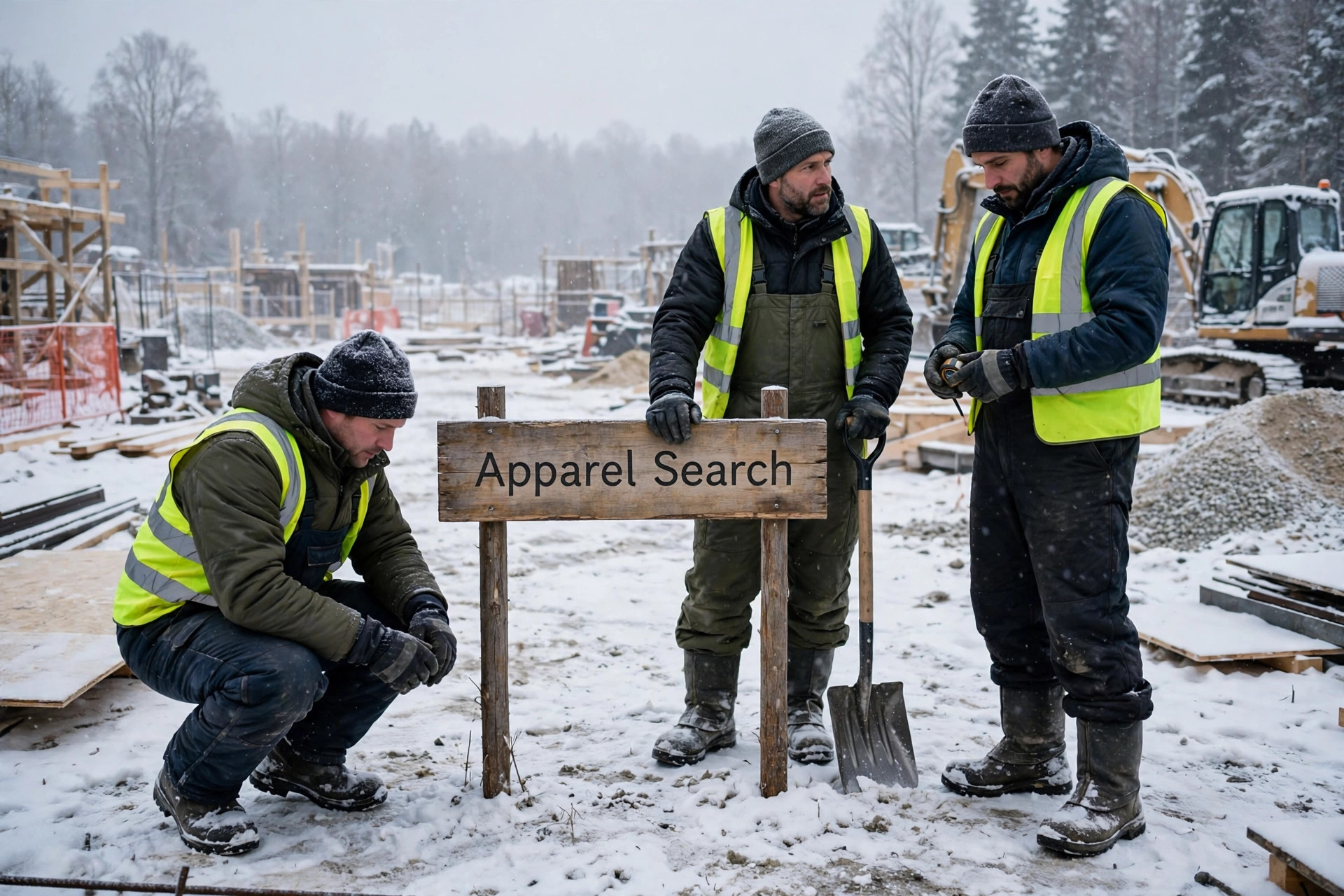
Winter workwear fails two ways: too little insulation for standing and waiting, and too much for the heavy work in between, so sweat soaks the layers and chills the wearer when the pace drops. The fix is a system, not a single heavy coat — layers you can open, vent or shed as work changes, built on the foundations in the men’s workwear guide.
This guide covers the layers, insulated jackets and bibs, high-visibility clothing in snow and low light, gloves, hats and boots, temperature bands, and the drying rotation that keeps it all working.
The Layering System
Base, Mid and Shell: Three Layers, Three Jobs
The base layer moves sweat away from the skin. Choose merino wool or a synthetic knit — never cotton, which holds moisture and cools fast — and pick the weight using the base layer weights guide; the base layer overview and the men’s thermal underwear guide cover fits and fabrics. The mid layer traps warmth: a fleece or quilted liner jacket sized to move without binding. The shell blocks wind and sheds wet snow — a work jacket and trousers or bibs with a water-resistant finish, storm flaps and cuffs that seal over gloves.
The working rule: start the shift slightly cool — you will warm up within minutes; starting comfortable means overheating, sweating, then chilling.
Jackets & Bibs
Insulated Jackets and Bibs That Earn Their Bulk
Match the cut to the task. A parka-length jacket covers the hips and suits static work — flagging, inspection, operating plant. A waist-length jacket rides better in a harness, on a ladder and in a cab. Look for insulation that works when damp, a two-way front zip, and pockets usable with gloves on. Insulated bibs are the workhorse below the waist: the bib front closes the gap a jacket leaves when you bend, side zips let you pull them on over boots, and no waistband digs in under a tool belt. On milder days, shell bibs over thermal bottoms give wind protection without the heat.
Temperature Bands
What to Wear at Each Temperature
| Band | Layers | Hands, head & feet |
|---|---|---|
| 40°F to 32°F — cold | Midweight base, fleece mid, lined softshell or light insulated jacket | Lined gloves, knit hat, waterproof boots, warm socks |
| 32°F to 20°F — freezing | Midweight base, heavier fleece or liner, insulated jacket; insulated bibs for static work | Insulated gloves plus liner gloves, balaclava option, 200–400 g insulated boots |
| 20°F to 0°F — severe | Heavyweight base, lofted mid, insulated parka and insulated bibs as the standard outfit | Mittens or heavy insulated gloves, full balaclava, 400–800 g insulated boots |
| Below 0°F — extreme | Expedition-weight base, maximum mid loft, longest insulated parka, insulated bibs, no gaps at wrist, neck or waist | Mitten system with liners, face coverage, warmest-rated boots; rotate tasks and take warm-up breaks |
Bands are starting points: wind, wet snow and a static job push you one band warmer; heavy continuous labour pushes you one lighter. Adjust in the first hour.
Visibility
High-Visibility Clothing in Winter Conditions
Winter shortens the day and flattens the light, so high-visibility layers matter more, not less. The hi-vis piece must be the outermost layer — a vest over your parka, or a jacket itself rated high-visibility — because a bright mid layer under a dark shell protects no one. Snow, fog and spray dull reflective tape quickly, so wipe tape clean, retire garments whose tape is cracked or peeling, and check that hoods and bib straps do not cover the reflective bands. Confirm any specified visibility class on the finished outfit.
Hands & Head
Winter Work Gloves and Hats
Hands lose dexterity before they feel truly cold, so gloves are a two-pair problem: an insulated, grippy work glove for handling, and a heavier mitten for waiting and carrying between tasks, with thin liners underneath for brief fine work. The men’s work gloves guide and the men’s gloves guide break down leathers, linings and grip. For the head, a fleece-lined knit hat under a hood covers most days; add a balaclava in driving wind, and keep hat and hood combinations compatible with any required head or eye protection. See the men’s hats guide.
Footwear
Insulated and Steel-Toe Boot Choices
Winter work boots combine insulation, a lugged sole that grips packed snow and wet concrete, and — where the job requires it — a protective toe. Start from the hazard: the steel-toe work boots guide covers toe, puncture and electrical specifications, and composite toes avoid the cold-conducting feel some wearers notice in steel. Fit boots with the thick socks you will actually wear — see the thermal socks guide — and compare insulation weights and styles in the men’s winter boots guide. The men’s work boots guide covers heights and soles year-round.
Care & Rotation
Care, Drying and the Two-Set Rotation
Wet insulation is failed insulation, so dry every piece fully after every shift: jackets and bibs hung in moving air, gloves opened out, boot insoles removed and boots dried with a boot dryer or loosely packed newspaper. Wash as the care label directs and re-proof finishes when water stops beading. Rotate two sets where you can — two pairs of gloves at minimum, ideally two pairs of boots — so nothing starts a shift damp. Retire pieces honestly: compressed insulation, torn shells and smooth soles do not come back. The care chapters of the men’s jackets guide apply here too.
Questions
Common Questions
What is the best layering system for outdoor work in winter?
Build three layers and adjust them through the shift. A moisture-wicking base layer moves sweat away from the skin, an insulating mid layer of fleece or lofted insulation traps warmth, and a windproof, water-resistant shell jacket and bibs or trousers block wind and wet snow. Open vents or remove the mid layer during heavy work so sweat does not chill you when the pace slows.
How warm a jacket and boots do I need for the temperature?
Match insulation to both temperature and activity. Around freezing, a lined jacket over a fleece usually suffices for active work. From about 20°F down to 0°F, step up to a heavily insulated parka and boots with 400 to 800 grams of insulation. Below 0°F, add insulated bibs, a balaclava and the warmest boots, and plan shorter outdoor stretches with warm-up breaks.
How do I keep winter workwear dry between shifts?
Dry everything fully after every shift — hang jackets, bibs and gloves in moving air, pull boot insoles out, and use a boot dryer or newspaper to draw moisture from inside boots. Rotate two pairs of gloves and, if you can, two pairs of boots, so no piece starts the day damp. Damp insulation loses warmth fast, so drying is part of the safety routine, not housekeeping.
More to Explore
Search Apparel Search