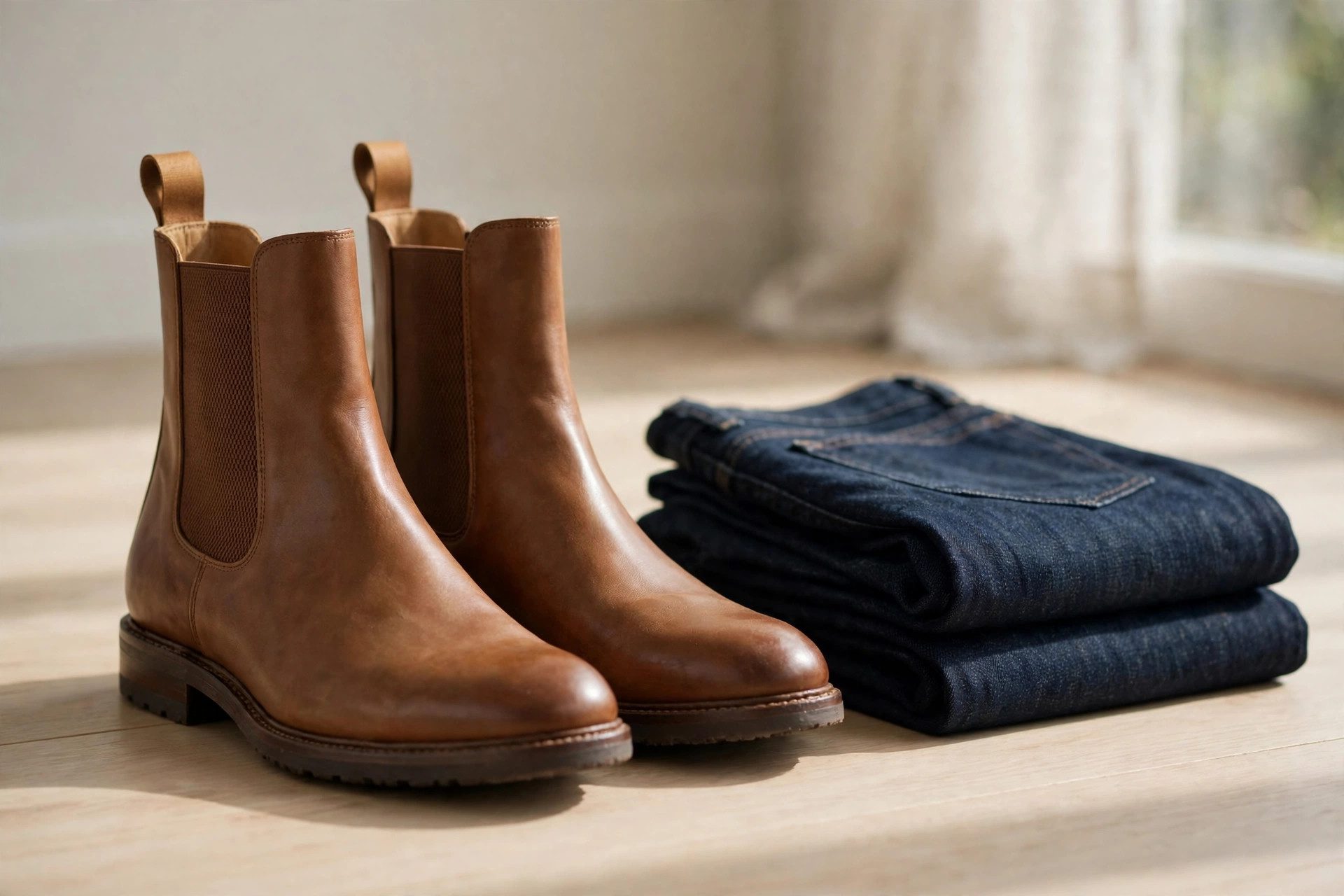
Chelsea boots are ankle boots defined by what they do not have: no laces, no zip, no buckles. Elastic side panels — gussets — stretch to let the foot in and then hold the ankle closely, giving the boot its clean, unbroken line, usually with a pull tab at the back, a low heel and a rounded toe. The design is credited to Queen Victoria's bootmaker J. Sparkes-Hall in the mid-19th century, was revived in 1960s London around the King's Road in Chelsea, and has been a permanent category ever since — worn with suits, jeans, dresses and everything between. For product picks and the style-influence view, see the Chelsea boots product page.
A Boot Defined by Its Gussets
The elastic gusset is a genuinely elegant piece of engineering. Before elasticised panels, a close-fitting boot needed laces, buttons or a long struggle with a boot hook; Sparkes-Hall's design — originally patented in 1851 — let riders pull boots on and off in seconds, which is why the style began as a paddock and riding boot. The gussets sit on both sides of the ankle, Vega or woven elastic inset into the leather quarters, and they flex every time the boot goes on. A fabric pull tab at the back collar completes the system.
The 1960s revival turned a practical boot into a fashion marker: worn by bands and the Chelsea set in London, the boot took its current name and its association with slim silhouettes. Modern versions keep the formula — ankle height, elastic sides, rounded or almond toe, low stacked heel — and vary the details: toe shape, heel height, sole weight and finish decide whether a given pair reads as dress boot, everyday boot or fashion boot.
Leather, Suede and the Sole Decides Formality
Smooth leather Chelseas polish up and cover the widest range, from suits to jeans; black is the most formal, dark brown the most versatile. Suede Chelseas are the casual classic — softer in outline, best in tan, sand and chocolate, and the natural partner of denim and knitwear. Waxed and roughout leathers sit between, shrugging off weather. Whichever upper you choose, read the boot from the ground up: the sole sets the formality. A slim leather or fine rubber sole keeps the boot sleek enough for tailoring.
A lug or commando sole turns the same boot into a stompy, casual, weather-capable one — fashionable, practical, and no longer a suit boot. Heel variations follow the same logic: flat and low stacked heels are the all-day standard, a moderate block or Cuban heel dresses the boot up, and platform Chelseas are the fashion-led branch. Construction matters at replacement time: a stitched (Goodyear-welted or Blake) sole can be resoled, which is why well-made Chelseas are a decades-long purchase rather than a seasonal one.
Fit Rules and Styling
Fit is unforgiving because there is nothing to adjust. The boot should grip the instep so the foot does not swim, hold the ankle without pinching, and leave roughly a thumb's width before the toes. Try Chelseas with the socks you will actually wear; thick socks can turn a correct fit into a squeeze, and the gussets will not forgive a whole size of error. Leather versions mould to the ankle over the first wears. If the elastic cuts in at one point, that is a shape mismatch, not a breaking-in stage — try another last.
Styling is the boot's reward. Men: dark jeans or tailored trousers, hem finishing at the boot top so the elastic panel shows — the panel is the design's signature and hiding it under a pooling hem wastes it. Women: the same boot runs from skinny jeans and cropped trousers to midi dresses and skirts, where its smooth line lets the hem do the talking. In both wardrobes the Chelsea is the boot that ends the what-shoes question: when in doubt between a shoe and a boot, this is usually the answer.
Common Questions
- Should Chelsea boots fit tight?
- Snug, not tight. A Chelsea boot holds on by the elastic gussets and the instep, not by laces you can adjust, so the fit should feel secure around the ankle and instep from the first wear, with room for your toes. A little heel slip in the first days is normal in leather versions; a loose ankle fit will not improve.
- Do the elastic panels on Chelsea boots stretch out?
- Slowly, yes — that is how they are designed to work. The gussets give a little over the first season and then stabilise. Good boots use robust elastic that lasts years; if panels bag early, a cobbler can replace them. Help them last by using the pull tab rather than hauling on the gussets themselves.
- Can you wear Chelsea boots with a suit?
- Yes — a slim Chelsea in smooth leather is one of the few boots that works with tailoring. Keep the boot sleek: a narrow last, no lug sole, polished leather, and a trouser hem that meets the boot top without bunching. Suede or chunky-soled Chelseas sit one step down in formality, with jeans and knitwear.
- How do you clean suede Chelsea boots?
- Brush off dust, use a suede eraser on marks, and work a suede brush in one direction to lift the nap. Treat new suede with a protective spray before the first wet outing and reapply through the season. Store with the shape supported and away from direct heat. Smooth leather versions simply need conditioner and polish.
Boot Style Guides
This page is part of our boot style series, completing the classic boot categories with dedicated guides.