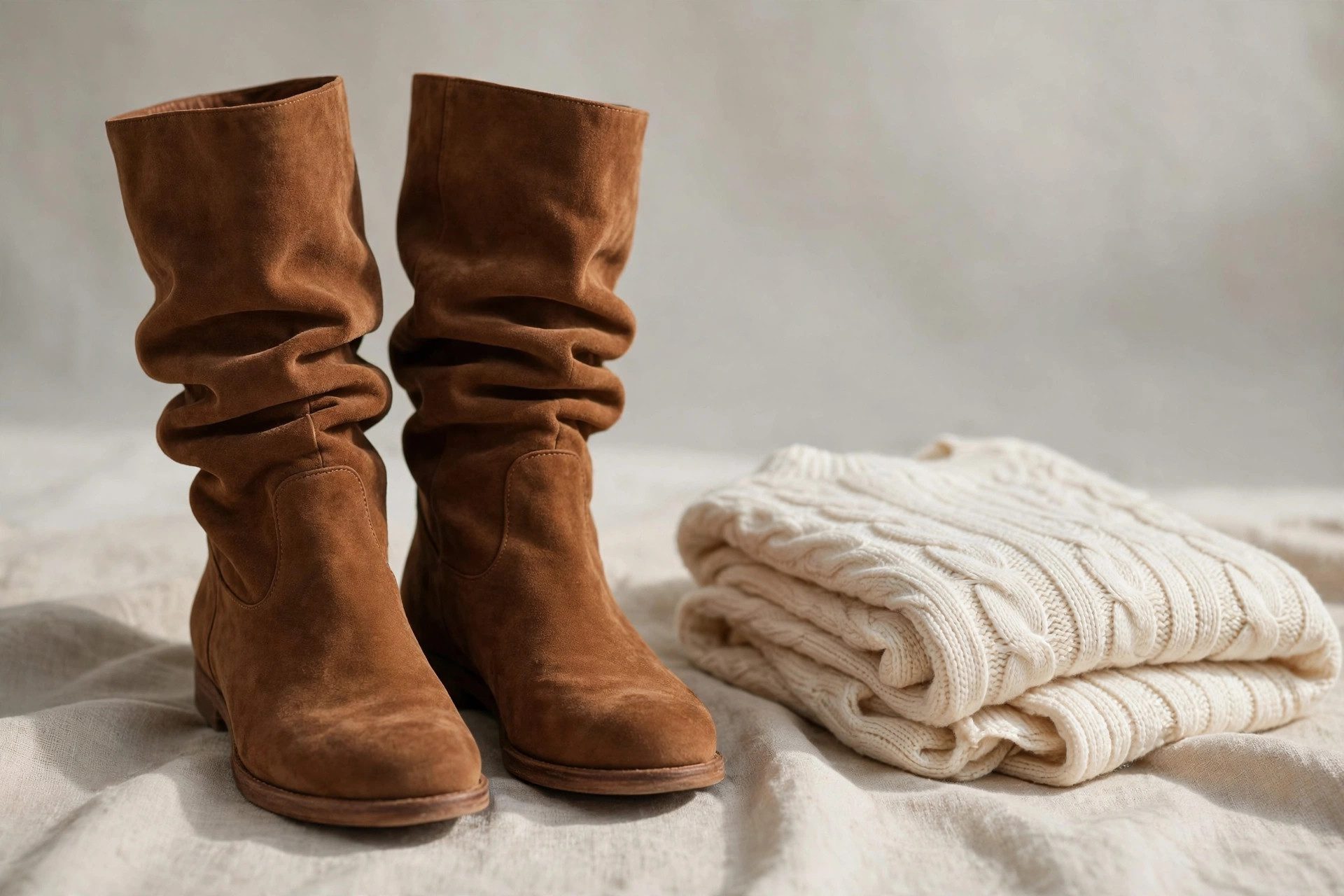
Slouch boots are boots whose shafts are made from soft, unstructured leather or suede that gathers and folds — slouches — around the ankle and calf instead of standing up straight. Where a riding boot is engineered to hold its shape, a slouch boot is designed to collapse gracefully: the folds are the style. Most slouch boots are knee-high, with ankle and over-the-knee versions either side, and they run in cycles of popularity from their 1980s peak to the current revival, driven by how well the relaxed shaft flatters the leg and softens an outfit. The slouch is a deliberate effect, and the difference between a good slouch boot and a merely floppy one is where the folds fall.
What Makes a Boot a Slouch Boot
A slouch boot is built backwards from a normal boot. The shaft uses soft nappa leather, suede or a supple synthetic with little or no stiffening, cut slightly generously so the surplus material has somewhere to go: it settles into folds above the ankle. Better designs engineer the collapse — a shaft that is shaped and slightly structured near the top band so the boot stays up, releasing into folds exactly at the ankle, where the leg narrows and the folds look natural.
The effect flatters because it breaks the leg's line softly instead of gripping it: a slouched shaft makes the ankle look narrower by contrast and adds texture and movement to plain outfits. The style's benchmarks come from the 1980s, when slouch boots were the default tall boot, and the current revival keeps the shape while cleaning up the details — better suedes, sleeker toes, quieter heels. Fabric versions exist but leather and suede hold folds with the most convincing weight; very thin synthetics tend to crumple rather than slouch.
Heights and Degrees of Slouch
The knee-high slouch is the classic: shaft ending just below the knee, folds stacked from ankle to mid-calf. Ankle slouch boots gather a small cuff of folds above a bootie — a softer take on the ankle boot. Over-the-knee slouch boots extend the folds up the thigh and need the top of the shaft to grip, so they usually hide some structure or elastic at the top band while the rest puddles and folds.
Degrees matter when you buy. A true slouch folds everywhere and looks relaxed from the first wear. A partial slouch — structured shaft with a gathered ankle section — keeps a taller, cleaner line and stays up more reliably; it is the safer choice if you like the idea more than the full effect. Try slouch boots standing and walking: the folds should settle at the ankle, not slide progressively downward, and the shaft top should hold its intended height through a walk across the shop.
Styling Without Looking Sloppy
The slouch boot's single rule is contrast: something in the outfit should be neat. With dresses and skirts, keep the hem clear of the shaft top or let a midi hem cover it entirely — the in-between graze looks accidental. Skinny jeans and leggings tucked into slouch boots are the proven casual formula because the leg line stays clean against the folds. A belted knit dress, a tailored coat or a structured bag anywhere in the outfit tells the eye the slouch is a choice.
Care keeps the effect. Brush suede regularly so dust does not lodge in the folds, and store slouch boots with their shafts supported — a rolled magazine or boot shaper — so the folds rest where they belong rather than creasing flat in the box. Smooth leather versions benefit from conditioner worked into the fold lines, which is where the leather flexes and dries first. Looked after, a good slouch boot's folds improve with wear, settling into the shape of your own stride.
Common Questions
- Are slouch boots in style?
- They recur rather than disappear — the style was a 1980s signature, returned in the 2000s, and is a current autumn trend again, named among the season's trending boot shapes. As a soft, classic-material boot it never looks costume when the rest of the outfit is structured; treat it as a wardrobe boot, not a novelty.
- How do you keep slouch boots up?
- The folds are meant to gather at the ankle, but the boot should stay at its height. Fit at the calf, a shaped top band, and internal structure near the top help. Suede grips the leg better than smooth leather. If a pair slides to mid-calf, a boot band or thicker socks can help — or the calf fit is simply wrong for you.
- What do you wear with slouch boots?
- Balance the boot's softness with clean lines elsewhere: skinny jeans or leggings tucked in, short skirts and dresses that show the gathered shaft, or a midi hem the boots disappear under. A top with some structure — a blazer, a fitted knit — keeps the outfit deliberate. Flowing, unstructured everything at once is where slouch boots start to look untidy.
- Can slouch boots be worn for formal occasions?
- Not formally, no — the relaxed folds read casual by design. A smooth leather slouch boot in a dark colour with a moderate heel can reach smart-casual and evening-relaxed, worn with a knit dress or tailored skirt, but for formal settings a structured tall boot is the right tool.
Boot Style Guides
This page is part of our boot style series, completing the classic boot categories with dedicated guides.