Women's Suede Boots Guide
Suede boots are boots whose outer is suede — leather finished with a napped, velvety surface — in ankle, knee-high and over-the-knee heights and every heel form.
Shop Women's Suede Boots Now
Shop Women's Suede Boots on Amazon Shop Women's Suede Boots on eBayThe Amazon and eBay links on this page are affiliate links. If you make a purchase through them, Apparel Search may earn a commission.
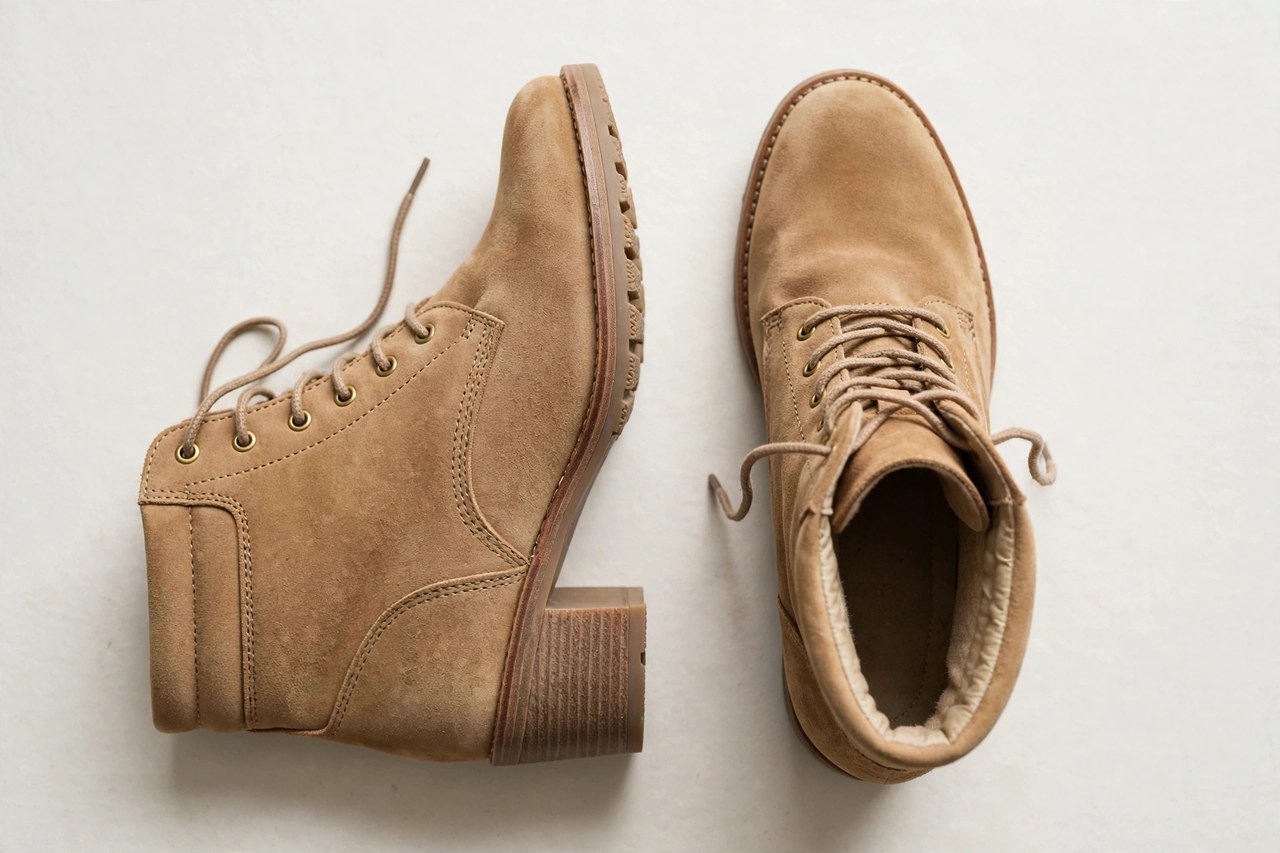
Suede boots are boots whose outer is suede — leather finished with a napped, velvety surface — in ankle, knee-high and over-the-knee heights and every heel form. Suede is a finish, not a boot style: this page covers the nap itself — protection, water limits, brushing and stain care — across all the boot shapes suede is used for.
This guide covers suede boots in the order a careful buyer needs it: what the garment is made from, how it is constructed, how it should fit, how to choose it for real use, and how to care for it so it lasts. The focus is on measurable details, named materials and checks you can perform in a shop or on a parcel's arrival, rather than general fashion language.
The Material: Nap, Skins and Finishes
Suede is leather that has been buffed on the flesh side to raise a soft, velvety nap of fine fibers; it is not a separate animal or a fabric. In suede boots the nap is both the appeal and the maintenance contract: it gives suede its matte depth of color and its soft hand, and it is what water spots, absorbs stains and crushes under pressure. Boot suedes are usually split leather or full hides finished for footwear — thicker and more robust than the glove-soft suedes used for garments, but still far more delicate than smooth leather. Pigskin and cowhide suedes are the durable mainstream; kidskin suedes are finer and more fragile.
Judge suede by its nap: it should be short, dense and even, changing shade smoothly when you brush a finger across it, with no bald patches, loose fibers or shiny worn areas at stress points. Color should be consistent across both boots of a pair — suede's nap makes mismatched dye lots unusually visible. The nap is suede's beauty and its vulnerability: protector spray before first wear and a suede brush after are not optional extras but the basic routine. Water-resistant treatments applied at the tannery help against light marks but do not make suede a wet-weather material, whatever the product name suggests; treat any 'waterproof suede' claim as resistance, not immunity.
Fit, Height and Sizing
Suede boots fit like other boots at purchase and then relax more than smooth leather: the napped structure gives slightly with wear, so a fit that is comfortably snug across the instep in the shop is usually right, while a loose fit becomes sloppy. Fit suede boots with the socks you will wear, late in the day, checking toe room standing and walking — your foot lengthens under load — and heel hold on a hard floor. Shaft fit matters by height: ankle boots must clear the ankle bone without rubbing, knee-high shafts should follow the calf without either gripping or standing away, and stretch panels or lacing change that equation materially.
Heel height interacts with suede's softness: a tall, slim heel on a soft suede boot needs a sound shank and a snug instep fit to feel stable, while block heels and flats forgive more. If you are between sizes, an insole can refine a slightly generous boot, but nothing corrects a short one, because suede's give works across the width, not the length. Break boots in around the house first: suede marks easily, and an unworn pair can still be exchanged, while a pair worn outdoors in the rain on day one has already begun its patina, wanted or not.
Choosing and Wearing
Choose suede boots for dry days and dressed-up textures: suede's matte surface softens tailored outfits, deepens casual ones, and pairs with more fabrics than any other boot finish — denim, wool, knitwear, leather's smoother forms and most dress fabrics all sit comfortably against it. Dark and mid-tone suedes are the forgiving workhorses, hiding the scuffs of ordinary wear; pale suede is beautiful and honest about its maintenance, so buy it as a considered choice, not a default. One superb pair in a versatile color, protected and brushed, outperforms three neglected pairs in every wardrobe audit.
Weather discipline is part of wearing suede well: check the forecast, keep an alternative for wet days, and treat a surprise shower as a care event, not a disaster — stuff the boots, dry them slowly and brush the nap back up once dry. In practice, rank the checks above in the order your own use demands — frequency of wear first, then weather, washing facilities and budget — because that order differs by household, and it is the real reason two careful buyers can correctly choose differently from the same shelf. Suede also rewards restraint in detailing: the nap is itself an ornament, so clean-lined boots in this material tend to outlast heavily decorated ones both in condition and in style. Buy the silhouette you would choose in smooth leather, executed in suede, and the finish becomes the only variable you are managing.
Protection, Cleaning and Storage
Protection starts before the first wear: apply a suede protector spray evenly, from a distance, let it dry fully, and repeat — it will not waterproof the boots, but it buys time against splashes and makes later cleaning far more effective. After wear, brush with a suede brush to lift dust and restore the nap, working in one direction for a smooth finish; use a suede eraser or crepe block on shiny marks and light scuffs, then brush again. Wet suede should be stuffed with paper, dried slowly away from heat — heat stiffens the leather permanently — and brushed once completely dry to raise the flattened nap.
Deeper cleaning uses a suede-safe cleaner or a specialist, never ordinary leather polish, cream or saddle soap, which flatten and darken the nap. Store boots upright with trees or rolled paper in the shafts so they neither slump nor crease, in a breathable place away from sunlight, which fades suede faster than smooth leather. Rotate wear — suede needs a rest day between outings to dry fully and recover its nap. Followed consistently, this routine is the difference between suede's reputation for fragility and its reality: a finish that stays rich and even for many seasons.
Related Women's Guides
Photos


Looking for Women's Clothing Stores?
This guide helps you choose women's suede boots. To browse where to buy, visit our women's clothing store directory, where you can find retailers that carry them.