01 / First PrinciplesClothing That Carries Its Own Weather
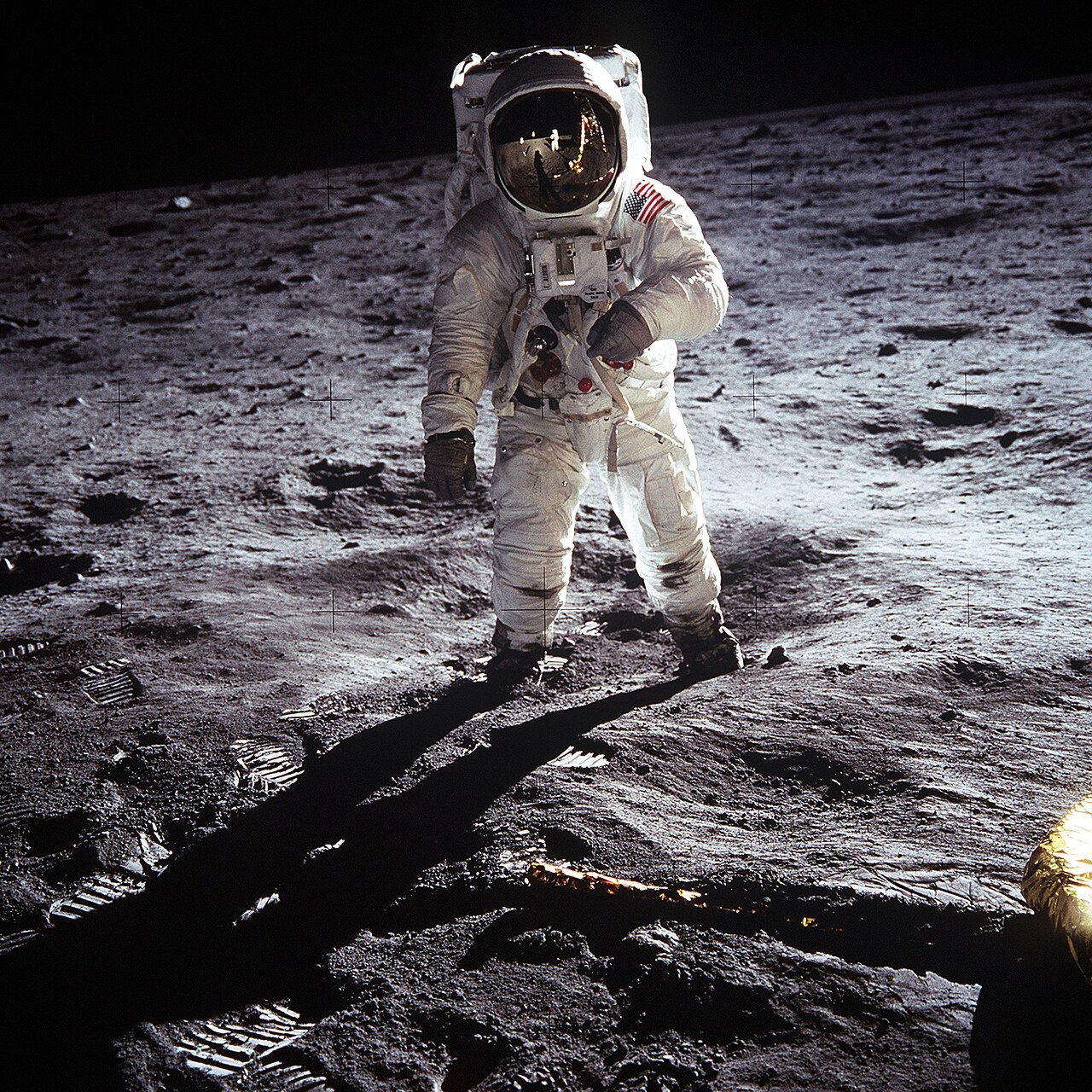
Ordinary clothing mediates between a body and an environment. A spacesuit replaces the environment. Inside the garment there must be breathable air at workable pressure, a temperature the body can stand, and protection from hazards the wearer cannot see. Outside a spacecraft, in direct sun, a surface can swing from well above boiling to far below freezing; the suit's job is to make sure none of that reaches the skin.
Suits divide by where they are worn. IVA suits (intravehicular) are cabin wear: pressure insurance for launch and landing, plugged into the spacecraft for air and power — the SpaceX flight suit is the modern exemplar. EVA suits (extravehicular) are the full spacewalking rigs: self-contained, with their own life-support backpack, built for hours of work outside. Everything below describes the EVA suit, the complete garment; IVA suits borrow the same principles in tailored miniature. Our space suit definition covers the terminology in brief.
02 / ConstructionThe Layer System, Skin to Shell
No single fabric can do what a spacesuit must do, so a spacesuit is a system of layers, each specialized — the same logic as technical outdoor clothing, carried to its limit. From the skin outward:
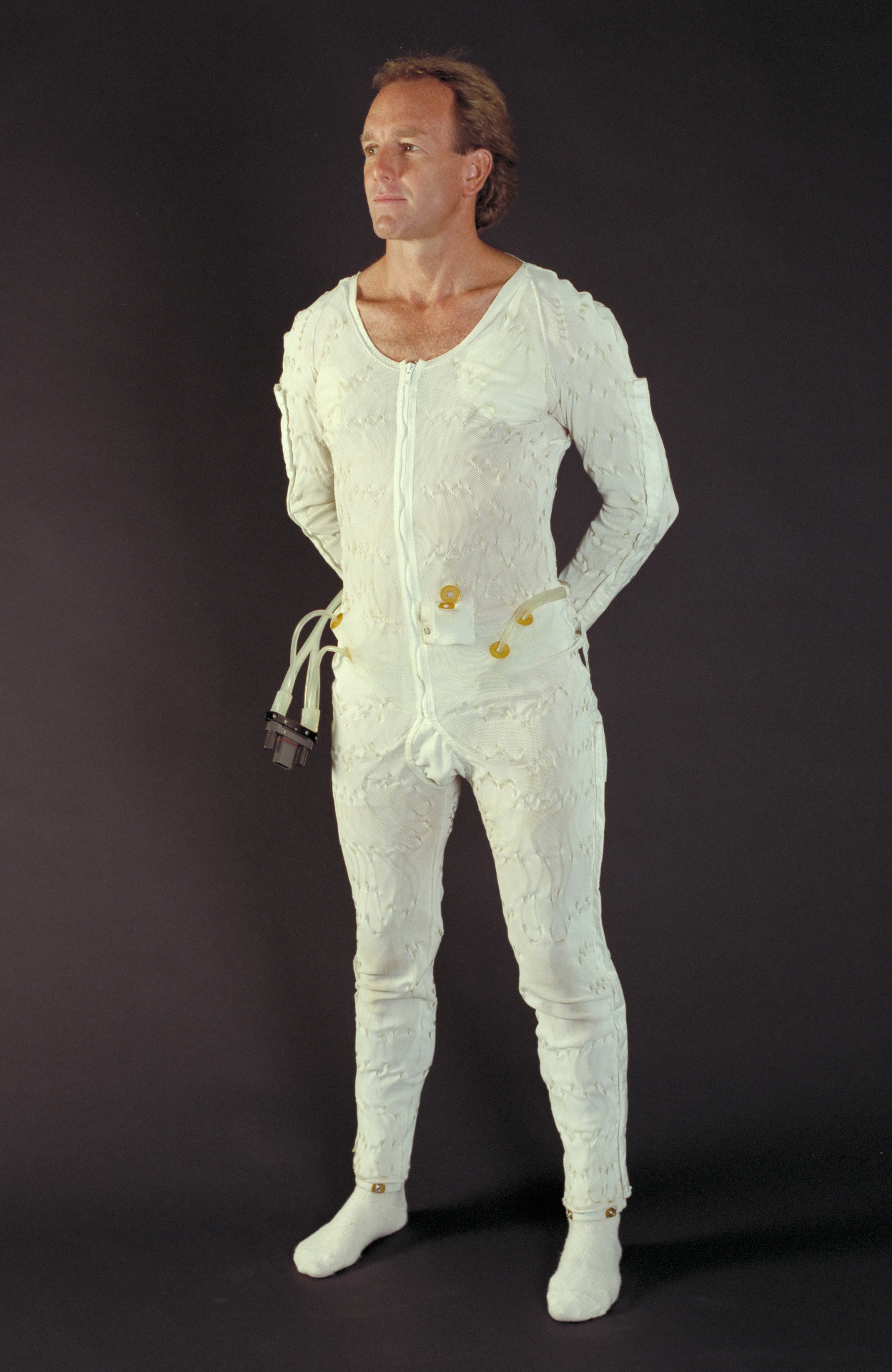
The Apollo A7L made the layering famous: its soft garment alone stacked around 21 layers, hand-assembled. And the assembly was garment work in the most literal sense — ILC Dover, the suit's maker, was the space-age arm of the International Latex Corporation, parent of Playtex, and the A7L's seams were sewn by the company's seamstresses, stitching to tolerances machinists would respect, with no room for a single broken thread in a seam that held a man's air in.
03 / HeadHelmets and Visors
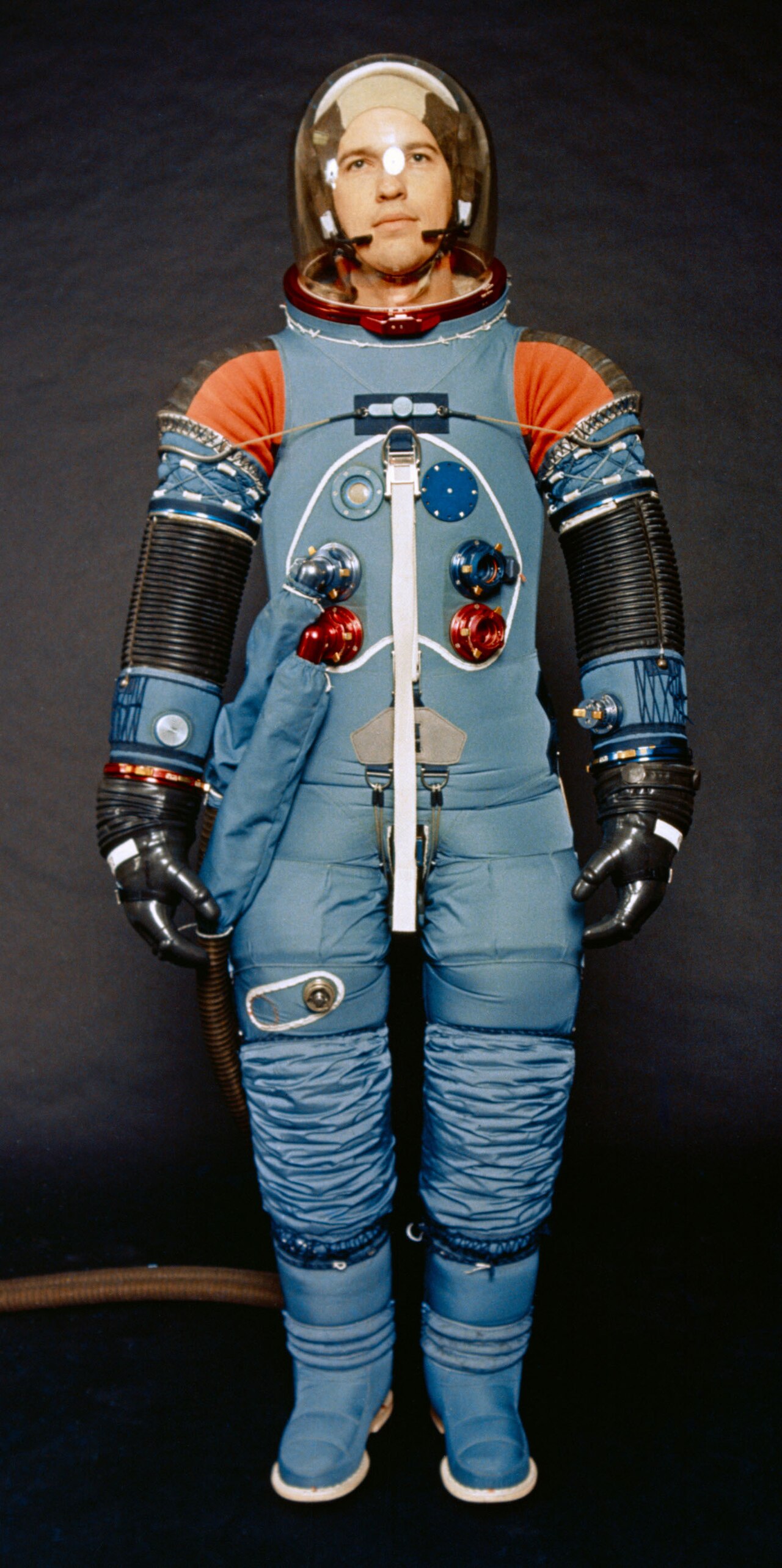
The helmet is where a suit meets its wearer face to face. Classic EVA helmets are clear polycarbonate “bubble” helmets giving near-panoramic vision, worn under a fabric-and-visor assembly whose gold-coated outer visor works like the world's most serious sunglasses, cutting glare and radiation. Communications live in the helmet too: the famous “Snoopy cap” headset worn underneath since Apollo, and on modern cabin suits, microphones and speakers built into a helmet shell that is custom 3D-printed to the wearer's head — the SpaceX approach. Either way, the helmet is a fitted garment component, sized to a person, not a generic part.
04 / HandsGloves: The Hardest Pattern in Clothing
Ask suit engineers which component fights them hardest and they will say the gloves. A pressurized glove is a balloon shaped like a hand: it wants to straighten every finger, and the wearer spends the whole spacewalk fighting it, which is why fingertip and fingernail injuries are a documented occupational hazard of spacewalking. EVA gloves are therefore built in the most bespoke way of any part of the suit — molded and patterned from casts and scans of the individual astronaut's hands, with a tough outer glove (leather palms and technical fabrics on Apollo; silicone-rubber fingertips and advanced textiles today) over the pressure glove beneath. Cabin suits invert the problem: the SpaceX glove must stay fine enough to work a touchscreen. Precision versus pressure — the glove maker's eternal brief, at two extremes.
05 / FeetBoots for Another World
Apollo's lunar boots were overshoes: silicone-soled boots worn over the suit's integrated footwear, with tread that left the most famous footprints in history in the lunar dust. Silicone was chosen because it stays flexible at temperatures that would crack ordinary rubber to glass. Modern suits integrate the boot into the leg of the suit with a proper walking sole — the new lunar suits are designed for real hiking across rough terrain, a footwear brief closer to mountaineering than to the Apollo shuffle. On the ground, the closest relatives of these decisions live in our flame-resistant clothing and protective footwear guides: materials chosen because the environment is trying to hurt the wearer.
06 / Life SupportThe Backpack Is Part of the Outfit
What turns a suit into a spacecraft is the PLSS — the portable life support system, worn as a backpack. It carries oxygen, removes carbon dioxide, circulates the cooling water, holds the radio and batteries, and monitors the whole garment. On NASA's EMU the pack and suit together run to roughly 280 pounds on Earth, a mass that vanishes in orbit but dominates every training session in the pool. A small jetpack, SAFER, rides along as the emergency lifeboat should an astronaut come untethered. The new generation of suits, including Axiom's AxEMU, shrinks and regenerates more of this system — its carbon-dioxide removal is regenerable rather than disposable — but the silhouette is unchanged since 1981: a person in white, wearing a building on their back.
07 / LineageA Short History, Worn on the Body
1961–62, Mercury: the Mark IV, a silver-coated nylon pressure suit adapted from a Navy design — the silver was aluminum powder on fabric, and it made astronauts look like the future. 1965–66, Gemini: the first American spacewalks, in suits that added layers and a chest pack as the missions left the capsule. 1969–72, Apollo: the A7L, the first suit designed to be walked in on another world, hand-sewn, 21 layers deep, with its own backpack. 1981–2011, Shuttle era: two suits for two jobs — the orange ACES “pumpkin suit” for launch and landing, and the white EMU for spacewalks, a modular suit assembled from sized components that is still the ISS's American workhorse. 2019: NASA unveils the xEMU, its next-generation lunar prototype. 2020s: the commercial era — suits become designed objects, built by companies, with costume designers and fashion houses in the credits. That is the era the two features in this series document.
08 / The New DesignersFashion Houses Enter the Space Age
Three collaborations define the moment. SpaceX hired Hollywood costume designer Jose Fernandez to give its cabin suit the silhouette of a tuxedo, then engineered it in-house — the full story is in our SpaceX flight suit feature. Axiom Space brought in Prada to co-develop the outer layer and materials of the AxEMU lunar suit, unveiled in Milan in October 2024 — see our Prada × Axiom feature. And Virgin Galactic made Under Armour its technical spacewear partner in 2019, unveiling the first spacewear system created for private astronauts — base layer, suit, footwear, training suit and a limited-edition jacket — a sportswear company's complete wardrobe for space tourists. The pattern across all three: when suits became products, their makers went looking for people who understand bodies, materials and desire. They went to the clothing industry.
09 / Down to EarthSpacesuit Ideas in Everyday Clothing
The suit's technologies keep landing in ordinary wardrobes. Phase-change and active-cooling fabrics descend from the LCVG's insight that the layer against the skin manages comfort. Aramid fibers developed for flak jackets and suit shells — read our Kevlar fiber guide and the Nomex fiber definition — structure everything from motorcycle gear to firefighters' turnout coats. The broader field lives in our smart fabrics guide and the wearable technology overview, while the design tools that now pattern both suits and streetwear are covered in our CAD/CAM guide. The spacesuit is the far end of a spectrum that starts with a base layer — and the whole spectrum is clothing.