Women's Nurse Uniforms Guide
The modern nurse uniform is a system, not a costume: scrubs-based, color-coded, and specified by your employer's dress code — built for hygiene and instant identification.
Shop Women's Nurse Uniforms Now
Shop Women's Nurse Uniforms on Amazon Shop Women's Nurse Uniforms on eBayThe Amazon and eBay links on this page are affiliate links. If you make a purchase through them, Apparel Search may earn a commission.
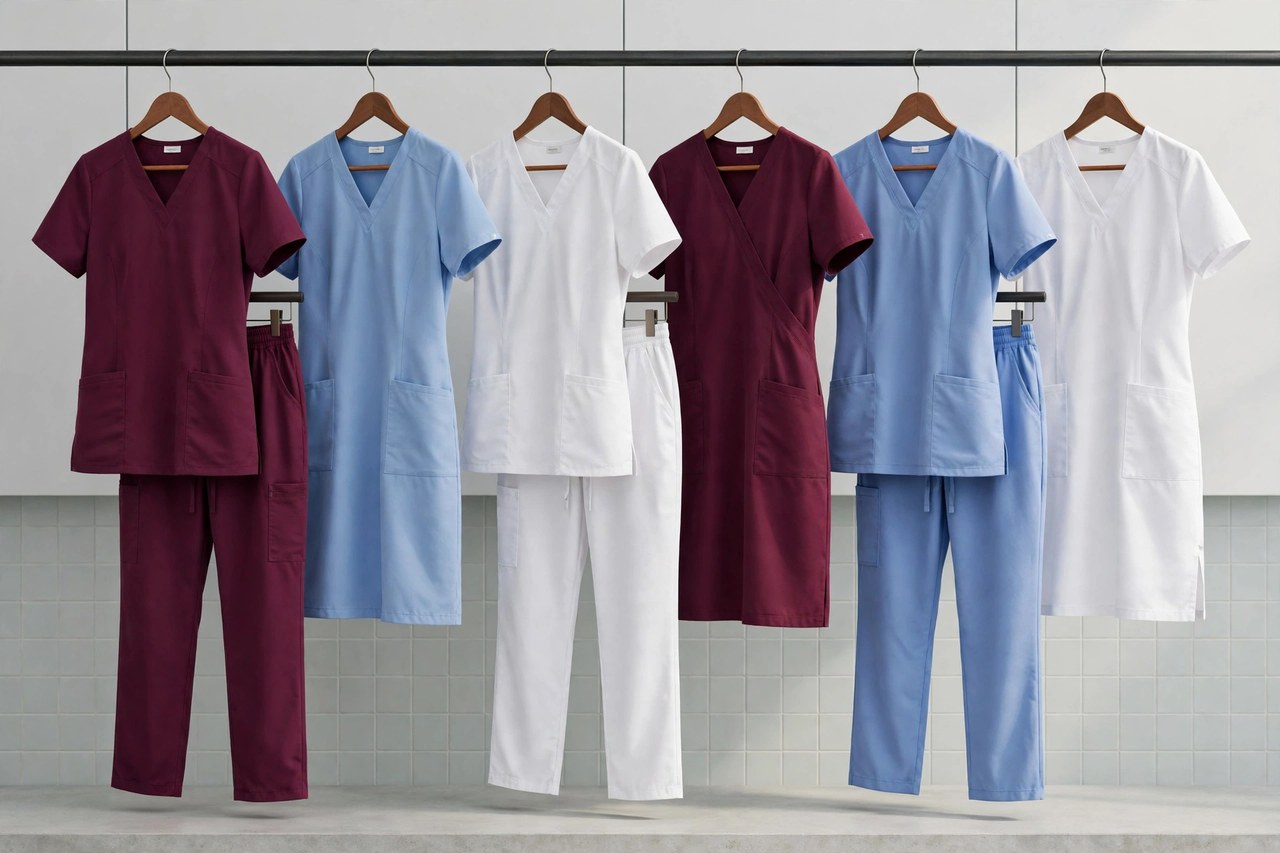
A nurse uniform is attire worn by nurses for hygiene and identification — and that definition still governs the subject; what has changed is the garment that satisfies it. Today's nurse uniform is overwhelmingly built on scrubs: the matching tunic-and-trouser sets (and in some settings the scrub dress) that replaced the traditional white dress, apron and cap in Western Europe and North America over the late twentieth century. This guide covers the uniform as it is worn now: the system, the codes, and the buying.
For the traditional uniform — the dress, pinafore apron and cap that descend from the nun's habit — and for where it survives, see our nursing uniforms guide (linked below). The two pages divide the subject the way the profession itself does: this one is the working present; that one is the history that explains it.
The Modern Uniform Wardrobe
The core is the scrubs set, covered in depth in our nurse scrubs guide: V-neck or mock-wrap tops, drawstring or yoga-waist pants, in the employer's specified color. Around the core sit the regulated extras: warm-up jackets and lab coats where the facility allows or requires them, scrub dresses — a simpler type of uniform, almost always worn in operating rooms and emergency rooms — and underscrubs for warmth and coverage.
Specialties adjust the standard kit. Operating and emergency departments often wear facility-laundered scrubs in a restricted color, changed on site. Pediatric and children's units are the print-friendly exception. Maternity, petite and tall ranges are part of the modern uniform program rather than afterthoughts, and a good uniform supplier's size run is the first sign you are dealing with one.
Dress Codes and Color Coding
The modern dress code does the identification work the white uniform once did alone. Many hospitals assign scrub colors by department or role so that patients and colleagues can identify a nurse at sight; some add embroidered names and roles, require ID badges at a set position, and specify footwear (closed, fluid-resistant, often a set color) as part of the uniform rather than a personal choice.
Codes also regulate the details the uniform doesn't cover: nails, jewelry, hair, tattoos and fragrance rules are hygiene and safety policy, not fashion commentary, and they sit in the same document as the scrub color. Read yours before you buy: the most expensive uniform mistake is a beautiful set in a color your unit doesn't wear, or a style your facility's policy quietly forbids.
Uniform Programs and Buying Your Own
There are three ways nurses get uniforms. Some employers issue and launder them (standard for operating suites and isolation work). Some run a uniform program: an approved catalog, an allowance, and group ordering through a uniform store or the brand's program site. And many nurses simply buy their own within the dress code, from uniform retailers — in which case fit ranges, exchange policies and embroidery services matter more than any single garment.
Buying advice that survives every code: purchase at least a week's rotation if you launder at home; keep tops and bottoms within one brand and dye lot; embroider after the first wash, not before; and keep one new set in reserve for the day the primary set meets bleach, a pen, or a torn pocket. The uniform's job is to disappear — to make the nurse, not the clothing, the thing a patient remembers.
One more practical note: keep your uniform spending records. Employers who do not provide uniforms sometimes reimburse them, professional bodies occasionally subsidize them, and in many workplaces the cost of required uniform pieces is a recognized work expense — a habit of keeping receipts makes all three easy to claim.
Related Women's Guides
More to Explore on Apparel Search
Looking for Women's Clothing Stores?
This guide helps you choose women's nurse uniforms. To browse where to buy, visit our women's clothing store directory, where you can find retailers that carry them.