Women's Nursing Uniforms Guide
Before scrubs, there was the nursing uniform: a white dress, a pinafore apron and a cap — a uniform descended from the nun's habit, and instantly recognizable for over a century.
Shop Women's Nursing Uniforms Now
Shop Women's Nursing Uniforms on Amazon Shop Women's Nursing Uniforms on eBayThe Amazon and eBay links on this page are affiliate links. If you make a purchase through them, Apparel Search may earn a commission.
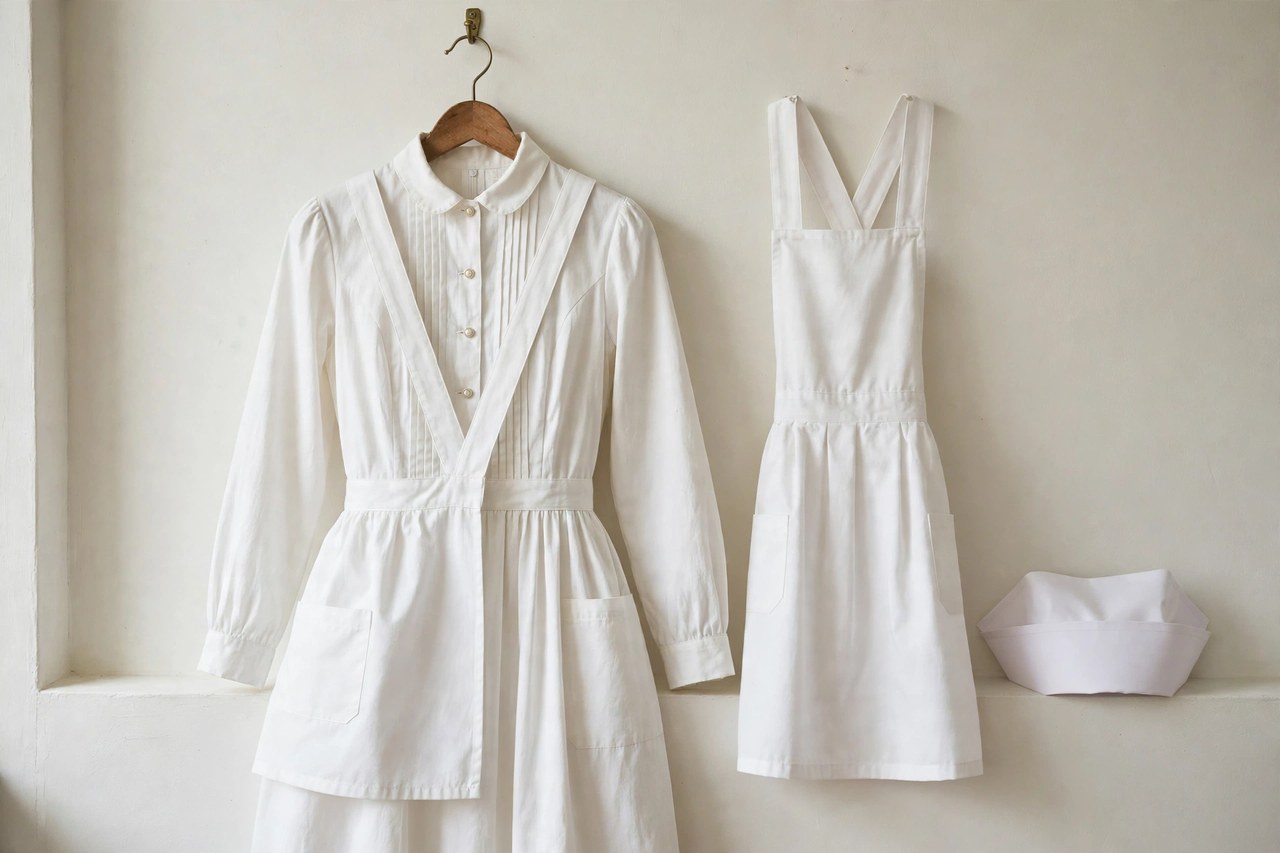
Say ‘nursing uniform’ and one image arrives before all others: the white dress, the apron, the cap. That is the subject of this page — the traditional uniform as a garment and as a piece of history. Readers looking for today's working uniform should see the nurse uniforms guide: the modern scrubs-based system has its own page (linked below), and this page covers the older garment.
The traditional uniform was attire worn by nurses for hygiene and identification, and it has existed in many variants — but the basic style has remained recognizable across all of them: a dress, an apron and a cap.
From the Nun's Habit to the Trained Nurse
The first nurse uniforms were derived from the nun's habit. Before the nineteenth century, nuns took care of the sick and injured, so it was natural that trained lay nurses might copy the nun's habit as they adopted ranks like ‘Sister’. When nursing became a trained profession in the Nightingale era, the uniform became its badge: a standardized dress that said, at ward distance, this woman is a nurse, she is trained, and she can be trusted.
The classic assembly had three working parts. The dress — white or in some schools striped or colored — was the base garment, washable and replaced when worn. The pinafore apron worn over it took the ward's dirt and could be changed during a shift, protecting the dress; in some hospitals the pinafore was replaced by a cobbler-style apron. And the cap, starched and shaped, often identified the nurse's school by its design — a wearable diploma. Student nurses in some hospitals also wore a nursing pin, awarded at graduation and treated with a seriousness closer to a medal than a badge.
Where the Traditional Uniform Survives
This type of nurse's dress continues to be worn in many countries, even as Western Europe and North America moved to scrubs and tunics. Traditional or semi-traditional uniforms remain standard in parts of Asia, Africa, Latin America and the Middle East, and in specific settings everywhere: religious nursing orders, some private hospitals, and district and community nursing services that kept the dress long after hospitals changed.
It also survives ceremonially. Pinning and capping ceremonies still mark the passage from student to nurse in many schools, using the cap and pin as symbols long after the ward stopped requiring them. And it survives in the culture: the white dress, apron and cap remain the universal visual shorthand for ‘nurse’ in film, costume and illustration — which is why traditional uniforms and faithful reproductions are still manufactured and sold.
The Term Today, and Buying Traditional Pieces
In modern retail, ‘nursing uniform’ has drifted into a generic term for whatever nurses wear — most products sold under it are scrubs. If you are buying the traditional garment itself (for work where it is still standard, for ceremony, or for an accurate costume), look for the real construction: a washable cotton or cotton-blend dress, a separate apron with proper ties rather than a printed imitation, and a cap that is shaped and starched rather than a novelty headband.
Care for whites the old way, because the uniform's authority was always its cleanliness: wash hot where the fabric allows, treat stains before they set, starch the cap and apron as the tradition demands, and keep the dress for duty only. For the uniform as it is worn on today's wards — scrub colors, dress codes and buying programs — continue to our nurse uniforms and nurse scrubs guides below.
Related Women's Guides
More to Explore on Apparel Search
Looking for Women's Clothing Stores?
This guide helps you choose women's nursing uniforms. To browse where to buy, visit our women's clothing store directory, where you can find retailers that carry them.