Women's Nurse Scrubs Guide
Scrubs are the sanitary working clothes of modern health care — designed to be simple, easy to launder and cheap to replace — and for most nurses they are the uniform itself.
Shop Women's Nurse Scrubs Now
Shop Women's Nurse Scrubs on Amazon Shop Women's Nurse Scrubs on eBayThe Amazon and eBay links on this page are affiliate links. If you make a purchase through them, Apparel Search may earn a commission.
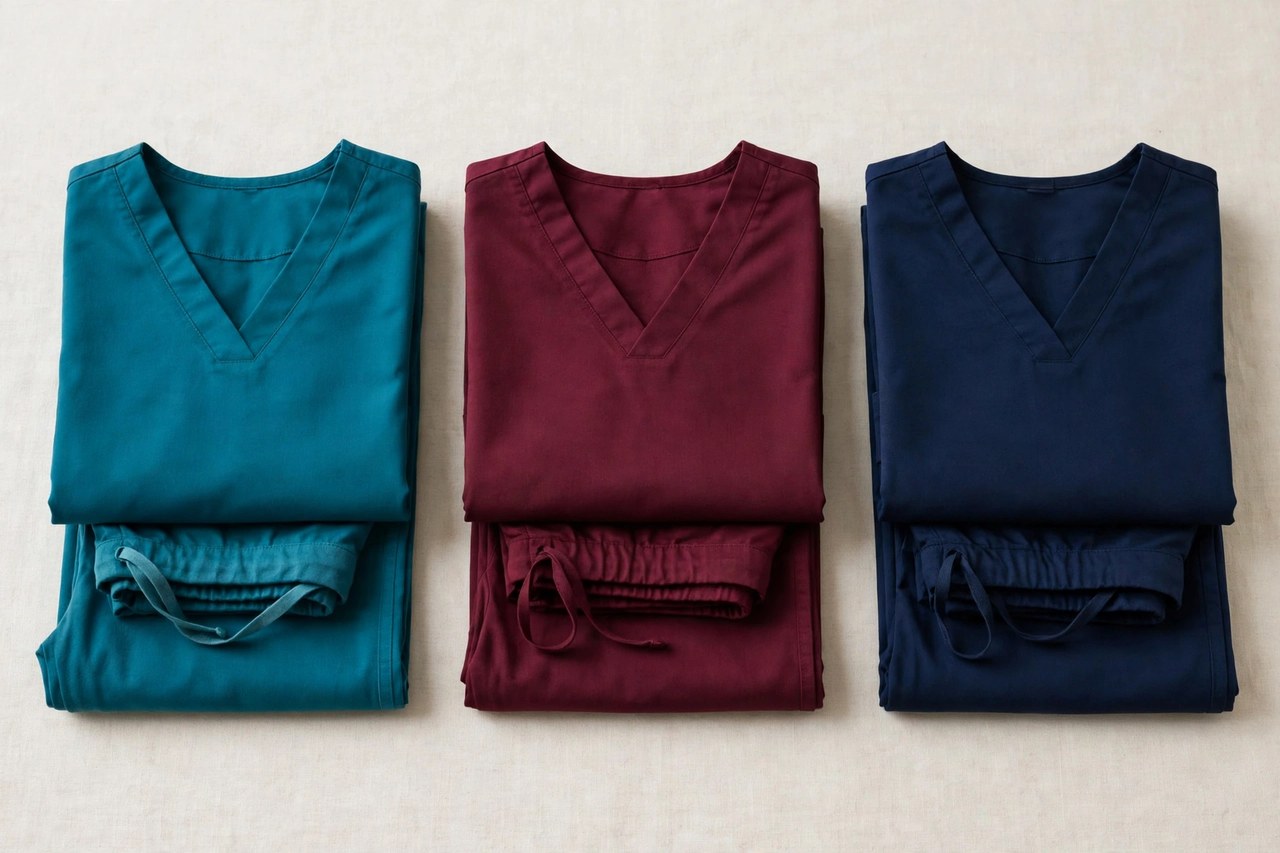
Scrubs are the sanitary clothing worn by surgeons, nurses, physicians and other workers involved in patient care in hospitals. They were originally designed for use by surgeons and other operating room personnel, who would put them on when sterilizing themselves, or ‘scrubbing in’, before surgery — which is where the name comes from. They are now worn by many hospital personnel, and their use has extended outside hospitals to any work environment where clothing may come into contact with infectious agents: veterinarians, midwives, dental and care staff.
The design philosophy is in the definition: scrubs are designed to be simple, with minimal places for contaminants to hide, easy to launder, and cheap to replace if damaged or stained irreparably. Everything about a scrub set — the V-neck top, the drawstring trouser, the absence of fussy closures — follows from those three requirements. In the United Kingdom, scrubs are sometimes known as Theatre Blues.
The Scrub Set: Tops and Bottoms
The classic top is a short-sleeved V-neck tunic with patch pockets — two at the hips, sometimes one at the chest. Modern women's scrub tops add shaping the original lacked: fitted and wrap-style (mock-wrap) fronts, empire seams, princess lines, stretch side panels, and sleeves cut to raise arms without the whole top lifting. The classic bottom is a drawstring pant, straight-legged and pocket-light; the modern alternatives are elastic-waist and yoga-waist pants, cargo styles with leg pockets for scissors and tape, and jogger scrubs with ribbed ankle cuffs.
Beyond the set: scrub jackets and warm-up layers for cold units and for coverage, scrub dresses (a simpler type of uniform, almost always worn in operating rooms and emergency rooms), and underscrubs — long-sleeved tees worn beneath for warmth and modesty. Buy tops and bottoms as a system: mixing brands means mixing dye lots, and two navies are rarely the same navy.
Fabrics and Finishes
Traditional scrubs were cotton or cotton-polyester twill: hard-wearing, breathable enough, and able to survive industrial laundering. The current generation is performance fabric — polyester-spandex blends with four-way stretch, moisture wicking and wrinkle resistance — trading a little of the old fabric's toughness for a full shift of comfort and a neater look at hour eleven. Antimicrobial and fluid-resistant finishes are widely offered; treat them as a bonus layer, not a substitute for changing out of soiled scrubs.
Weight matters in both directions. Heavier twills last for years and hang more professionally; featherweight stretch sets feel like athletic wear and dry overnight in a locker. Many nurses keep both: the durable sets for the floor, the soft sets for long shifts — and everything in the employer's mandated color, which brings us to the code.
Color Codes, Buying and Laundering
Hospitals increasingly dress departments by color — one color for nurses, another for technicians, another for environmental services — so patients can read the room at a glance. If your employer color-codes, your only real choice is brand, fit and fabric within the assigned color; buy the exact shade name on your policy, not the nearest-looking one on a screen. Where prints are allowed (pediatrics and veterinary work especially), printed tops over solid pants are the standard compromise.
Fit for a twelve-hour shift: raise your arms, squat, and sit in the fitting room; scrubs fail in motion, not standing still. Women-specific cuts in petite, regular and tall lengths are now standard from the major uniform brands — use them rather than sizing a unisex set. Launder as the garment was designed to be laundered: wash before first wear, hot wash where the fabric allows, separate from household laundry after clinical shifts, and retire sets when the fabric thins — a scrub's job includes being replaceable.
Related Women's Guides
Looking for Women's Clothing Stores?
This guide helps you choose women's nurse scrubs. To browse where to buy, visit our women's clothing store directory, where you can find retailers that carry them.