Apparel Search · Business Guide
Private Label Clothing Guide
The step-by-step path to selling clothing under your own brand: the four routes, the labeling rules, and the costs and minimums — written for boutiques and small brands.
Search Apparel Search
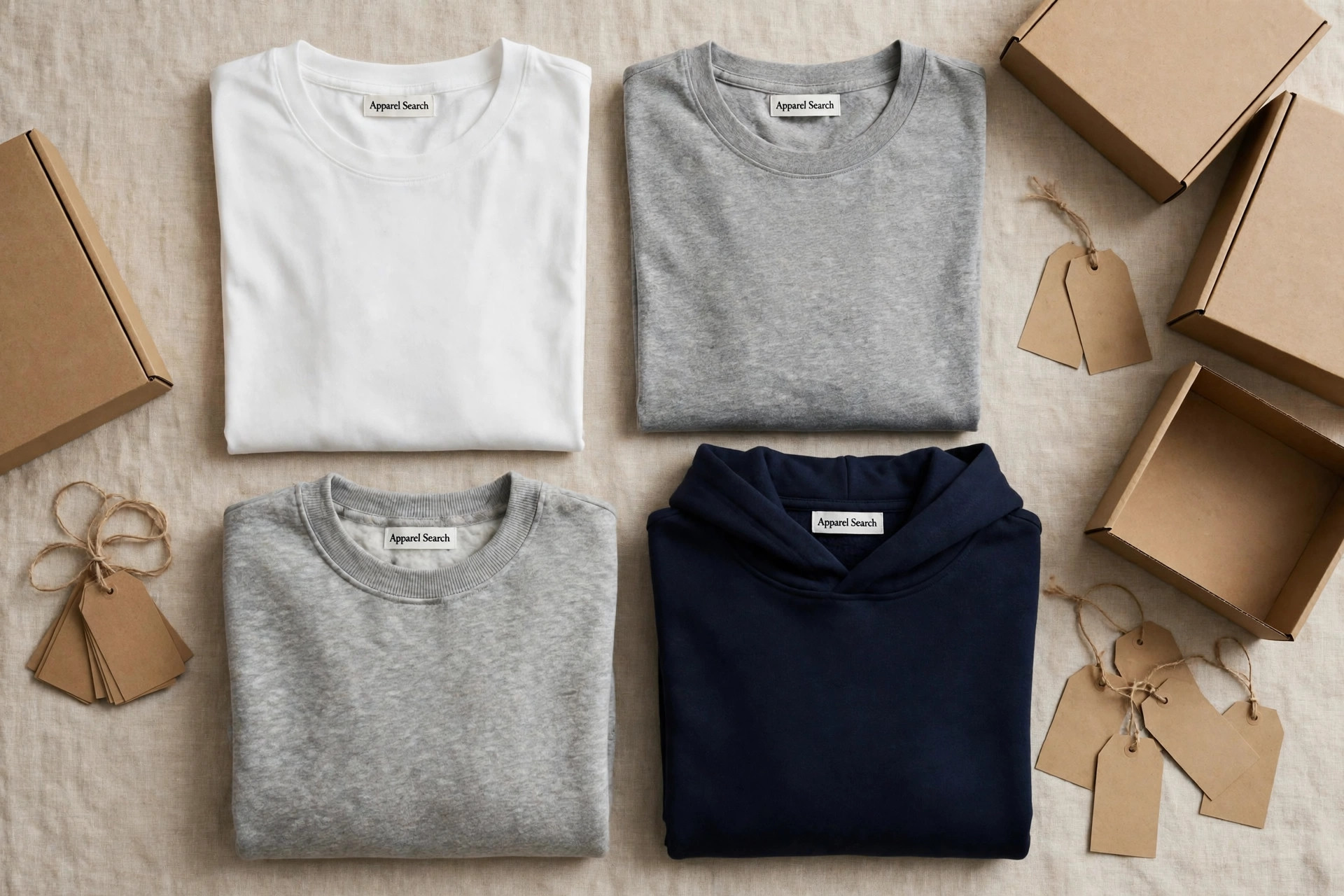
Private label is the middle path into the clothing business: instead of designing garments from raw fabric, you sell garments that a manufacturer already knows how to make, produced or finished under your brand — your woven label in the neck, your hangtag on the side seam, your name on the packaging. Boutiques use it to stock own-brand basics no competitor carries. Online sellers use it to escape commodity listings. New brands use it to learn the trade — sizing, quality control, reorders — before committing to full custom production. This guide walks the whole route: the four ways private label is done, the labeling rules that come with putting your name on someone else's garment, and the costs and minimums that decide whether the numbers work.
The Guides in This Section
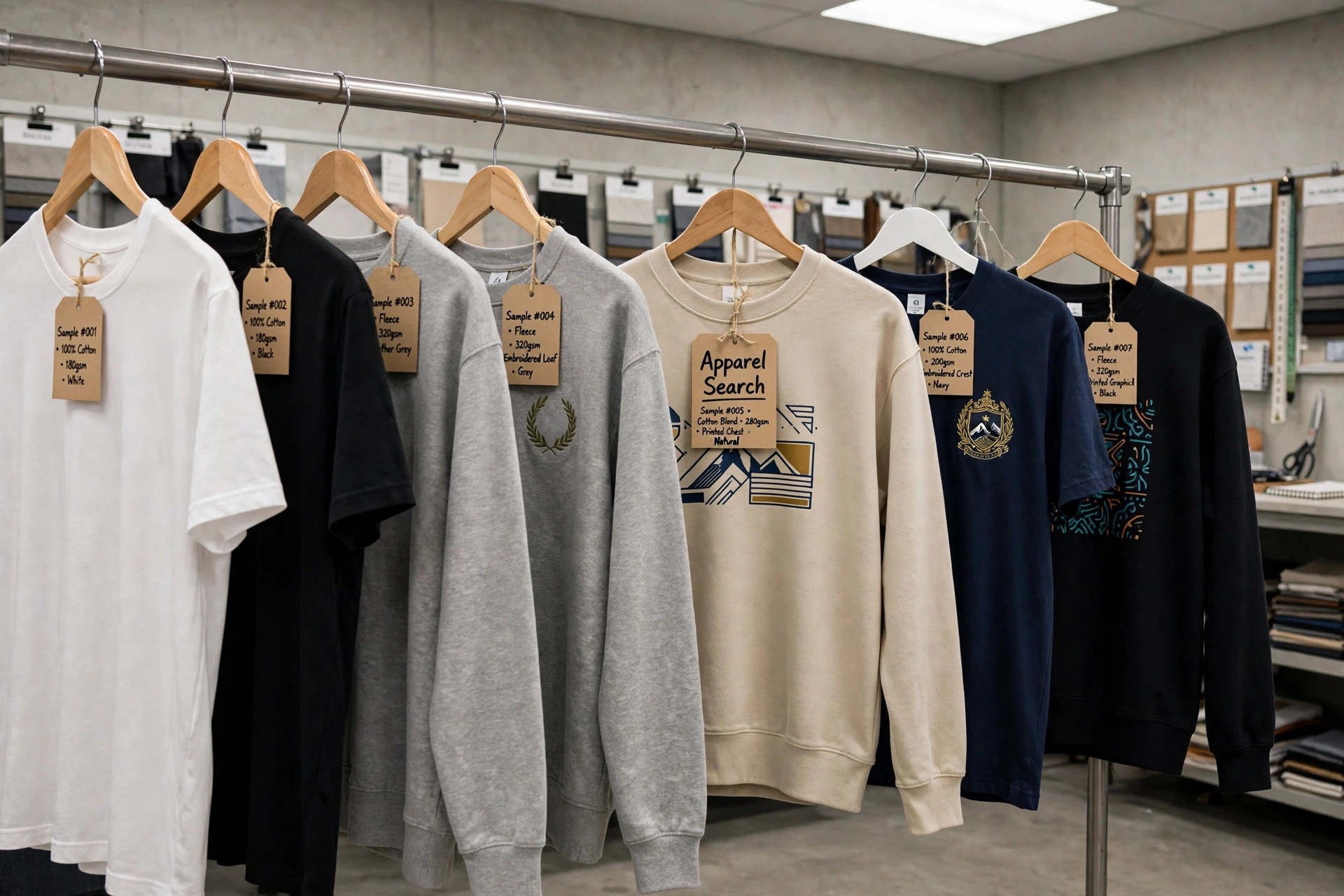 The Four Routes, ComparedRelabeling stock garments, decorating blanks, modifying existing styles, and full custom manufacturing — what each route controls, costs, and risks.
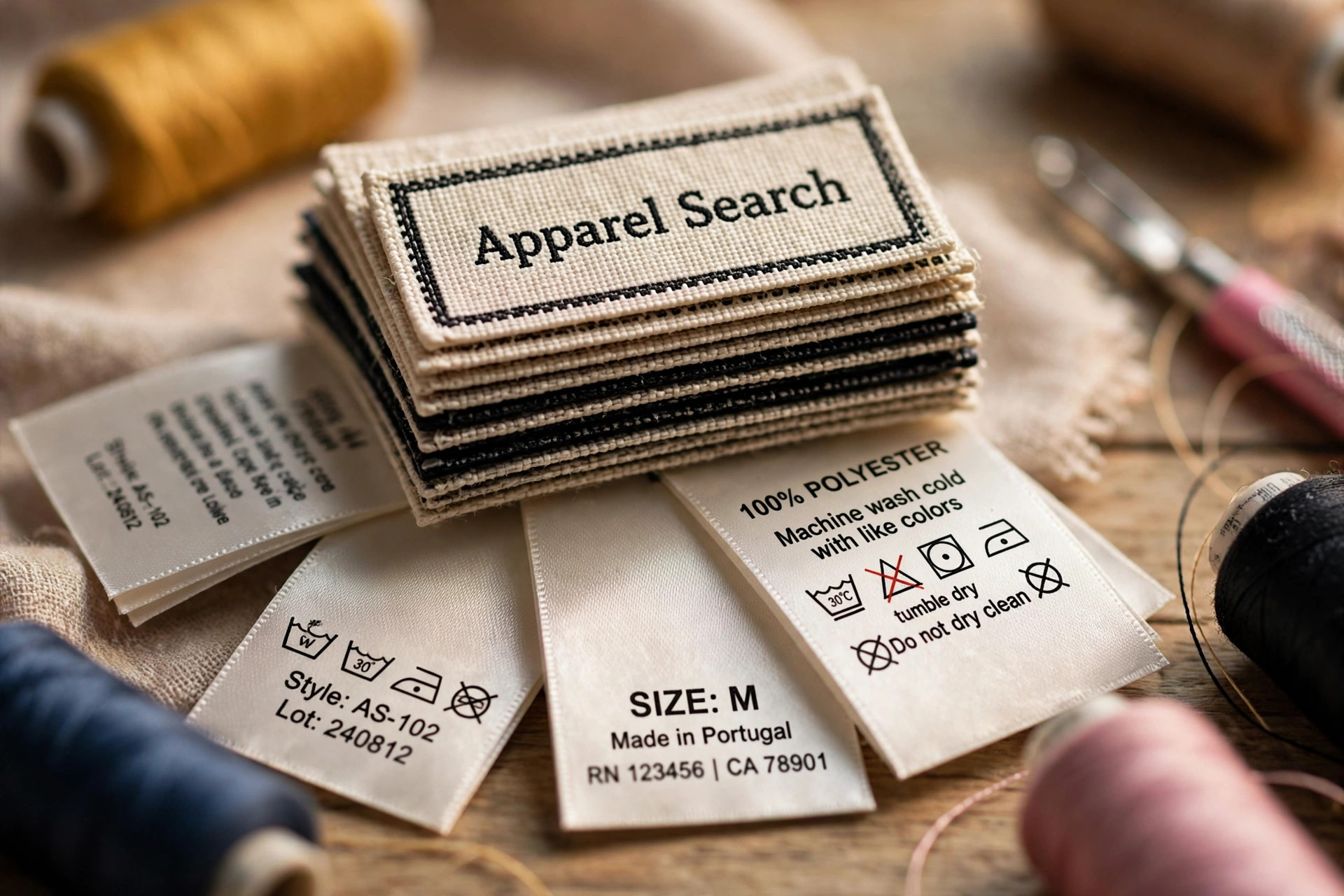 Labels & Labeling RulesWhat may legally be relabeled and what may not: fiber content, country of origin, RN numbers and care labels, explained at the practical level.
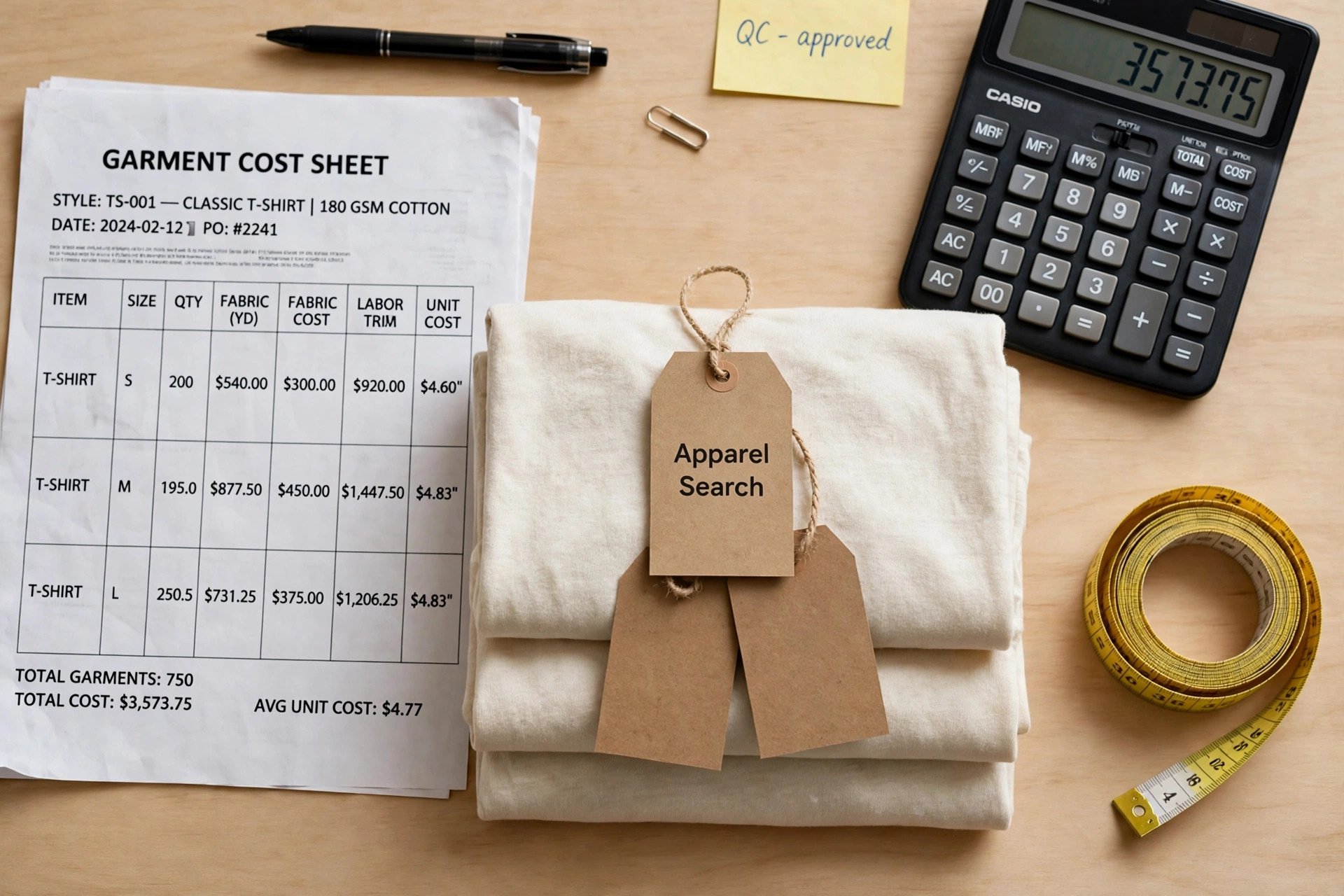 Costs & MinimumsThe full cost stack — unit prices, labels, packaging, sampling — plus realistic minimums by route and the margin math that follows from them.
The Four Routes at a Glance
Every private label arrangement sits somewhere on one ladder of control. The higher the rung, the more of the product is yours — and the more money, time and inventory you commit. The routes guide compares all four in depth; here is the short version.
- Relabeling stock garments — buy finished garments and have your label sewn in (sometimes the maker's label removed, where the labeling rules allow). Fastest and cheapest; the garment itself is identical to what others sell.
- Decorated blanks — buy blank garments and add your designs by print or embroidery. The garment is stock, the surface is yours. The natural home of graphic brands.
- Modified existing styles — start from a manufacturer's pattern and change fabric, color, trim, fit details or finishes. A genuinely differentiated product without development from zero.
- Full custom manufacturing — your patterns and specification, made for you. This is where private label shades into cut-and-sew production, with its minimums and timelines.
Private Label, White Label, Cut-and-Sew
The terms overlap in trade talk, but the working distinctions matter. White label usually means a finished generic product you simply buy and brand — no product input at all. Private label means the manufacturer produces to your choices from their options: fabrics, colors, trims, branding. Cut-and-sew means your own designs made from raw fabric. Our clothing business models compared guide puts all five production models — these three plus print-on-demand and made-to-order — side by side on cost, control and risk.
Private Label, Step by Step
- Choose the route. Match the route to your advantage — audience, design skill, capital, speed — using the four routes compared. Most first lines belong on rungs one to three.
- Source the products. Find manufacturers and suppliers who run private label programs: our wholesale private label clothing directory lists them, and the guide to finding and vetting a manufacturer covers the questions to ask.
- Sample and check quality. Order samples in every size you plan to sell, wash them, measure them, and compare them against the specification. Sampling discipline is what separates a label from a logo.
- Sort the labels and packaging. Your brand label goes in — and the legally required fiber, origin and care information must stay truthful. The labeling rules guide explains exactly where the line sits.
- Price it honestly. Build the full landed cost per unit, then set wholesale and retail prices that leave margin for markdowns. The costs and minimums guide works a complete example.
- Order, inspect, sell, reorder. Inspect production against your approved sample, sell through, and reorder what earned it. Private label's real advantage is reorder speed — use it.
Who Private Label Is For — and Who Should Skip It
Private label fits a retailer or seller whose strength is audience and merchandising rather than product design: the boutique that knows exactly what its customers want on the rail, the online seller with traffic and a niche, the established brand adding a basics line. It is also the standard testing stage before cut-and-sew — demand proven on private label styles is the evidence that justifies custom development later.
One neighboring trade orders branded garments without becoming a brand at all: teams and clubs. Their version of the same decisions — garments, decoration, minimums, timelines — is covered in our team uniform ordering guide, written for the coaches and organizers who outfit a whole roster in one order.
Skip it, or treat it as a bridge only, if your whole proposition is a unique product: a fit nobody else offers, a construction detail, a fabric story. A relabeled garment cannot carry that claim, and customers who find the identical garment under three other labels will price-shop all four of you. The honest summary: private label trades product uniqueness for speed, lower minimums and lower risk. For many first lines that is exactly the right trade.
More to Explore
Part of Starting a Clothing Line
This guide is one stage of the full path — see the Start a Clothing Line guide for the complete route from idea to first sale.
Common Questions
What is private label clothing?
Private label clothing is made or finished by one company and sold under another company's brand. The brand chooses the garments — and, depending on the arrangement, the fabric, colors and trims — and sells them with its own labels, hangtags and packaging, without owning the factory or developing the garment from scratch.
What is the difference between private label and white label?
In trade usage, white label means a finished, generic product the brand simply buys and brands, with no product input. Private label allows choices from the manufacturer's menu — fabric, color, trim, specification — so the product is partly the brand's. In practice suppliers use the terms loosely, so what matters is the actual arrangement: what you may change, and at what minimums.
How much money do I need to start a private label line?
Far less than cut-and-sew production, because there are no pattern, grading or fabric-development costs and minimums are lower. The main costs are the garments themselves, labels and packaging, sampling, freight and your selling costs. Our private label costs and minimums guide breaks the stack down with a worked example.
Can I start with private label and move to my own designs later?
Yes — it is one of the most common paths in the trade. Brands test demand, sizing and price points on private label styles, then move proven sellers into modified or fully custom production where control and margins are better. Keep your samples and sales records; they become the specification evidence for the custom version.