Apparel Search · Private Label Guide
Private Label Routes Compared
Relabeling, decorated blanks, modified styles and full custom: what each route actually controls, costs and risks.
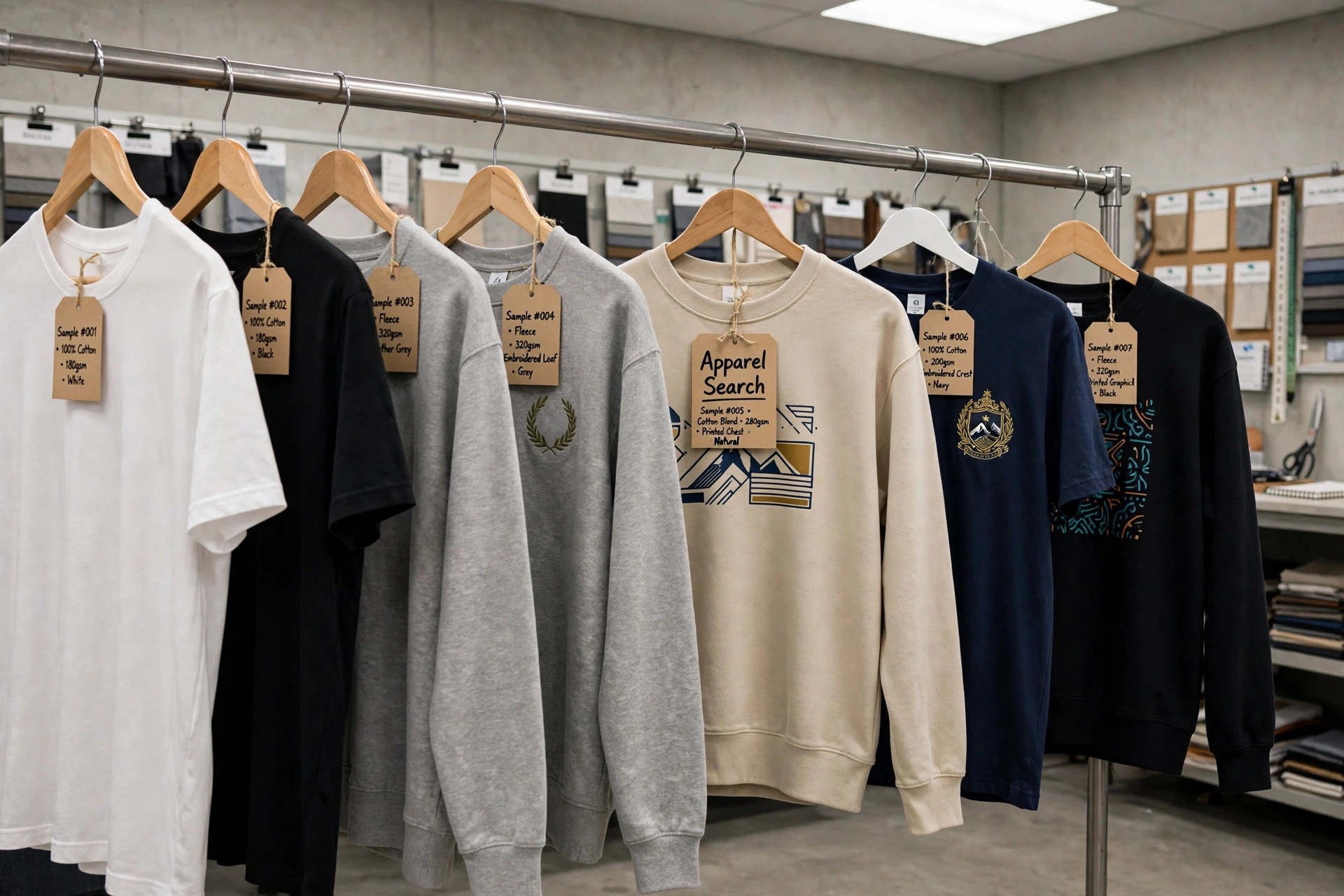
"Private label" covers four quite different arrangements, and confusing them is the most common beginner mistake — the minimums, margins and risks differ by an order of magnitude from one rung to the next. This guide takes each route in turn: what you actually control, what it typically costs to start, how fast you can be selling, and how it goes wrong. It extends the comparison in our clothing business models guide, which also covers print-on-demand and made-to-order.
The Four Routes, Side by Side
| Route | You control | Typical minimums* | Speed to market | Main risk |
|---|---|---|---|---|
| 1. Relabel stock | Brand label, hangtag, packaging, price | Dozens to a few hundred pieces | Weeks | Identical garment sold by competitors |
| 2. Decorated blanks | Artwork, print/embroidery placement, blank choice | Single units (print-on-demand) to a few hundred | Days to weeks | Decoration quality; thin unit margins |
| 3. Modified styles | Fabric, color, trim, small fit and finish changes | A few hundred per style/color | One to three months | Changes cost more than expected; longer lead times |
| 4. Full custom | Pattern, fabric, construction — everything | Several hundred to 1,000+ per style | Three to six months+ | Development cost and inventory commitment |
*Minimums are typical ranges seen across suppliers, not guarantees — fabric, category and country move them a long way. Our minimum order quantities guide explains why factories set them and where they flex.
Route 1: Relabeling Stock Garments
The entry rung. You buy finished garments — from a private label supplier's stock program or a wholesaler — and the garments are sold with your woven label sewn in and your hangtag attached. Some suppliers offer the relabeling as a service; some ship unlabeled or with a removable label precisely so you can. Quality varies enormously within this rung: the best stock programs use garments designed to be branded, with consistent sizing and fabric you can reorder season after season.
Fits: boutiques building an own-brand basics rail; sellers testing a niche; anyone whose advantage is audience, not product. Watch for: the same garment under rival labels (differentiate with styling, bundles and service, not product claims), and the labeling line — your brand label goes in, but required fiber, origin and care information must remain accurate, as the labeling rules guide explains.
Route 2: Decorated Blanks
Buy blank garments — our fashion blanks page covers the category — and make them yours on the surface: screen print, digital print, embroidery, patches. The blank's fit and fabric are the manufacturer's; the design layer is entirely yours, which is why graphic-led and merch brands live on this rung. At the lowest volumes, print-on-demand services decorate one unit at a time after a sale; at higher volumes, a local printer or the blank supplier's decoration program does runs.
Fits: graphic, slogan, souvenir and community brands; merch for an existing audience. Watch for: decoration durability (wash-test prints), blank quality showing through a premium price, and unit economics — decoration on single units is the most expensive way to buy a finished garment.
Route 3: Modified Existing Styles
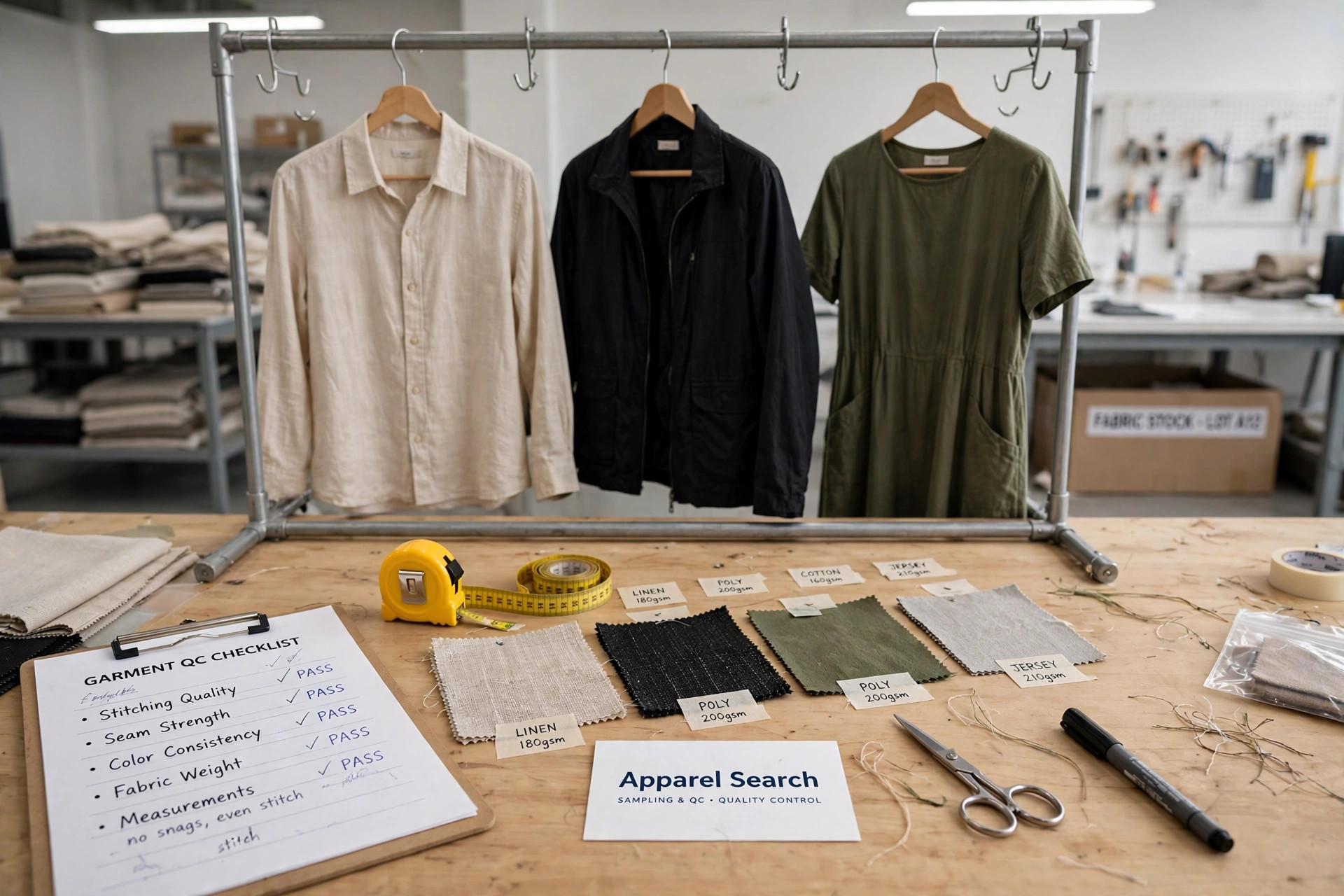
The professional middle rung. The manufacturer starts from a pattern they already run and changes what you specify: a different fabric or color story, swapped trims and buttons, an adjusted length or fit detail, your labels and packaging throughout. The result is a garment competitors cannot buy off the same page — genuinely your product in the ways customers can see and feel — without paying for pattern development from zero. Minimums rise because the factory is cutting fabric for you, and sampling matters: approve a pre-production sample in the actual fabric before the run.
Fits: boutiques and small brands with a proven seller to differentiate; anyone graduating from routes 1–2. Watch for: change creep (every "small" change repriced), longer and less flexible lead times, and minimums per color, not just per style.
Route 4: Full Custom Manufacturing
Your pattern, your fabric, your specification — the manufacturer executes your product. At this rung private label has become cut-and-sew production in everything but name: you will need patterns or a tech pack, samples and revisions, and order quantities that justify the factory's setup. In return you own the product completely, and margins at volume are the best of the four routes. Our manufacturer guide covers finding and vetting factories for this level.
Fits: brands with proven demand and a product reason to exist. Watch for: development timelines measured in seasons, and inventory risk — a custom style that fails is yours alone.
Moving Up the Ladder
Routes are stages as much as choices. A common, sensible progression: test a niche on relabeled stock or decorated blanks, take the styles that sell into modified production to differentiate them, and reserve full custom for proven sellers where the margin justifies development. Each rung funds and informs the next — and skipping rungs with unproven demand is how small brands end up owning a warehouse of their own designs.
More to Explore
Back to the Private Label Guide
Routes chosen, the next questions are labels and money — return to the Private Label Clothing Guide for the full sequence.
Common Questions
Which private label route is best for a first line?
For most first lines, relabeling stock garments or decorating blanks — the capital at risk is small, minimums are low, and you learn sizing, quality and reorder behavior before committing to production. Modified styles are the right second step once a style has proven it can sell.
Can I remove a manufacturer's label and sew in my own?
Your brand label can go in, and suppliers offering relabeling services handle that routinely. What may not be removed or replaced is the legally required information — fiber content, country of origin and care instructions must remain present and truthful for the actual garment. Our labeling rules guide explains the line in detail.
Why do minimums jump so much between routes?
Because of who carries the setup cost. Relabeling uses garments already made; decorating adds a process to a finished garment; modifying a style means cutting fabric for one customer; full custom adds pattern and development work. Each step asks the factory to do more work that only your order can pay for, so the smallest order it can accept grows.
Is print-on-demand a private label route?
It is the lowest rung of the decorated-blanks route: blanks decorated one unit at a time, after a sale, often with your branding on labels and packaging where the service allows. It removes inventory risk entirely, at the highest per-unit cost — a testing tool more than a production model.