Apparel Search · Starting a Clothing Line
How to Find & Vet a Clothing Manufacturer
Shortlisting factories, the questions that reveal how they really work, judging samples properly, and the test-order discipline that protects a new brand.
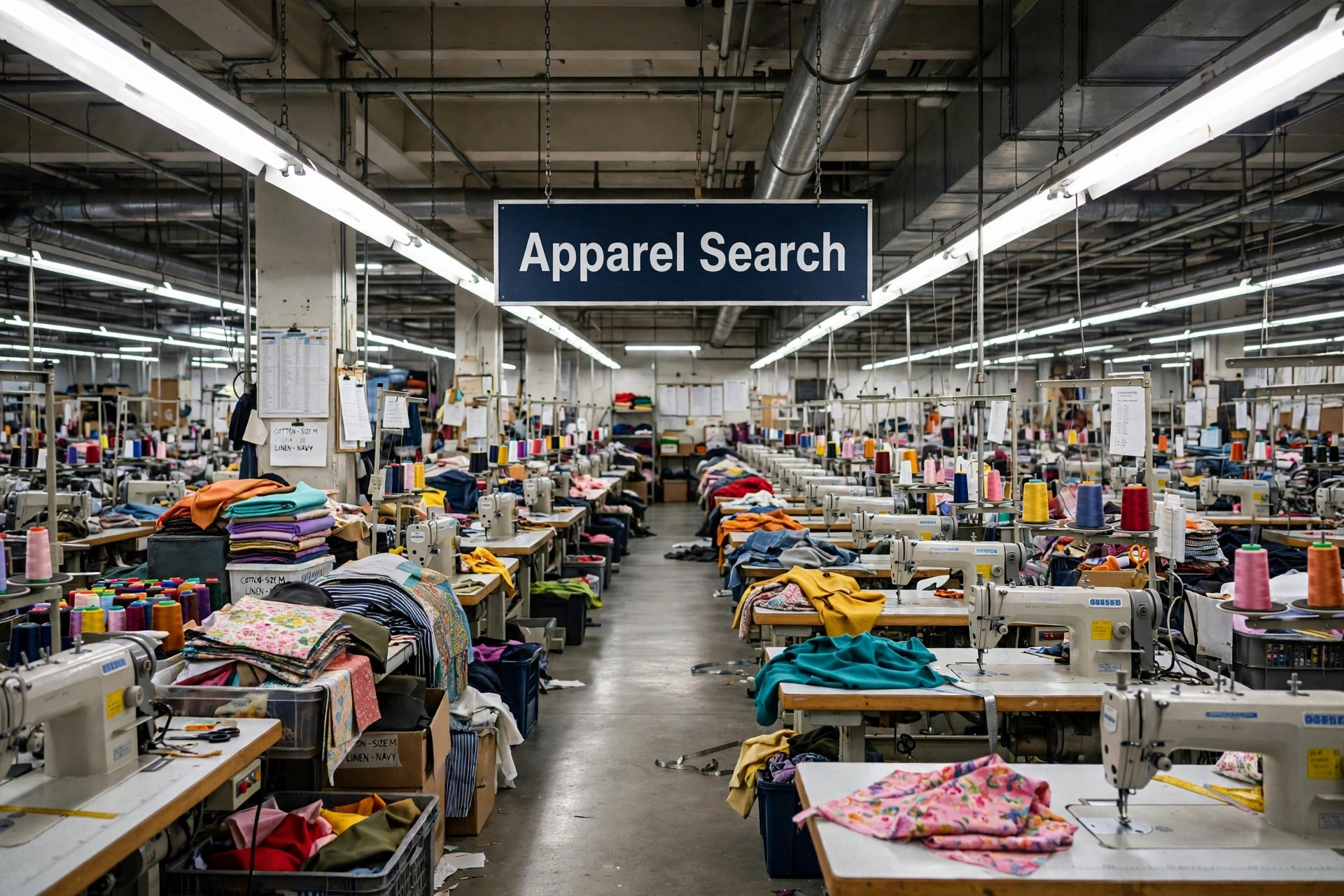
Ask experienced founders what decides a young label's fate and factory choice comes up again and again. This guide covers the knowledge layer of that choice — how to search, shortlist, question, sample and test — as part of the starting a clothing line path. The listings themselves live in Apparel Search's directories; this page teaches you what to do with them.
What “Vetting” Means
Vetting a manufacturer means verifying, before real money moves, that a factory can make your specific product, at your quantities, to your quality level, on a survivable timeline — and that it behaves professionally when something goes wrong. A glossy website and a low quote verify none of those things. Samples, references and a small test order verify most of them.
Start With the Right Search
Factories specialize. A plant built for tailored jackets will struggle with swimwear; a knitwear specialist may not touch wovens. Search by product type first and geography second: Apparel Search's CMT and manufacturer directories organize factories by garment category, and the existing step-by-step companion, how to find a clothing manufacturer, walks the search mechanics. Before contacting anyone, know your model from business models compared — cut-and-sew, private label and print-on-demand each need a different kind of partner.
Questions That Separate Real Factories From Brokers
What do you actually make here?
Ask for the product categories sewn in-house, the machinery on the floor, and what gets subcontracted. A factory evasive about its own floor may be a trading company adding a margin — sometimes workable, never free.
What are your real minimums?
MOQs are quoted per style, per color and sometimes per size run, and they are often negotiable for a first order at a surcharge. Get the number for YOUR structure, not the headline figure.
What will sampling cost and how long will it take?
Sample fees, revision rounds and timelines reveal how a factory treats small customers. Slow, sloppy sampling does not become fast, careful production.
Can I speak to brands you produce for?
References are the cheapest due diligence in this industry. A factory that produces for known labels in your category and will say so is a different risk class from one that cannot name a single customer.
How do we handle problems?
Ask directly: defective units, late delivery, a fabric flaw discovered mid-run. The answer's clarity matters more than its promises — you are listening for a process, not perfection.
Samples, Then a Test Order
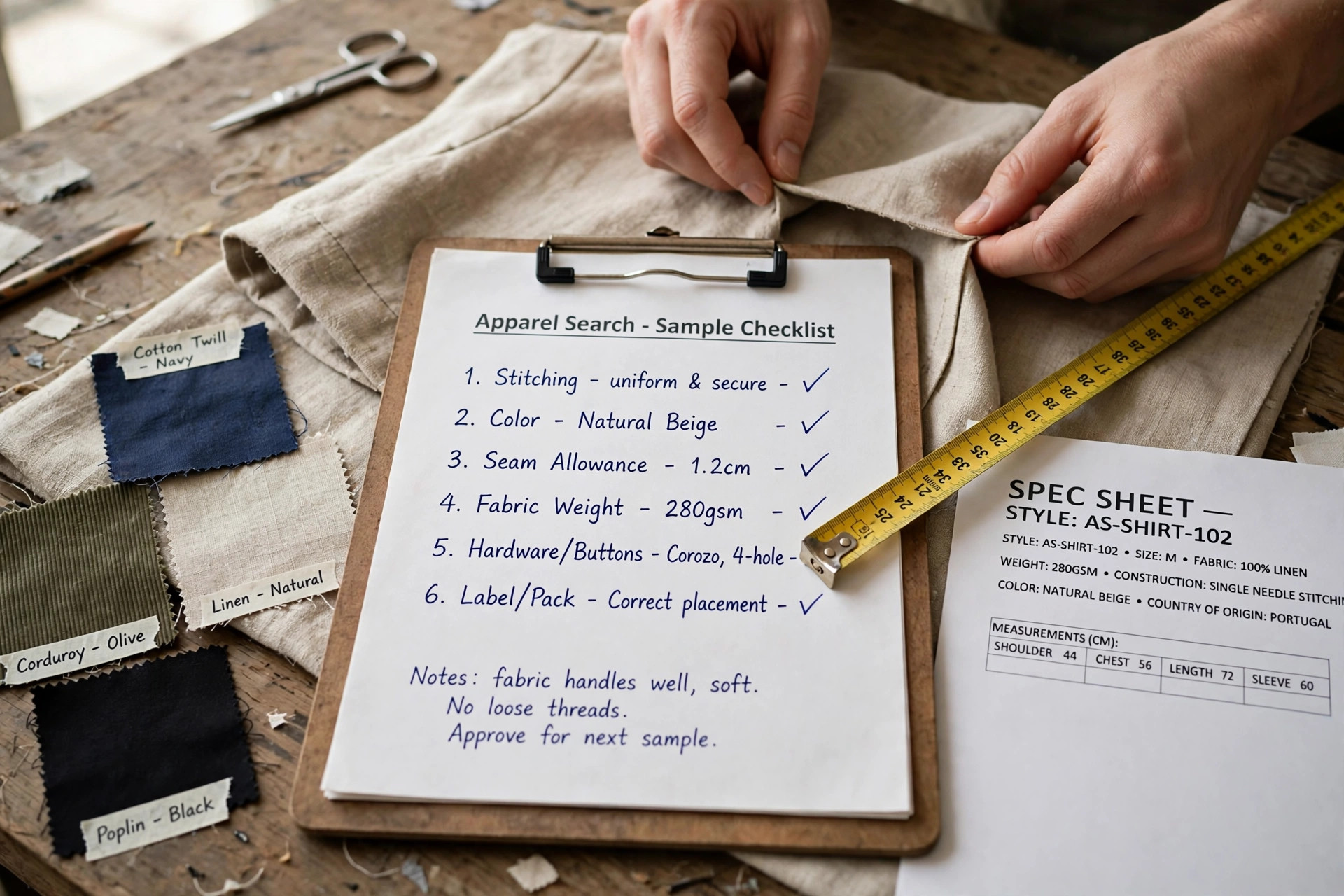
Never judge a factory on its own showroom samples — judge it on samples made from your tech pack, measured against your points of measure and washed, worn and pulled apart. Apparel Search's factory evaluation checklist structures the visit or video-call version of this judgment. When samples pass, place a deliberately small first production order even if a larger one is cheaper per unit. The test order is tuition: it proves communication, packing, labeling, timing and problem-handling at a survivable cost. Factories that perform on a small order earn larger ones.
Red Flags Worth Walking Away From
- Quotes far below every competitor with no explanation of how.
- Reluctance to make samples from your tech pack, or to put terms in writing.
- Full payment demanded up front from a new customer with no track record offered in return.
- Minimums that quietly multiply per color and size after the first conversation.
Prepare for Production
Common Questions
How do I find a clothing manufacturer for my first line?
Search by product category, not by country alone: use manufacturer directories such as Apparel Search's CMT listings, trade shows and industry referrals to build a shortlist of factories that already make your type of garment. Then contact several with the same information — tech pack, quantities, target cost — so their answers can be compared fairly.
What is a reasonable minimum order quantity for a new brand?
It varies widely by factory, country and garment type, from very small runs at domestic and sample-room factories to hundreds of units per style and color offshore. What matters is the minimum for your exact structure — per style, per color, per size run — quoted in writing, since headline MOQs often hide multipliers.
Should I visit the factory before ordering?
If you can, yes — a floor visit shows machinery, workload, organization and quality habits that no video call fully reveals. If distance prevents it, use structured video calls, third-party inspection at shipment, and a small test order to buy the same information more slowly. Never let a first order be both large and unverified.
How many manufacturers should I get quotes from?
Enough to see the market — typically a shortlist of three to five serious candidates making your product type. Quotes are only comparable when every factory prices the same tech pack and quantities; five quotes on five different assumptions tell you nothing, while three on identical inputs tell you a great deal.
Back to the Starting a Clothing Line Guide
A good factory is a long-term asset — founders who find one tend to stay for years, which is exactly why the vetting is worth doing slowly. The full Starting a Clothing Line guide walks the whole path — business plan, business models, manufacturers, collection planning, costs, selling channels and launch.