Apparel Search · Starting a Clothing Line
Planning Your First Collection
Range planning in plain language: how many styles, which sizes and colors, what price ladder — and how to keep a first collection coherent and affordable.
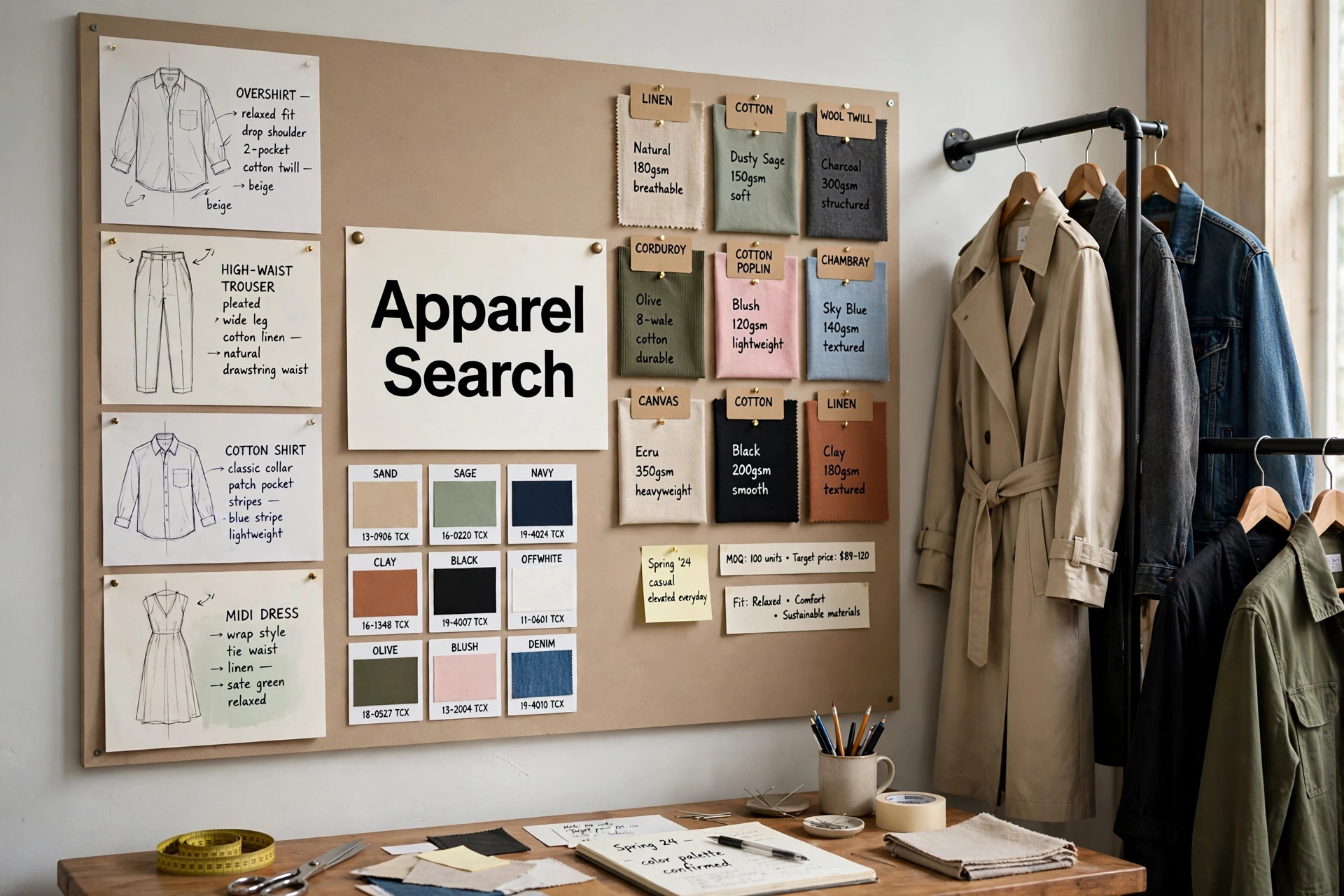
A first collection is a plan before it is a set of garments: a deliberate group of styles, in chosen sizes and colors, at prices that work, delivered for one selling season. This guide covers that planning — range planning in plain language — as the bridge between development and production on the starting a clothing line path.
What a Range Plan Is
A range plan is the collection written down as a structure: how many styles, in which categories, at which price points, in what size range and color palette, and how many units of each. It is the document that keeps a collection coherent — and keeps a founder from developing twenty beautiful garments that cannot be produced, priced or sold together.
How Many Styles Should a First Collection Have?
Fewer than instinct suggests. Every style carries fixed costs — pattern, samples, grading, photography, a minimum production run — before it sells anything, so a tight line of well-judged styles beats a sprawling one. Many first collections land somewhere in the range of six to fifteen styles, scaled to the category and budget; a focused capsule of fewer, stronger pieces is a legitimate and often smarter launch. Whatever the count, each style must earn its place by serving the defined customer in the business plan — a style that duplicates another's job in the wardrobe is a candidate for the cutting floor.
Building the Size and Color Matrix
Set the size range deliberately
Choose the sizes you will offer and plan units unevenly across them: middle sizes historically sell through faster than the extremes. Grading a pattern across sizes costs money per style, which is another argument for a tight first range; the technical side lives in the Sizing & Fit Guide.
Build a color story, not a color pile
Pick a palette where every color works with the others, so customers can combine pieces and buyers can merchandise the rail. A common starter structure is a core of neutrals carrying most units, with a small number of fashion colors carrying the excitement.
Balance price architecture
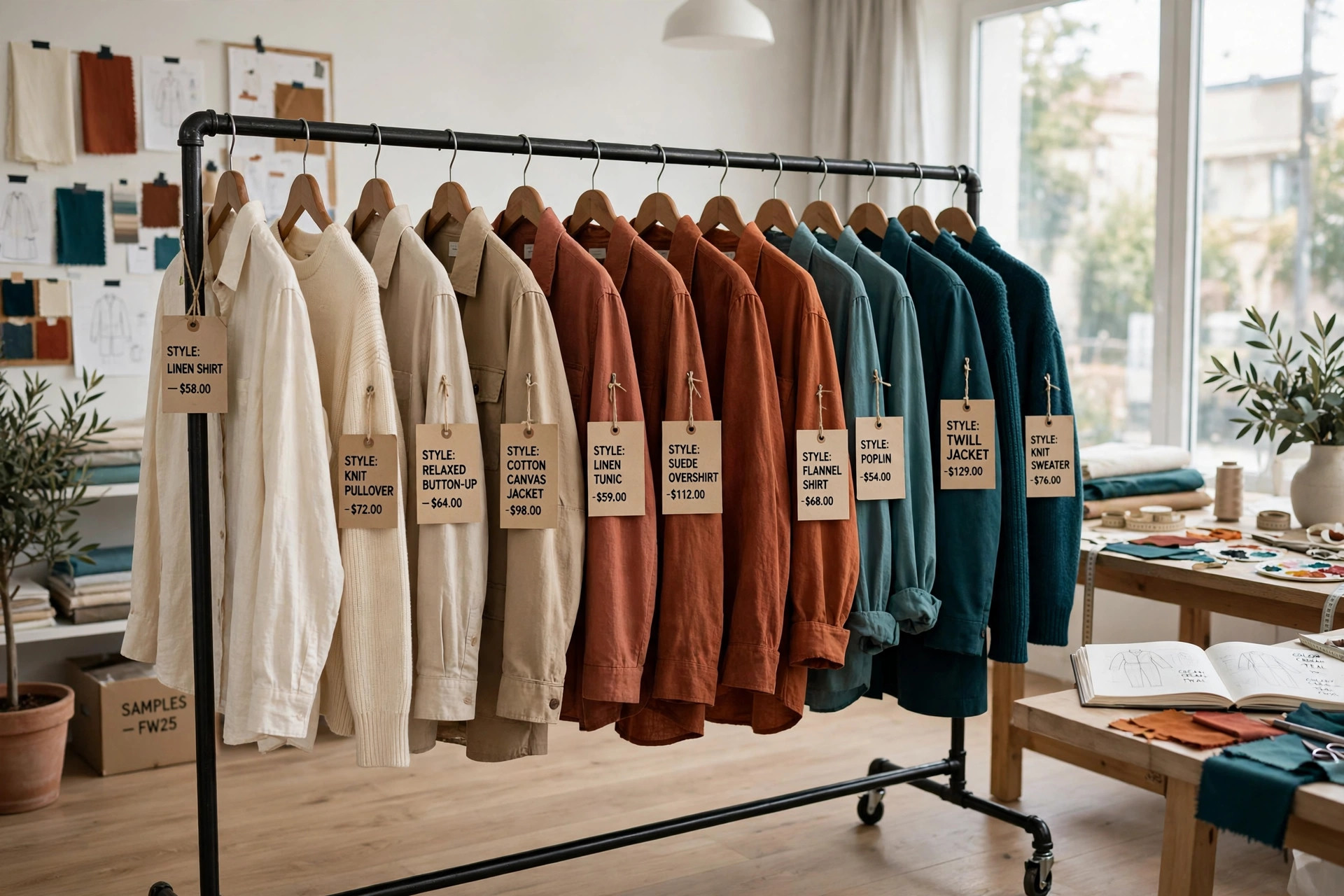
Spread styles across entry, core and statement price points. The entry pieces recruit new customers, the core does the volume, and one or two statement pieces give press and photography something to talk about.
Count units before committing
Multiply styles by colors by sizes: that is your true SKU count and your inventory exposure. Founders are routinely shocked by this arithmetic — twenty-four styles in four colors and six sizes is 576 decisions to fund. The range plan exists to make that number a choice, not a surprise.
Coherence Is a Commercial Feature
A collection is sold as a group — to wholesale buyers building a rail, and to direct customers building outfits. Styles that share fabrics, palette and attitude reinforce each other; orphans weaken all of them. Development discipline comes from the Product Development Guide: each style passes through the same sampling and approval gates, and the range plan is where weak candidates are cut early, while they are still sketches rather than invoices. Cutting a style at plan stage costs nothing. Cutting it after production costs everything it consumed.
First-Collection Planning Traps
- Developing every idea: sampling is the most seductive spending in fashion and the easiest to overrun.
- Too many colors in slow styles: color multiplies minimums and strands inventory.
- No price ladder: everything at one price point gives buyers and customers no way to trade up.
- Ignoring the calendar: a winter collection sampled in autumn is a next-year collection.
Plan It, Then Cost It
Common Questions
How many pieces should be in a first clothing collection?
There is no required number, but first collections commonly land between about six and fifteen styles. The right count is set by budget, category and minimums: each style adds pattern, sampling, grading and production costs, so the count should be the largest range you can fund properly — not the largest you can imagine.
What is a size and color matrix?
It is the grid that results from multiplying a collection's styles by its colorways and its sizes. The matrix shows the true SKU count and where inventory money will sit. Planning it deliberately — more units in proven colors and middle sizes, fewer at the extremes — is one of the main protections against dead stock in a first season.
Should a first collection follow a theme?
A theme or story helps a collection cohere and gives buyers, press and customers a way to talk about it, but the theme is a tool, not a requirement. What is required is coherence: shared palette, fabrics and attitude so the pieces sell each other. A loose theme that produces coherent garments beats a strict theme that produces costumes.
When should I cut a style from the collection?
As early as the evidence allows. Cut at the range-plan stage if a style duplicates another's role or breaks the price architecture; cut at sample stage if fit, fabric or cost will not come right. Every stage a weak style survives multiplies what it costs to remove, and after production the cost is total.
Back to the Starting a Clothing Line Guide
The range plan is the last cheap place to fix a collection — every problem it catches is one that production never gets the chance to charge you for. The full Starting a Clothing Line guide walks the whole path — business plan, business models, manufacturers, collection planning, costs, selling channels and launch.